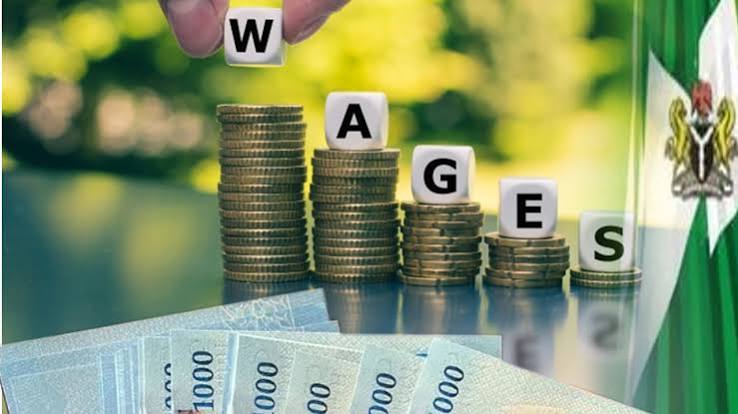
Nigeria’s renewed minimum wage debate has exposed a difficult economic question: how much should a worker earn to live with dignity in an economy where prices have risen sharply, without triggering another round of inflation, job losses and higher production costs?
Organised labour is pushing for a new national minimum wage of ₦500,000, arguing that the current ₦70,000 statutory wage has been overtaken by the rising cost of food, transportation, housing, healthcare and education.
The demand, however, has met resistance from economists who argue that although ₦70,000 is inadequate, an immediate jump to ₦500,000 could be economically disruptive if it is not supported by higher productivity and stronger output.
The dispute is therefore no longer simply about the amount written on a worker’s payslip. It is increasingly about what that amount can actually buy.
Why labour is asking for ₦500,000
The Nigeria Labour Congress and Trade Union Congress have renewed calls for a substantial increase in the minimum wage as the purchasing power of workers continues to weaken.
In August, NLC Deputy President and Nigeria Union of Teachers President, Audu Titus Amba, said organised labour wanted negotiations for a new minimum wage of at least ₦500,000. He argued that anything below that level would be inadequate given prevailing socioeconomic conditions.
The demand has since become part of a broader labour campaign for measures to ease the cost of living.
In its Independence Day statement on September 30, the NLC demanded the commencement of negotiations for a new minimum wage, a nationwide wage award and a reduction in petrol prices. The union said the real value of workers’ wages had been eroded by inflation and rising transportation, food, rent and education costs.
The NLC specifically said the ₦70,000 minimum wage had already lost much of its value by the time it was implemented.
That argument is supported by the experience of many households. A Reuters report in August documented how Nigerians earning considerably more than the minimum wage were still struggling with rent, food, transport and utility bills, illustrating the gap between nominal income and actual purchasing power.
What happened to the ₦70,000 wage?
Nigeria’s current national minimum wage followed months of negotiations between the Federal Government, organised labour and employers in 2024.
The government ultimately approved ₦70,000, replacing the previous ₦30,000 minimum wage. The Federal Ministry of Labour had earlier stated that the new wage was intended to reflect prevailing economic realities and improve workers’ welfare.
But the economic environment has changed significantly since then.
Nigeria has experienced major increases in the cost of transportation, food, housing and other essentials following the removal of the petrol subsidy and the depreciation of the naira.
The National Bureau of Statistics currently reports headline inflation at 15.39 per cent, while its latest available data puts food inflation at 19.57 per cent.
Although the inflation rate is substantially lower than the peak recorded under the previous CPI methodology, lower inflation does not mean that prices have returned to their previous levels.
Inflation measures the rate at which prices increase; it does not reverse the increases that have already occurred.
That distinction is central to the minimum wage argument.
A worker whose salary remains at ₦70,000 may face a lower inflation rate than a year earlier, but still be paying substantially more for food, rent, transport and other necessities than before.
The ₦500,000 question
At first glance, moving from ₦70,000 to ₦500,000 represents an increase of more than seven times the current statutory minimum.
That is precisely why economists and employers are questioning whether the demand can be implemented immediately.
Economist Paul Alaje recently described the ₦500,000 demand as unrealistic under current economic conditions, while simultaneously acknowledging that ₦70,000 is inadequate for a decent standard of living.
He argued that a sharp wage increase without corresponding growth in production could increase the amount of money circulating in the economy without creating enough additional goods and services, potentially generating further inflation.
Alaje suggested that a wage in the region of ₦125,000 to ₦150,000 would be more appropriate under current conditions, while advocating improvements in healthcare, education and other public services to reduce workers’ household expenses.
His argument highlights the central economic dilemma.
If wages rise substantially while productivity remains unchanged, businesses may respond by increasing prices, reducing staff, cutting investment or replacing some labour with technology.
But if wages remain stagnant while essential expenses continue to rise, workers effectively suffer a reduction in real income.
The cost of doing nothing
There is also an economic cost to maintaining a low minimum wage.
Workers who cannot meet basic expenses may take second jobs, borrow more frequently, reduce consumption, leave formal employment or migrate.
Low purchasing power also affects businesses because workers are consumers. When households spend almost all their income on food, transpor