Nigeria’s opposition parties have taken another step towards building a common political platform for the 2027 presidential election, but whether major figures including former Vice-President Atiku Abubakar and former Anambra State Governor Peter Obi can overcome their differences and unite against President Bola Tinubu remains uncertain.
The latest push was made at the G-100 opposition summit held in Abuja on August 31, where representatives of several opposition parties agreed to begin structured negotiations on cooperation ahead of the 2027 election.
The summit brought together representatives of the African Democratic Congress, Allied Peoples Movement, Nigeria Democratic Congress, Peoples Democratic Party, Peoples Redemption Party and Social Democratic Party, with the parties agreeing to work towards a possible common platform and presidential candidate.
However, two of the most prominent figures associated with the opposition — Atiku and Obi — were absent from the meeting.
Their absence has raised fresh questions about whether the latest coalition initiative can succeed where previous attempts at opposition unity have struggled.
Atiku, who is associated with the ADC, was represented at the summit by senior party officials.
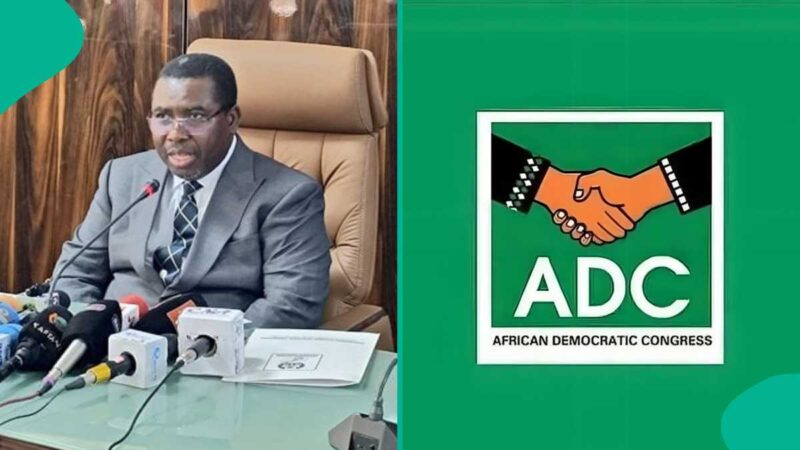
ADC National Publicity Secretary Bolaji Abdullahi said Atiku’s absence should not be interpreted as rejection of the coalition process. He explained that the summit was primarily focused on discussions between political parties rather than individual presidential candidates.
Atiku’s spokesman, Phrank Shaibu, also said the former vice-president’s absence was unavoidable and did not amount to a boycott. According to him, Atiku remains committed to building a united opposition capable of challenging the APC in 2027.
Obi, however, was also absent from the summit, despite his emergence as one of the country’s most prominent opposition figures following his strong performance in the 2023 presidential election.
The National Democratic Congress said it remained part of the coalition process, but Obi’s absence means one of the key personalities whose support would be required for a genuinely broad opposition alliance has yet to formally participate in the latest negotiations.
The central difficulty is likely to emerge when the negotiations move from broad cooperation to the question of presidential leadership.
Opposition parties can agree on a common programme and electoral strategy, but a presidential election ultimately requires a single candidate to represent any unified platform.
This is where personal ambitions could become difficult to reconcile.
Earlier reports indicated that both the Atiku and Obi camps were reluctant to abandon their respective presidential ambitions in favour of another candidate. While both sides have expressed support for greater opposition cooperation, neither has clearly agreed to withdraw from the presidential race in favour of the other.
The latest G-100 process is therefore attempting to solve the problem without immediately forcing the leading candidates to step aside.
Salihu Lukman, one of the organisers of the summit, said the meeting was not asking any party to dissolve or any presidential candidate to withdraw. Instead, the participating parties agreed to establish mechanisms through which the difficult questions could eventually be negotiated.
One of the proposals emerging from the summit is a four-year transition government that would focus on implementing a national reform programme.
The parties agreed to establish a Central Leadership Committee, a publicity and communication committee and a legal committee.
Five working groups were also created to prepare proposals on a National Covenant for Democratic Renewal, a Single-Term Transition Charter, a National Reform Programme, a Framework for Opposition Unity and a roadmap towards a common presidential candidate.
The working groups are expected to submit their reports within four weeks before another summit considers the proposals.
The structure gives the opposition a formal process for negotiating unity rather than relying solely on political declarations.
But the success of the process will ultimately depend on whether the major political actors accept its rules and are willing to make concessions.
Beyond the question of who becomes the presidential candidate, policy differences could also threaten the proposed alliance.
One example is the removal of the petrol subsidy.
The ADC has indicated that it supports restoring the subsidy, while Obi has maintained that the subsidy should remain removed, arguing that the problem is how the savings from its removal have been managed.
ADC spokesman Bolaji Abdullahi said the disagreement could become a serious issue for any proposed merger or alliance.
“If Peter Obi doesn’t believe in the return of subsidy while we do, then what would be the basis for a merger?” Abdullahi asked.
Such disagreements suggest that opposition unity cannot be based solely on the shared objective of defeating the APC. The parties would also need to agree on what they intend to do if they win.
The push for unity is largely driven by the belief that Nigeria’s opposition vote was fragmented in the 2023 presidential election.
At the G-100 summit, organisers argued that opposition candidates collectively attracted millions of votes but competed against one another, allowing the APC to emerge victorious.
The argument is straightforward: if opposition voters and political structures can be brought under one umbrella, the combined electoral strength could pose a much stronger challenge to Tinubu in 2027.
But translating that arithmetic into an actual political coalition is considerably more complicated.
The opposition must reconcile different parties, regional interests, political structures, policy positions and presidential ambitions.
The latest developments suggest that unity remains possible, but it is far from guaranteed.
The fact that six opposition parties have agreed to a structured negotiation process represents progress compared with previous efforts that failed to produce a common platform.
The PDP’s decision to endorse the G-100 process could also broaden the potential coalition.
However, the absence of Atiku and Obi from the summit demonstrates that the most important political decisions have yet to be made.