The long-awaited initial public offering of Dangote Petroleum Refinery and Petrochemicals FZE is set to open to investors on September 14, offering Nigerians and other eligible investors an opportunity to acquire shares in one of Africa’s biggest industrial projects.
The Securities and Exchange Commission (SEC) has approved the offer, which comprises 4.1 billion ordinary shares priced at ₦525 each. If fully subscribed, the IPO is expected to raise approximately ₦2.15 trillion.
The offer is scheduled to close on October 13, while the refinery is expected to list its shares on the Nigerian Exchange (NGX) in November.
The transaction is expected to become Africa’s largest IPO to date and one of the most significant transactions in the history of Nigeria’s capital market.
For retail investors, the entry point is relatively low compared with the size of the transaction.
The minimum subscription is 10 shares, meaning an investor needs ₦5,250 to participate at the offer price of ₦525 per share.
Applications after the minimum are expected to be made in multiples of 10 shares. Aliko Dangote, president of Dangote Industries Limited, has described the transaction as an “IPO for the people”, saying the structure is intended to give ordinary Nigerians an opportunity to own a stake in the refinery.
However, investors should distinguish between being able to subscribe to the offer and being guaranteed a particular number of shares. If demand exceeds the available shares, the final allotment could be affected by the terms of the offer.
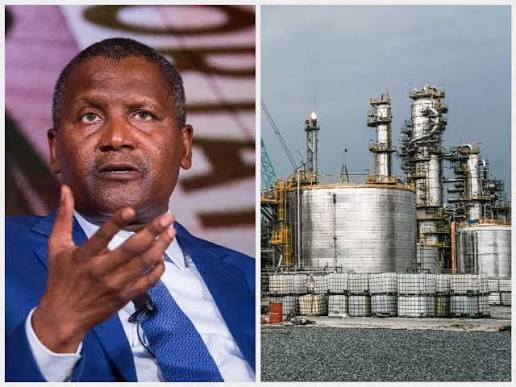
The refinery, located in the Lekki area of Lagos, has become one of Nigeria’s most important industrial assets.
The facility currently has crude-processing capacity of about 700,000 barrels per day, although earlier operational reports have referred to 650,000 barrels per day as its full initial design capacity.
Dangote plans to expand the refinery to 1.4 million barrels per day, effectively doubling its current capacity. The company says proceeds from the IPO will help finance its growth capital expenditure and expansion programme.
Reuters reported that the company has announced a $14.3 billion expansion programme aimed at increasing capacity to 1.4 million barrels per day by 2029.
At ₦525 per share, the offer implies a valuation of roughly $47 billion to $49 billion, depending on the exchange-rate basis used in the transaction.
The refinery has 120.13 billion existing ordinary shares registered with the SEC, in addition to the 4.1 billion shares being offered.
This means the 4.1 billion shares should not be described as 10 per cent of the company’s existing equity. Based on the latest disclosed share numbers, the offer represents a much smaller proportion of the company’s enlarged share base.
The size of the company could nevertheless have a major effect on the NGX. The exchange’s market capitalisation stood at about ₦159.56 trillion at the end of last week. If the refinery is listed at a valuation of roughly ₦65 trillion, the overall market capitalisation could move above ₦200 trillion, assuming other market conditions remain broadly unchanged.
An Initial Public Offering, or IPO, is the process through which a company offers shares to the public and becomes publicly traded.
In an offer for subscription, investors buy newly issued shares and the money raised goes to the company. The shares can subsequently be traded on a stock exchange once they are listed.
The Dangote Refinery transaction is structured as an offer for subscription, with the proceeds intended to support the company’s expansion and growth capital expenditure.
Investors should use only the authorised channels and capital-market operators specified in the approved offer documents.
The process generally involves completing an application through the approved receiving banks, stockbrokers or other authorised channels, making payment for the shares applied for and waiting for the allotment process to be completed.
Once the shares are listed on the NGX, investors will be able to buy or sell them in the secondary market through licensed stockbrokers.
The IPO is expected to open on September 14 and close on October 13, subject to the applicable regulatory and offer terms.
The ₦525 price should not be viewed in isolation.
Investors need to examine the company’s financial statements, profitability, cash flow, debt obligations, crude-oil supply arrangements, refining margins, expansion costs and future earnings prospects before deciding whether the shares represent good value.
The refinery’s performance will also depend on its ability to secure sufficient crude at competitive prices. Reuters has reported that crude supply and pricing remain important considerations for the refinery as it seeks to expand production.
Another consideration is valuation. At a valuation approaching $50 billion, investors will need to determine whether the refinery’s expected future earnings justify the price being asked for the shares.
Investors could potentially benefit from future increases in the share price if the company performs strongly after listing.
Shareholders may also receive dividends if the company declares them. Reports on the offer indicate that the refinery’s dividend structure is expected to be dollar-denominated, although investors should rely on the final approved prospectus for the precise terms and conditions.
The planned expansion to 1.4 million barrels per day could also create additional revenue-generating capacity if successfully completed and operated profitably.
An IPO is not a guaranteed investment.
After listing, the market price of Dangote Refinery shares can rise or fall depending on the company’s financial performance, investor demand, crude-oil prices, refining margins, exchange rates, government policies and broader economic conditions.
There are also operational risks. The company needs reliable access to crude oil, efficient logistics and sustained production to achieve its expansion and profitability targets.
Investors should therefore avoid making decisions based solely on the size or reputation of the Dangote brand.
The SEC has previously warned Nigerians about unauthorised marketing of supposed Dangote Refinery shares.
In June 2026, before the formal approval of the IPO, the regulator ordered capital-market operators and digital platforms to stop soliciting money for the purported offering, warning investors against transferring funds to anyone promising guaranteed allocations or pre-IPO placements.
With the official offer now approved, investors should still rely on the SEC-approved prospectus and authorised receiving channels rather than social-media advertisements, unofficial agents or individuals promising guaranteed profits or allocations.
The Dangote Refinery IPO gives Nigerian investors an opportunity to own shares in a major African industrial asset, with a minimum entry point of ₦5,250.
But the low entry price should not be confused with low investment risk.
The key question for investors is not simply whether they can afford 10 shares. It is whether they believe the refinery’s future earnings, expansion plans and dividend prospects justify the ₦525 offer price and the company’s implied valuation.
Before subscribing, investors should read the approved prospectus, understand the company’s financial position and risks, and use only authorised capital-market channels.