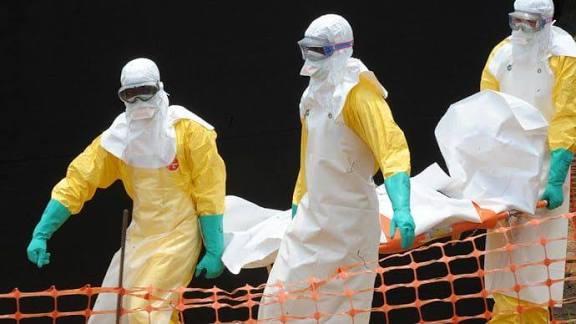
A rapidly expanding Ebola outbreak in the Democratic Republic of the Congo (DRC) has raised fresh concerns about the risk of the virus spreading beyond Central and East Africa, although health authorities have not reported evidence of transmission into West Africa.
The outbreak, caused by the Bundibugyo species of Ebola virus, was declared in the DRC in May 2026. It has since expanded across seven provinces and dozens of health zones, while neighbouring Uganda has also recorded imported cases. The World Health Organization (WHO) has classified the outbreak as a public health emergency of international concern, prompting intensified international coordination.
As of September 20, WHO’s regional office reported 7,733 confirmed cases and 3,732 deaths in the DRC. By September 30, WHO reported that the outbreak had affected seven provinces and 63 health zones, with 7,773 cases and 3,759 deaths recorded.
The figures cited in the original brief 7,890 cases and 3,799 deaths as of September 23, therefore do not exactly match the latest WHO figures available and appear to come from a different reporting cut-off or dataset.
Why the outbreak is raising concern
The geographic expansion is one of the biggest concerns for public-health authorities.
The outbreak initially centred on Ituri Province but subsequently spread to North Kivu, South Kivu, Haut-Uélé, Tshopo, Bas-Uélé and Sud-Ubangi. WHO reported that the latest expansion included Dungu health zone in Haut-Uélé, near the South Sudan border, and Bulu health zone in Sud-Ubangi.
The affected areas include locations close to international borders and important population and trading routes. WHO has warned that informal border crossings could complicate efforts to detect and contain infections.
The organisation’s assessment has identified the risk of further regional spread as a significant concern, particularly because of population movement, insecurity and humanitarian pressures in affected parts of the DRC.
Does this mean West Africa is facing an Ebola outbreak?
Not at present.
There is no indication in the WHO information reviewed that Ebola transmission has reached West Africa.
The immediate cross-border concern has been concentrated in countries sharing borders with affected areas of the DRC, particularly Uganda and countries around the newly affected northern and western provinces.
Uganda has previously recorded imported Bundibugyo virus cases linked to the DRC outbreak. WHO reported 20 confirmed cases in Uganda by September 7, including two deaths.
For West African countries such as Nigeria, Ghana, Liberia, Sierra Leone and Guinea, the situation is therefore primarily one of preparedness and surveillance rather than an active Ebola outbreak.
Why Nigeria and West Africa cannot ignore it
West Africa has extensive experience with Ebola.
The region experienced the world’s largest Ebola epidemic between 2014 and 2016, particularly in Guinea, Liberia and Sierra Leone. Nigeria also recorded imported cases during that epidemic but successfully contained transmission.
That experience means health authorities across the region have established systems for detecting suspected viral haemorrhagic fever cases, investigating contacts and managing potential outbreaks.
International travel and commercial connections, however, mean that diseases can cross borders quickly. WHO says the DRC outbreak is occurring amid high population movement and trade, making surveillance at borders and transport hubs important.
A different Ebola virus
Another important factor is the type of Ebola involved.
The current outbreak is caused by Bundibugyo virus, rather than the Zaire ebolavirus that caused the devastating 2014–2016 West African epidemic.
WHO says Bundibugyo virus is one of the less-studied Ebola species and currently has no licensed vaccine or specific treatment specifically approved for the disease, although research into vaccines and therapeutics is ongoing.
WHO has nevertheless issued emergency guidance on the potential use of the licensed Ervebo Ebola vaccine during Bundibugyo outbreaks while candidate vaccines and treatments continue to be evaluated.
Containment remains possible
Despite the scale of the outbreak, health authorities have expanded the response considerably.
By early September, WHO reported that dozens of treatment and transit facilities had been established across affected provinces. In Ituri alone, 25 care facilities were operating across 19 health zones, while more than 4,000 additional health professionals had been deployed to strengthen the response.
Surveillance, contact tracing, laboratory testing, treatment and community engagement remain central to containment efforts.
WHO reported that the seven-day average of new cases had rebounded in early September but subsequently declined in the most recent reporting period. However, the organisation cautioned that national averages mask substantial differences between provinces and health zones, with some areas still experiencing sustained transmission.
What should West Africa be watching?
For West African countries, the most important warning signs would be confirmed imported cases, infections among travellers arriving from affected areas, or evidence of sustained local transmission outside the current outbreak zone.
Health authorities would also need to monitor major airports, land borders and other points of entry, while maintaining the capacity to rapidly isolate and test suspected cases.
The experience of Nigeria and other West African countries during the 2014–2016 epidemic demonstrated that early detection and rapid contact tracing can make a major difference in preventing imported infections from developing into wider community transmission.
The bigger concern
The current outbreak is serious because of its size, geographic expansion and high fatality rate, not because there is evidence that Ebola is currently spreading in West Africa.
The outbreak’s expansion to seven provinces and 63 health zones demonstrates the difficulty of containing Ebola in areas affected by insecurity, population displacement and limited access to healthcare. WHO has also warned that continued geographic expansion increases the potential for international spread.
For West Africa, the appropriate response is therefore not panic but preparedness.
The region’s health authorities will need to maintain surveillance, strengthen laboratory and isolation capacity, monitor international travel and ensure that health workers remain prepared to recognise and manage suspected Ebola cases.
For now, the DRC remains the centre of the outbreak. But with international travel and cross-border movement continuing, the lesson for West Africa is clear: Ebola may begin thousands of kilometres away, but preparedness must begin before the first imported case arrives.