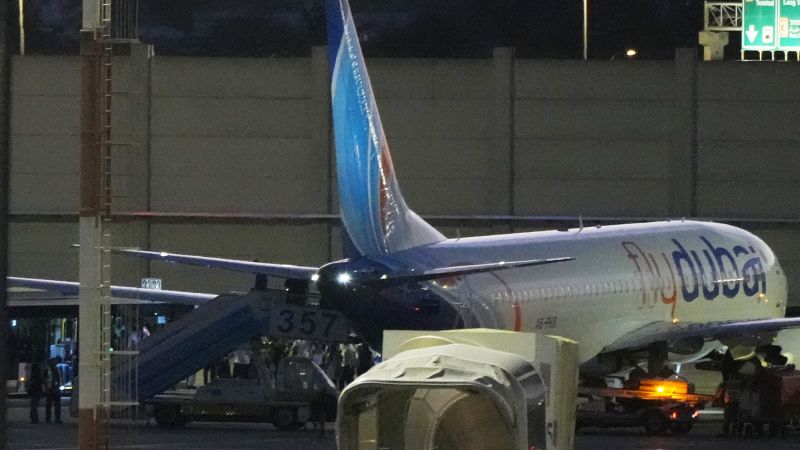
The Omani co-pilot accused of attacking the captain of a Flydubai flight bound for Tel Aviv had previously been removed from a role at Oman’s national airline following concerns about his alleged extremist views, according to sources familiar with the matter.
The pilot, identified as Hamam al-Hammami, was reportedly removed from flight-related duties at Oman Air after concerns were raised about his views. Two sources cited by CNN said he was taken out of flight training and assigned another role at the airline.
The disclosure has raised questions about how the pilot was subsequently able to obtain employment with Flydubai and operate as co-pilot on an international passenger flight.
According to ABC News, sources said al-Hammami had worked as a co-pilot trainee for Oman Air in 2024 when he was reportedly found with extremist materials. He was allegedly grounded from flying for a year but continued working for the airline in an administrative capacity.
The reports have not established whether the concerns previously raised in Oman were formally communicated to Flydubai or other authorities.
Attack aboard Tel Aviv-bound flight
The latest revelations follow an incident aboard Flydubai Flight FZ1073, which was travelling from Dubai to Tel Aviv on September 30.
Reuters reported that the aircraft, carrying 174 passengers and crew, was cruising at about 34,000 feet over Saudi Arabia when it suddenly lost more than 16,000 feet in roughly 30 seconds.
Israeli officials said the co-pilot attacked and stabbed the captain, Smit Machchhar, in what they described as an attempt to bring down the aircraft. Machchhar, despite his injuries, managed to unlock the cockpit door, allowing passengers and crew members to intervene.
Reserve pilots who were travelling aboard the aircraft subsequently took control of the plane and diverted it to Tabuk, Saudi Arabia, where it landed safely.
Machchhar was later transferred to the United Arab Emirates for medical treatment.
Investigation continues
The UAE Attorney General has ordered a specialist investigation into the incident, including whether it involved terrorist activity, prior planning or outside direction. Saudi authorities have also conducted an initial investigation into the cockpit assault.
Israeli officials have described the incident as a possible extremist attack, but investigators have not publicly established a final motive.
Reuters reported that Israeli security officials had found no evidence so far of Iranian involvement and initially believed the suspect may have acted alone. The investigation remains ongoing.
The new information about al-Hammami’s previous employment history is expected to form part of questions surrounding aviation security and the background checks conducted before he was employed by Flydubai.
CNN reported that al-Hammami’s LinkedIn profile indicated that he left Oman Air in February 2025 and subsequently worked for Royal Air Maroc before leaving that airline in January 2026. The profile has since been deleted.
It remains unclear why the concerns reportedly raised during his time with Oman Air did not prevent him from subsequently obtaining aviation employment elsewhere.
Flydubai has said the circumstances surrounding the incident remain under investigation and has declined to comment on specific details while the probe continues.
The case is likely to draw further scrutiny of pilot recruitment, information-sharing between airlines and aviation authorities, and procedures for identifying potential security risks before pilots are permitted to operate passenger flights.