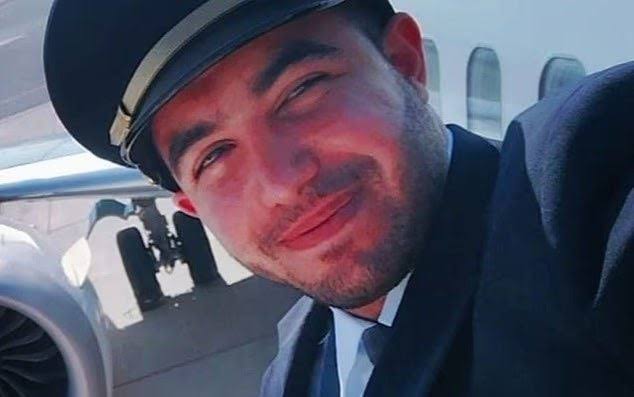
The attempted terrorist attack aboard a flydubai passenger aircraft bound for Tel Aviv has raised serious questions about the effectiveness of aviation background checks after reports emerged that the co-pilot had previously been removed from flying duties in Oman over concerns about extremist views.
The incident occurred on September 30 aboard flydubai Flight FZ1073, which was travelling from Dubai to Tel Aviv with more than 170 passengers and crew.
According to the UAE Attorney-General, the co-pilot attacked the captain with a crash axe kept inside the cockpit and attempted to take control of the aircraft. The plane subsequently made an emergency landing in Tabuk, Saudi Arabia, after passengers intervened and helped subdue the attacker.
The UAE authorities have classified the incident as an attempted terrorist act and said investigations are continuing to establish the circumstances, motive and any connections associated with the attack.
But the most pressing question emerging from the investigation is not only how the attack happened, but how the suspect was allowed to occupy a commercial cockpit in the first place.
Previous security concerns
The co-pilot has been identified by sources cited by Reuters as Hammam al-Hammami, an Omani national. The UAE authorities have not publicly confirmed his identity.
ABC News, citing senior intelligence and law-enforcement officials, reported that al-Hammami had previously been identified as a security concern while working as a co-pilot trainee with Oman Air in 2024.
According to those officials, he was found in possession of extremist material and was subsequently grounded from flying for a year. He was reportedly allowed to remain with Oman Air in an administrative capacity.
Other reporting has similarly said that Omani authorities had barred him from flying because of concerns about extremist views.
If those reports are accurate, they raise a fundamental aviation-security question:
What happened to the information gathered by Omani authorities after he was removed from flying duties?
More specifically, was the information shared with flydubai when he subsequently sought employment there?
Did flydubai know about the previous concerns?
The answer is not yet publicly established.
The Associated Press reported that a Gulf diplomat said al-Hammami underwent standard security checks before being hired by flydubai. However, the diplomat questioned whether those checks went sufficiently beyond conventional criminal-record screening to identify possible signs of radicalisation.
That claim has not been independently established as a finding against flydubai, and the airline has not publicly disclosed the full details of its recruitment and security-screening process.
Nevertheless, the reported history creates an obvious question for investigators:
If another airline and security authorities had previously identified concerns serious enough to remove the individual from flying duties, why did those concerns apparently not prevent him from later becoming a commercial co-pilot?
That question becomes even more important because pilots occupy one of the most security-sensitive positions in commercial aviation.
What about his online activity?
Reports have also drawn attention to social-media accounts and a LinkedIn profile associated with al-Hammami.
Al Jazeera reported that a LinkedIn profile bearing his name indicated that he had spent years at Oman Air before leaving in February 2025. The profile also reportedly contained employment information relating to Royal Air Maroc.
However, there is an important distinction.
Royal Air Maroc has said that al-Hammami completed a three-month theoretical training programme with the airline in 2025 as part of its pre-employment process, but that his application was not selected for employment.
Reports have also emerged concerning his social-media activity and material depicting extremist figures.
CNN, according to several media reports, reviewed a large number of deleted posts associated with accounts linked to al-Hammami. Some of the material reportedly contained extremist or hardline religious content and imagery associated with al-Qaeda figures.
But those posts, by themselves, do not establish that al-Hammami was a member of al-Qaeda or another terrorist organisation.
That distinction is particularly important because investigators have not publicly established such a connection.
Reuters reported that the investigation was still examining the suspect’s motive and possible connections, while a diplomat cited by the Associated Press said investigators had not found links to militant groups at that stage.
The questions investigators now face
The case raises several questions that aviation regulators and security agencies will need to answer.
First, was al-Hammami’s previous grounding by Oman Air documented as a security-related matter, and was that information communicated to flydubai?
Second, what exactly did flydubai’s background screening cover before he was employed?
Third, did the screening include intelligence or security information from another country, or was it limited primarily to information available through conventional employment and criminal-record checks?
Fourth, if information about previous extremist concerns existed, who was responsible for assessing whether those concerns made him unsuitable to operate a passenger aircraft?
And fifth, does the international aviation industry have an effective mechanism for transferring security-related information when pilots move between airlines and jurisdictions?
These questions do not amount to a conclusion that flydubai ignored a known terrorist threat. There is currently no public evidence establishing that the airline knowingly employed someone it knew posed a terrorist danger.
Instead, they highlight a potential information-sharing and vetting gap that investigators now have to examine.
The challenge of identifying genuine security threats
The case also illustrates the difficulty of aviation security screening.
A pilot’s religious, political or personal beliefs cannot by themselves constitute proof of terrorism or justify discriminatory treatment. Security agencies must distinguish between lawful beliefs and credible indicators of an intention to engage in violence.
At the same time, aviation authorities have a particularly high responsibility when credible security concerns emerge because pilots have direct access to aircraft controls and hundreds of passengers.
That makes the reported decision by Oman to remove al-Hammami from flying duties particularly significant.
If his previous restriction was genuinely based on security concerns, investigators will need to determine what was known, who knew it, when it was known and whether the information was passed to the people responsible for clearing him to fly again.
Investigation still ongoing
The UAE Attorney-General has said investigators are continuing to examine the incident, including the suspect’s motives and any related connections.
Australian authorities have also confirmed that a counter-terrorism team is examining al-Hammami’s links to Australia, adding another dimension to the international investigation.
For now, it would be premature to conclude that the attack was directed by a terrorist organisation or that any airline deliberately ignored a known threat.
But the reported history raises a legitimate question that aviation authorities will have to answer:
If a pilot had previously been removed from flying duties because of concerns about extremist views, how did he later pass the checks required to sit in the cockpit of a commercial aircraft bound for an international destination?
The answer could prove as important to aviation security as determining what happened inside the cockpit on Flight FZ1073.