Nigeria’s opposition landscape has undergone one of its most significant realignments in recent years, with politicians moving between the All Progressives Congress (APC), African Democratic Congress (ADC), Nigeria Democratic Congress (NDC), Peoples Democratic Party (PDP), Labour Party (LP) and other platforms ahead of the 2027 general elections.
What began as an attempt by major opposition figures to create a single political vehicle capable of challenging President Bola Ahmed Tinubu and the ruling APC has evolved into a more complicated contest involving competing parties, presidential ambitions and fresh coalition negotiations.
The development has left the opposition with greater political activity but, at the same time, renewed questions about whether its major blocs can overcome their differences before the 2027 presidential election.
The ADC moment
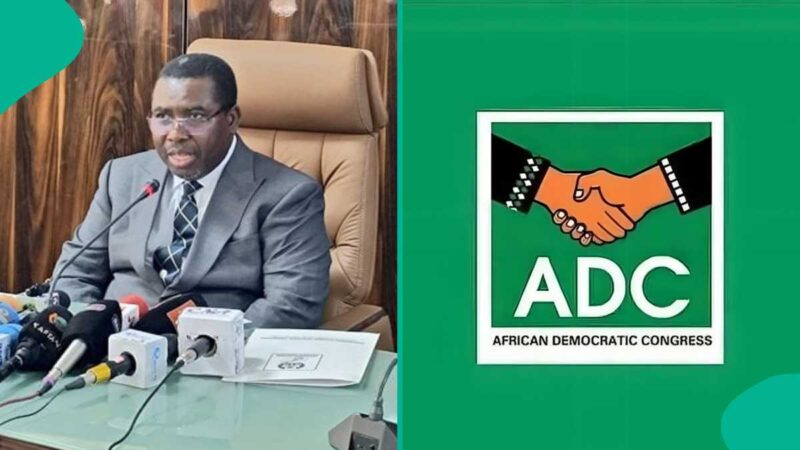
The African Democratic Congress emerged as the most prominent vehicle for the opposition realignment after prominent politicians from different parties rallied around the platform.
Former Vice-President Atiku Abubakar, former Anambra State governor Peter Obi, former Kano State governor Rabiu Kwankwaso and other political figures were initially associated with the coalition-building effort.
The arrangement generated expectations that the ADC could become a broad anti-APC platform and produce a single presidential candidate capable of consolidating opposition votes.
However, internal disagreements and legal and organisational disputes eventually exposed divisions within the coalition. Reuters reported in May that Obi and Kwankwaso had left the ADC-led arrangement, citing legal disputes and internal divisions.
The ADC subsequently secured a major legal reprieve when the Court of Appeal overturned a Federal High Court judgment that had ordered the deregistration of the party and four other political parties.
Atiku remained the ADC’s presidential candidate, while the party continued to position itself as a major opposition force.
The rise of the NDC
The biggest beneficiary of the ADC’s internal crisis has been the Nigeria Democratic Congress.
Peter Obi emerged as the NDC’s presidential candidate, with Rabiu Kwankwaso as his running mate. Their movement to the NDC represented a major shift in the opposition calculations because both politicians had significant political followings from the 2023 presidential election.
The NDC has since attracted additional political figures and lawmakers. In May, 17 members of the House of Representatives defected from the ADC to the NDC, while another lawmaker moved to the APC.
The Senate has also witnessed realignment. Recent defections have included Senator Victor Umeh and Senator Rufai Hanga to the NDC, while Senator Enyinnaya Abaribe moved from the ADC to the Labour Party.
The movement illustrates how party loyalty has become increasingly fluid as politicians position themselves for the 2027 contest.
PDP and Labour Party face a different challenge
The realignment has also placed pressure on established opposition parties, particularly the PDP and Labour Party.
The PDP remains one of Nigeria’s largest opposition parties and retains a nationwide political structure, elected officials and significant historical support. But internal disputes and defections have weakened its cohesion ahead of 2027.
The Labour Party, meanwhile, is attempting to rebuild following Obi’s departure. His 2023 presidential campaign significantly increased the party’s national profile, particularly among younger and urban voters, but his subsequent movement to the NDC has altered Labour’s political calculations.
The NNPP has similarly faced the consequences of Kwankwaso’s departure. The former Kano governor remains an important political figure, particularly in Kano and parts of the North, but his exit has weakened the party’s position in the emerging national opposition configuration.
A wider opposition beyond the big parties
The emerging opposition picture is no longer simply a contest between the APC and the traditional PDP.
Smaller parties such as the Peoples Redemption Party (PRP), Social Democratic Party (SDP) and Allied Peoples Movement (APM) have also been involved in discussions about creating a broader opposition arrangement.
In September, representatives of six opposition parties — ADC, APM, NDC, PDP, PRP and SDP — participated in talks convened by the G100 political pressure group on the possibility of developing a common framework for the 2027 election.
The proposed arrangement included working groups examining issues such as opposition unity, a national reform programme and a mechanism for selecting a possible common presidential candidate.
But crucially, the talks did not immediately resolve the central question: who should lead the opposition?
Atiku versus Obi remains the central problem
The difficulty confronting the opposition is not necessarily a lack of political personalities. It is the abundance of them.
Atiku is seeking the presidency under the ADC, while Obi is running under the NDC. Both have substantial political profiles and significant constituencies.
Their supporters have continued to debate which candidate is best positioned to challenge Tinubu.
In September, Kwankwaso publicly urged Atiku to withdraw from the presidential race, while Obi indicated that he was not prepared simply to step aside for Atiku.
Obi has also rejected suggestions that he previously turned down a formal offer to become Atiku’s running mate, saying no such proposal was made.
The disagreement has become one of the biggest obstacles to the opposition’s effort to reproduce the kind of consolidated challenge that many opposition supporters believe is necessary to defeat the APC.
The search for a compromise
Despite the disagreements, efforts to create some form of cooperation have not stopped.
As recently as October 3, G100 stakeholders were reported to be considering alternative arrangements, including the possibility of a second-round voting strategy, as efforts to persuade Atiku and Obi to support a single opposition candidate continued.
This suggests that the opposition’s strategy may eventually move beyond a simple merger or the selection of one candidate before the election.
The options could include electoral alliances, negotiated withdrawals, coordinated campaigns or agreements designed to prevent opposition votes from being excessively divided.
What the realignment means for APC
For the APC, the fragmented opposition presents both a challenge and an opportunity.
The ruling party remains the dominant national political organisation, with the advantages of incumbency and an established nationwide structure. But the emergence of multiple opposition blocs also means the APC faces a more politically fluid environment than it did at the beginning of the current electoral cycle.
Recent analysis has highlighted opposition fragmentation as one of the factors that could benefit Tinubu’s re-election prospects despite public dissatisfaction over economic and security challenges.
At the same time, opposition leaders argue that the APC can be defeated if anti-incumbency sentiment is converted into a coordinated electoral strategy.
A new opposition map
Nigeria’s opposition politics is therefore moving from a relatively familiar APC-versus-PDP framework toward a more complicated multi-party contest.
The ADC has emerged as Atiku’s principal platform. The NDC has become the political home of Obi and Kwankwaso. The PDP is trying to preserve its relevance, while Labour, NNPP, PRP, SDP and other parties are weighing their options.
The result is an opposition landscape characterised by defections, new alliances, competing presidential ambitions and continuing negotiations.
The critical question ahead of 2027 is no longer simply which opposition party is strongest.
It is whether the different opposition blocs can transform their combined political support into a coherent electoral strategy.
If they remain divided, the APC could benefit from opposition vote-splitting. If they reach a credible agreement, the 2027 election could become a substantially more competitive contest.
For now, however, Nigeria’s opposition remains in transition — with the final political map still far from settled.