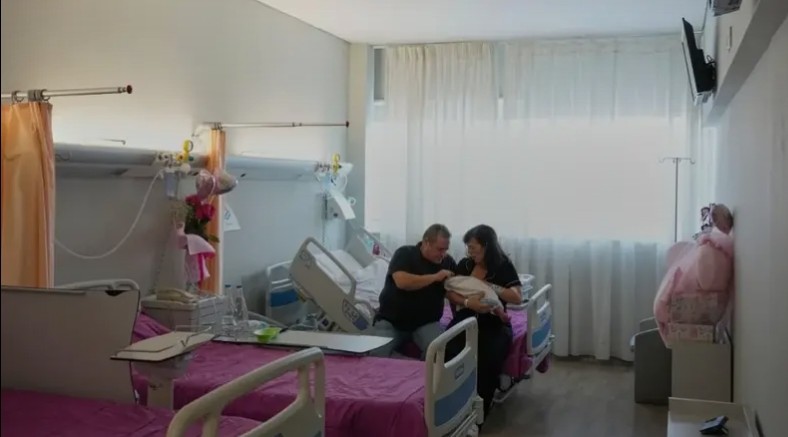
A 54-year-old Greek woman has given birth to a baby girl in Athens using an embryo that had been frozen for more than 22 years, in a birth that came just months after the couple lost their adult son in a car accident, and after a race against Greece’s legal age limit for fertility treatment.
Cristina Rapti-Tzelepi and her husband, Constantinos Raptis, 60, welcomed their daughter, Georgia, on Wednesday, September 9, 2026, at a private maternity clinic in Athens. The baby weighed 3.49 kilograms (7 pounds, 11 ounces) and was reported healthy.
The pregnancy followed profound personal loss for the couple. In October 2025, their 21-year-old son conceived from the same original batch of embryos during Rapti-Tzelepi’s first IVF attempt in 2004 was killed in a road accident. In the months that followed, the couple decided to pursue another embryo transfer using one of the remaining embryos that had stayed in cryopreservation since 2004.
“We decided to give life a second chance, to make a new start, bring new life into our home and keep our family’s story going,” Rapti-Tzelepi said from her hospital bed on Friday, in a room decorated with pink balloons and flowers. She added that her hope for her daughter was for her to grow up healthy and joyful, much like her late brother had filled their home with laughter.
Rapti-Tzelepi’s decision to proceed came with added pressure: Greek law imposes a strict age limit of 54 for women to complete in vitro fertilisation procedures and secure the necessary approval from the country’s national fertility authority. Because she was approaching that threshold, she had only a narrow window to act. “I only had a 2½-month window,” she said, describing the process as stressful but manageable with the support of her medical team.
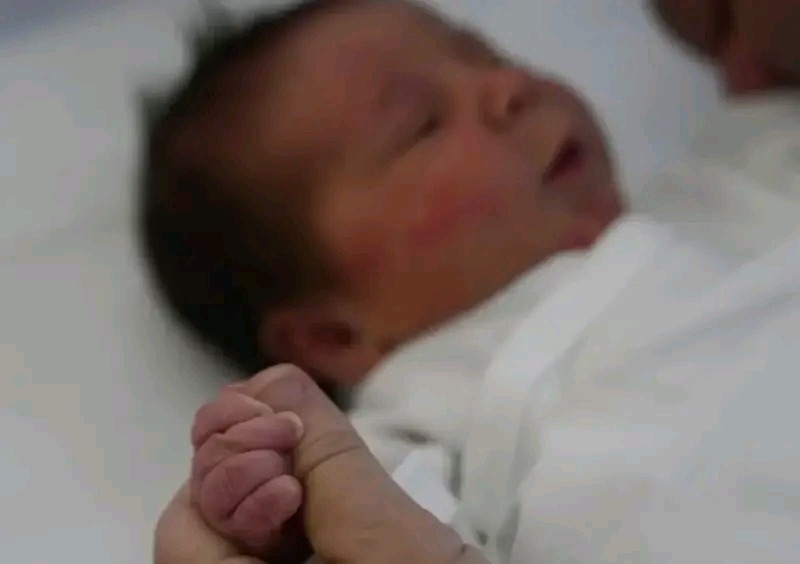
The embryo transfer procedure was carried out on December 23, 2025, at a private clinic in Athens under the supervision of Dr Konstantinos Pantos, Rapti-Tzelepi’s gynaecologist and head of the Hellenic Society of Reproductive Medicine. The embryo itself had been cryopreserved on March 17, 2004 meaning that, by the time of Georgia’s birth, exactly 22 years, five months and 23 days had passed between freezing and live birth.
According to Pantos’s medical team, this interval represents the longest internationally documented case of a woman’s own cryopreserved embryo as opposed to a donor embryo resulting in a live birth. Previous recognised milestones for autologous embryos of this kind included cases in Japan, where an embryo was stored for 18 years and three months before resulting in a birth, and in Israel, with a comparable long-term storage case.
The Greek case should be distinguished, however, from the current global record for frozen embryos more broadly. In the United States, several children have been born from donor embryos frozen for considerably longer periods including a 2022 case in which a couple in Ohio welcomed a baby using an embryo frozen for more than 30 years through a programme known as “embryo adoption,” a feat recognised by Guinness World Records. The distinguishing feature of the Athens case, doctors say, lies in the fact that the woman used her own embryo, rather than one donated by another party, after more than two decades in storage.
The Athens clinical team has compiled the laboratory and clinical data from the case and intends to submit its findings for publication in an international medical journal, though independent verification of the milestone will depend on that peer-review process.
The case has also reignited debate in Greece over the country’s strict age restrictions for fertility treatment. Dr Pantos argued that the 54-year limit warrants review, pointing to Greece’s ongoing decline in birth rates as a reason to reconsider the policy. “The law is very strict: 54 plus one day is not allowed,” he said, underscoring how narrowly Rapti-Tzelepi’s case fell within the legal window.
For Rapti-Tzelepi and Raptis, however, the milestone carries a deeply personal significance far beyond the medical achievement, a family finding a path forward after tragedy, and a new daughter arriving to carry their family’s story into its next chapter.