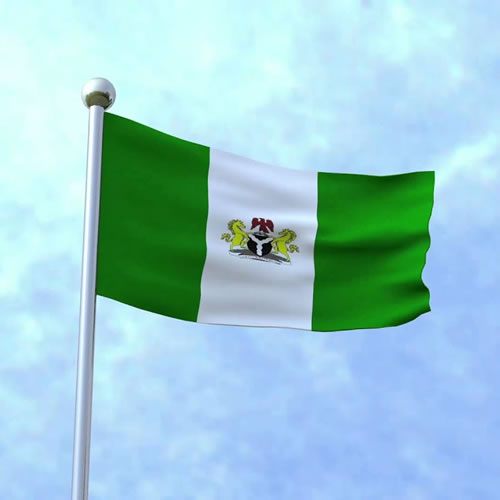
Nigeria is marking 27 consecutive years of civilian rule, a milestone that would have been difficult to imagine during the country’s long history of military interventions.
Since May 1999, when former military ruler Olusegun Obasanjo was sworn in as president following the return to civilian government, power has changed hands through successive elections without another military takeover. The continuity itself represents a significant departure from the instability of the preceding decades.
But as Nigeria reflects on 27 years of uninterrupted democracy, a more difficult question remains: what has actually changed for citizens?
The answer is mixed. Democracy has brought political continuity, greater civic space and institutional reforms, but Nigerians continue to confront insecurity, poverty, weak public services, infrastructure deficits and concerns about the credibility of elections.
From military rule to uninterrupted civilian government
The most obvious achievement since 1999 is the survival of constitutional government.
Nigeria experienced repeated military coups and long periods of military rule after independence. The 1999 transition ended 15 years of uninterrupted military government and established the Fourth Republic.
Since then, the country has held presidential and legislative elections in 1999, 2003, 2007, 2011, 2015, 2019 and 2023.
Political power has also changed hands between parties. The 2015 election produced Nigeria’s first transfer of power from an incumbent governing party to an opposition party through the ballot box, when Muhammadu Buhari’s APC defeated the PDP administration of Goodluck Jonathan.
The 2023 election again produced a change in the political landscape, although the APC retained the presidency with Bola Tinubu succeeding Buhari.
The government’s own assessment of the 27-year period describes uninterrupted democratic governance as a major achievement and a sign of institutional resilience.
Elections have survived, but trust remains a problem
Nigeria’s elections have become more competitive and the country has avoided a return to military rule, but the quality of elections remains one of the central concerns surrounding the Fourth Republic.
Freedom House’s 2026 assessment says Nigeria has made significant improvements to electoral quality since 1999, but elections continue to be affected by irregularities.
The 2023 general elections generated particularly strong criticism from opposition parties, civil society organisations and international observers over issues including the management of results, voter intimidation, violence and the performance of the Independent National Electoral Commission.
Freedom House also noted that voter turnout in the 2023 presidential election fell to a record-low 27 per cent of registered voters, reflecting widespread public disengagement from the electoral process.
The challenge for Nigeria is therefore no longer simply holding elections. It is ensuring that citizens believe their votes are accurately counted and that political institutions operate fairly.
Democratic institutions have expanded, but remain under pressure
The past 27 years have seen the expansion of institutions designed to strengthen accountability and democratic governance.
The National Assembly has become a permanent centre of political power, state governments have operated continuously under elected administrations, and civil society and the media have played increasingly important roles in scrutinising government.
Nigeria also has a vibrant media environment and an increasingly influential digital public sphere.
However, rights organisations continue to document pressure on journalists, activists and online commentators.
Human Rights Watch’s 2026 Nigeria report, for example, highlighted arrests and prosecutions involving journalists and social-media commentators under laws including the Cybercrimes Act.
Freedom House similarly said Nigeria’s civil liberties remain constrained by issues including restrictions on expression, abuses by security agencies and discrimination.
The result is a democratic system that has survived, but whose institutions continue to face questions about accountability, independence and respect for fundamental rights.
Security remains one of democracy’s biggest tests
Insecurity has arguably become one of the most persistent challenges of the Fourth Republic.
The country has faced Boko Haram and other insurgencies in the North-East, banditry and kidnapping in the North-West and North-Central regions, communal violence and separatist-related violence in parts of the South-East.
Freedom House’s latest assessment identifies insurgencies, kidnapping and communal and sectarian violence as continuing threats to millions of Nigerians.
The persistence of insecurity matters beyond the immediate loss of lives. It affects farming, investment, education, transportation and the ability of citizens to move freely.
For many Nigerians, therefore, the value of democracy is judged partly by whether elected governments can provide basic security.
Poverty remains a major measure of democratic performance
Economic conditions provide another complicated picture.
Nigeria’s economy has grown since 1999 and has become more diversified in areas such as telecommunications, financial services, technology and entertainment. Yet economic growth has not translated into sufficient improvements in living standards for large sections of the population.
The World Bank estimates that 69.6 per cent of Nigerians lived below the lower-middle-income poverty line of $4.20 a day in 2025, while about 123 million people were living in extreme poverty.
The International Monetary Fund similarly reported in June 2026 that poverty remained high and estimated that 63 per cent of Nigerians were living below the national poverty line, while about 27 million people faced food insecurity in late 2025.
These figures highlight one of the central contradictions of Nigeria’s democratic experience: macroeconomic growth and political stability have not automatically translated into improved household welfare.
Infrastructure: progress alongside persistent deficits
Nigeria has also seen major infrastructure development since 1999, particularly in telecommunications, roads, airports, rail and digital services.
The telecommunications revolution is perhaps one of the clearest examples of change. Mobile phones and internet access have transformed communication, commerce, banking and social interaction.
But electricity remains a major weakness.
President Tinubu acknowledged in his 2026 Democracy Day address that Nigeria’s power sector inherited chronic generation shortages, unreliable gas supply, weak transmission infrastructure and a large metering deficit. His administration has pointed to reforms under the Electricity Act and investments in off-grid and mini-grid systems as part of its response.
The IMF has also identified electricity, infrastructure, agriculture, human capital and security as priority areas for Nigeria’s development.
The contrast illustrates the broader infrastructure story: Nigeria has built more, but the gap between what citizens need and what public infrastructure consistently delivers remains substantial.
The cost-of-living question
Perhaps the most immediate measure of whether democracy has improved Nigerians’ lives is what households can afford.
Inflation, food prices, fuel costs and declining real incomes have placed considerable pressure on households in recent years.
The World Bank reported that although inflation has eased substantially from its 2025 peak, food inflation remained high, reaching 20.3 per cent in July 2026. It also said household incomes had not fully recovered and poverty remained high.
The government argues that recent economic reforms are beginning to restore macroeconomic stability and strengthen public finances. The IMF also acknowledged improvements in Nigeria’s macroeconomic position, including stronger external reserves and continued economic growth.
The challenge is translating those improvements into higher purchasing power and better living conditions for ordinary households.
So, what has changed?
After 27 years, the strongest evidence of progress is not that Nigeria has solved its problems. It is that the country has remained under civilian constitutional rule for nearly three decades despite the enormous pressures placed on the political system.
That continuity matters.
Governments have changed. Political parties have won and lost elections. Presidents have come and gone. The military has remained outside direct political power.
But the weaknesses are equally clear.
Nigeria continues to struggle with insecurity, poverty, unemployment, inadequate electricity, weak public services, corruption, electoral distrust and concerns over human rights.
The World Bank says Nigeria has made meaningful progress in restoring macroeconomic stability, but stresses that household incomes have yet to recover fully and poverty remains high.
Democracy beyond elections
The 27th year of the Fourth Republic therefore offers a reason to celebrate — but also a reason to ask harder questions.
Democracy is more than holding elections every four years. It is also about whether citizens can influence government, hold public officials accountable, access justice, live securely, express themselves freely and experience improvements in their everyday lives.
Nigeria has made undeniable progress in maintaining democratic continuity since 1999.
The unfinished question is whether the next phase of the Fourth Republic can convert that political continuity into better institutions, greater security, stronger infrastructure and a measurable improvement in the living standards of ordinary Nigerians.
After 27 years, the test of democracy is increasingly not simply whether Nigeria remains democratic, but whether democracy delivers enough to convince citizens that it is working for them.