Minister of Finance and Coordinating Minister of the Economy, Taiwo Oyedele, has warned that restoring petrol subsidy could push pump prices to at least ₦2,000 per litre and weaken the naira to around ₦3,000 to the dollar.
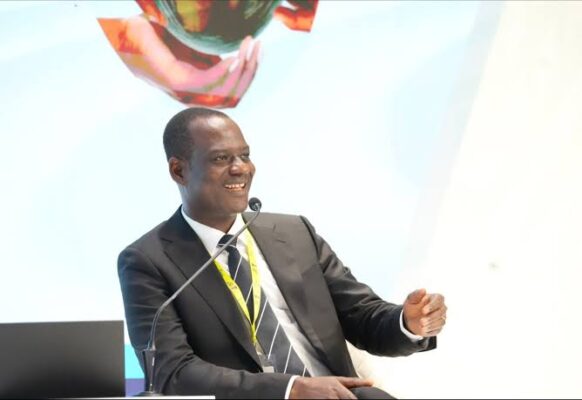
Oyedele gave the warning on Thursday during a press briefing in Abuja on rising petrol prices and renewed calls for the Federal Government to restore the subsidy.
He said reintroducing the policy could reduce government revenue, threaten Nigeria’s credit rating, increase borrowing costs and put pressure on foreign exchange reserves.
According to the minister, these developments could weaken the naira and reverse progress made in controlling inflation.
“Our estimate is that the exchange rate could approach ₦3,000 to the dollar within months, and so-called subsidised petrol would cost at least ₦2,000 a litre,” he said.
Oyedele stressed that the figures represented the government’s projections of the possible consequences of restoring the subsidy.
He argued that although subsidy could initially reduce the amount motorists pay at filling stations, the government would still have to finance the difference between the market price and the regulated pump price.
He warned that funding the policy could force the government to delay salary and pension payments, increase taxes or resort to money creation, potentially worsening inflation.
The minister also questioned how proponents of subsidy restoration intended to finance the policy sustainably.
“We remain open to ideas, but any credible proposer should answer three questions. Number one, what will it cost? Number two, how will it be funded sustainably? Number three, what pump price will it deliver?” he said.
Oyedele added that the government was willing to consider proposals backed by clear financial calculations.
President Bola Tinubu announced the removal of petrol subsidy on May 29, 2023, as part of efforts to reduce pressure on public finances.
The policy led to a sharp increase in petrol prices, contributing to higher transportation and living costs and prompting repeated calls for the government to reconsider its decision.
Oyedele said the removal of the subsidy released ₦15.8 trillion to the Federation between June 2023 and December 2025, with ₦10.4 trillion shared among state and local governments.
He maintained that restoring the subsidy would place a significant burden on government finances and could divert resources from public services, including healthcare, education, infrastructure and security.
The minister also argued that subsidised petrol could encourage cross-border smuggling by making fuel cheaper in Nigeria than in neighbouring countries.
Oyedele’s comments came as the Federal Government announced measures to cushion the impact of rising petrol prices.
The government has introduced a 30-day discount on petrol sold at Nigerian National Petroleum Company Limited retail outlets, with priority given to public transport operators.
It is also negotiating a proposed ₦1,350-per-litre ceiling on the ex-gantry or landing cost of petrol. Under the arrangement, refiners and importers would initially absorb costs above the ceiling and recover the difference when market conditions improve.
The government says the measures are intended to moderate price fluctuations without restoring the former blanket subsidy.
Oyedele maintained that the administration would continue to pursue targeted relief measures rather than return to a system he considers financially unsustainable.
The subsidy debate remains a major economic and political issue as Nigerians contend with high transport costs and pressure on household budgets ahead of the 2027 general elections.