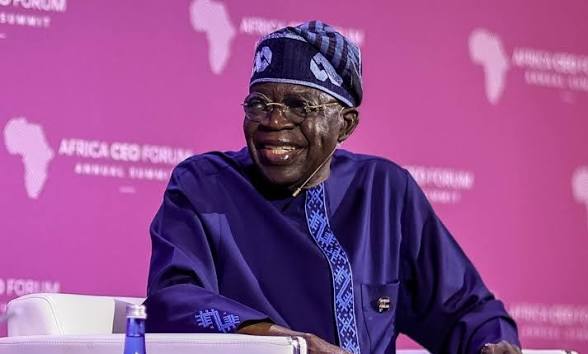
President Bola Tinubu has welcomed the World Bank’s latest report on Nigeria’s economy, saying its findings show that his administration’s economic reforms are delivering results and creating a stronger foundation for sustained growth.
The report, released in October 2026, said Nigeria’s economy grew by 4.2 per cent in the first half of the year, compared with 3.9 per cent in the corresponding period of 2025.
Titled ‘Beyond the Federal Purse: How Higher Revenues Reshaped State Priorities’, the World Bank’s latest Nigeria Development Update also projected that the economy would grow by an average of 4.4 per cent between 2026 and 2028.
In a statement issued on Sunday by his Special Adviser on Information and Strategy, Bayo Onanuga, Tinubu said the findings validated the government’s decision to remove the petrol subsidy, unify the foreign exchange market and strengthen fiscal discipline.
The President said the reforms had increased government revenues, improved economic stability and created more fiscal space for federal and state governments to invest in development.
According to the World Bank, gross federation revenues increased by 69 per cent in real terms between 2023 and 2025, with state governments recording the largest increase in revenue flows.
The report also found that aggregate state revenues rose by about 93 per cent in real terms during the period, while expenditure increased by approximately 92 per cent.
State governments expanded capital spending, with its share of total expenditure rising from 46 per cent to 61 per cent. Transport infrastructure accounted for the largest increase, alongside higher spending on housing, agriculture and other investments intended to support economic growth.
The report said 29 of 33 states reviewed shifted their spending towards economic infrastructure, while internally generated revenue increased in real terms in 31 of 35 states.
Tinubu urged state governments to manage their increased revenues prudently and prioritise projects that improve living standards, particularly in healthcare, education and infrastructure.
The President also highlighted the World Bank’s finding that Nigeria’s poverty rate had stabilised for the first time since 2019.
The bank expects poverty to decline gradually if economic growth outpaces population growth.
However, it warned that elevated inflation continues to weigh on household purchasing power.
The report noted that inflation fell from 27.6 per cent in January 2025 to 15.2 per cent in December 2025, but higher global fuel prices linked to the conflict in the Middle East, alongside seasonal food-price pressures, slowed further progress.
The World Bank projected that inflation could ease to about 12 per cent by 2028.
Nigeria’s external position also strengthened during the first half of 2026. The country’s current account surplus rose to $12 billion, equivalent to about 7.1 per cent of gross domestic product, from $8.6 billion in the corresponding period of 2025.
Gross external reserves also increased from $45.5 billion at the end of 2025 to more than $54 billion in September 2026, according to the report.
Despite the reported improvements in economic indicators, Tinubu acknowledged that more needed to be done to ensure the benefits reached ordinary Nigerians.
“The dividends of reform are becoming visible. But more work remains to ensure they fully translate into better living standards for every household, starting with lower food prices and decent jobs for our young people,” he said.
The President said his administration would maintain its reform programme while placing greater emphasis on inclusive growth under the Renewed Hope Agenda.
He also pledged to expand targeted cash transfers, accelerate the deployment of compressed natural gas for transportation, improve agricultural productivity and increase access to affordable healthcare and quality education.
According to the statement, targeted cash transfers had reached more than 10 million households.
Tinubu commended the federal government’s economic management team and state governors for their cooperation in implementing the reforms.
The World Bank, however, stressed that sustaining economic growth and improving living standards would depend on maintaining reform momentum, strengthening public service delivery, improving spending efficiency and creating conditions for private-sector investment and job creation.