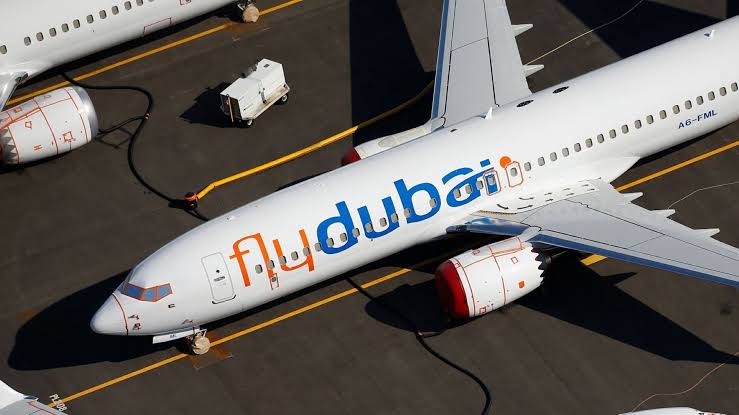
The attempted takeover of a Flydubai flight bound for Tel Aviv has quickly become more than an aviation security incident, with competing political narratives emerging around the motives of the alleged attacker and the wider Israeli-Palestinian conflict.
From a pro-Palestinian perspective, the central argument is not that Palestinians or pro-Palestinian groups were responsible for the incident. Rather, it is that the episode could be politically useful to Israeli Prime Minister Benjamin Netanyahu by reinforcing the security narrative that has long featured prominently in Israeli politics.
Flydubai Flight FZ1073 was travelling from Dubai to Tel Aviv on September 30 when its co-pilot allegedly attacked the captain in the cockpit. The aircraft subsequently plunged more than 16,000 feet before passengers and off-duty pilots intervened and helped regain control. The plane eventually landed safely in Tabuk, Saudi Arabia.
The UAE has since ordered an investigation into whether the incident involved terrorist activity, prior planning or outside direction. On Saturday, the UAE prosecutor general described the incident as an attempted “terrorist attack.”
However, the investigation has not established a political motive or demonstrated a connection to Hamas, Palestinians, Iran or another organisation.
Why Netanyahu could benefit politically
The incident occurred at a particularly sensitive moment for Israel, where national security remains a central political issue.
Netanyahu has already framed the incident in security terms, saying the co-pilot appeared to have undergone radical Islamist indoctrination. Israeli officials have also suggested that the attack may have been intended to bring down the aircraft.
From a pro-Palestinian viewpoint, this creates an opportunity for Netanyahu to reinforce a political message that Israel faces persistent threats from Islamist violence and that heightened security measures are necessary.
That does not establish that Netanyahu caused or orchestrated the incident. Instead, the argument concerns political utility: an incident involving a flight carrying predominantly Israeli passengers can strengthen the political salience of security, terrorism and threats against Israelis.
The Washington Post noted that the incident has already entered Israel’s political debate, with Netanyahu’s supporters presenting him as a security-focused leader while critics have questioned how the alleged attacker was able to board the flight in the first place.
The Palestine connection remains unproven
This is where caution is particularly important.
The aircraft was travelling to Israel and reportedly carried more than 170 people, most of them Israeli passengers. That fact alone does not establish that the incident was connected to the Israeli-Palestinian conflict.
Israeli officials have raised the possibility of radicalisation, but investigators have not publicly established who, if anyone, influenced or directed the co-pilot.
Reuters reported that Israeli security officials had not identified Iranian involvement and that the co-pilot was believed to have acted alone, although the investigation was continuing.
That leaves an important distinction between what happened and how the event is being interpreted politically.
Could it shift attention away from Gaza?
A pro-Palestinian reading also focuses on the broader information environment.
The Gaza war and its humanitarian consequences have generated intense international criticism of Israel, while Israel has consistently argued that its military operations are driven by security threats and the need to protect its population.
An incident apparently targeting an Israel-bound aircraft can shift public discussion toward the vulnerability of Israeli civilians and the threat of terrorism.
From the pro-Palestinian perspective, this could divert some attention from questions about Palestinian civilian casualties, Gaza’s humanitarian situation and Israel’s military conduct.
That is an interpretation of the political consequences, not evidence that the incident was deliberately staged or exploited for that purpose.
Security measures could also strengthen Israel’s position
The incident has already prompted discussion of tighter aviation security.
Israeli authorities have said they will increase scrutiny of pilots flying into Israel after the incident. Netanyahu also referred to a security “loophole” concerning how the co-pilot was able to operate a flight to Israel.
A pro-Palestinian analysis could argue that such measures may further institutionalise Israel’s security-first approach, particularly towards individuals from countries that do not have diplomatic relations with Israel.
But there is another side to the argument: if a pilot genuinely attempted to crash a passenger aircraft, stronger screening could be viewed as a conventional aviation-security response rather than a political measure.
Who actually benefits?
The phrase “only one man benefits” should therefore be treated as political commentary rather than an established fact.
Netanyahu may gain politically from an incident that reinforces his longstanding emphasis on security and terrorism, particularly at a time when Israel’s political debate remains heavily focused on national security. But the episode also creates potential problems for his government.
The immediate question is how an individual who reportedly had previous security concerns was able to become part of an international flight crew. Reports have indicated that the co-pilot had previously faced restrictions on flying in Oman because of concerns about extremist views, although details of his employment history and the handling of those concerns remain under investigation.
If investigators establish serious failures in recruitment or intelligence-sharing, the incident could instead become an example of a security lapse.
The larger political battle
For Palestinians and their supporters, the broader concern is that isolated acts of violence can be used to frame an entire political conflict primarily through the lens of terrorism and Israeli security.
For Israel and its supporters, the counterargument is that attacks against Israeli civilians and threats to Israeli transportation infrastructure are genuine security concerns that cannot be separated from the wider regional conflict.
Both narratives will likely continue as investigators establish what happened.
For now, the confirmed facts are narrower: a Flydubai co-pilot allegedly attacked the captain, the aircraft experienced a dramatic loss of altitude, passengers and other crew members intervened, and the aircraft landed safely in Saudi Arabia. The UAE is investigating the incident as a possible terrorist attack, but the precise motive, whether the suspect acted alone and whether there was any connection to the Israeli-Palestinian conflict have not been conclusively established.
The political significance of the incident may ultimately depend less on what investigators discover about the suspect’s personal motives and more on how governments and political actors use the event to shape the continuing debate over security, Israel and Palestine.