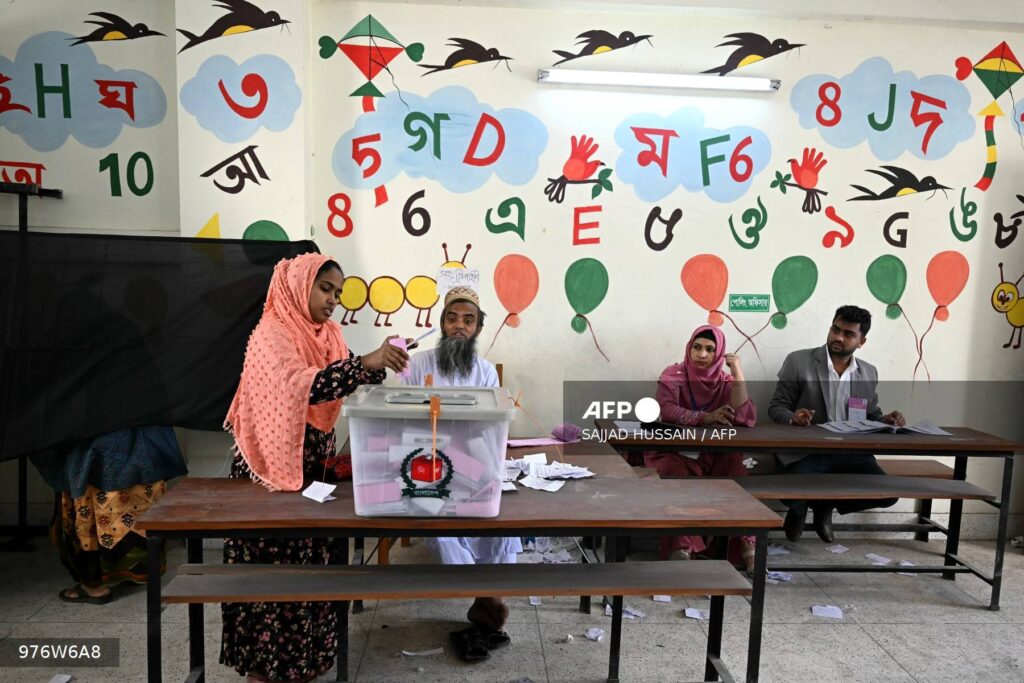
Bangladesh is voting in landmark elections today, marking the country’s first democratic contest since a deadly uprising in 2024 toppled the long-standing government of Sheikh Hasina and ushered in a new political era for the South Asian nation.
The polls represent a pivotal moment for Bangladesh’s democracy, with political parties that were systematically marginalized and crushed during Hasina’s tenure now returning to compete freely for the first time in years. The election is being closely watched as a test of whether the country can successfully transition from authoritarian rule to a more open and competitive political system.
The 2024 uprising, which resulted in significant loss of life and widespread civil unrest, fundamentally reshaped Bangladesh’s political landscape. Mass protests driven by economic grievances, allegations of corruption, and demands for democratic freedoms eventually forced Hasina from power after her years-long grip on the country’s institutions.
Voter turnout has been closely monitored throughout the day, with early reports suggesting significant public engagement as citizens exercise their democratic rights in what many view as the most consequential election in recent Bangladeshi history. Security forces have been deployed across the country to ensure peaceful voting, though tensions remain high in some areas.
Opposition parties that faced severe repression under the previous government, including arrests of their leaders, bans on political activities, and restrictions on media coverage, have seized the opportunity to rebuild their organizations and present their platforms to voters. The revival of genuine political competition has energized many Bangladeshis who felt excluded from the political process for years.
International observers are monitoring the election to assess its credibility and fairness, with the global community hoping to see Bangladesh establish a more democratic foundation after the turbulent events of 2024. The election’s conduct will be scrutinized as an indicator of whether the country’s institutions can support free and fair democratic processes.
Key issues dominating the campaign have included economic recovery, accountability for violence during the uprising, constitutional reforms, and measures to prevent future authoritarian backsliding. Candidates across the political spectrum have promised change, though skepticism remains among voters who have witnessed broken promises before.
The outcome of the election will determine not only Bangladesh’s immediate political direction but also whether the sacrifices made during the deadly uprising translate into lasting democratic gains. Results are expected in the coming days, with the nation anxiously awaiting to see which vision for its future will prevail.
For many Bangladeshis, particularly young people who participated in the protests that brought down the old regime, this election represents both hope and uncertainty as they seek to build a more inclusive and accountable political system from the ashes of authoritarian rule.