
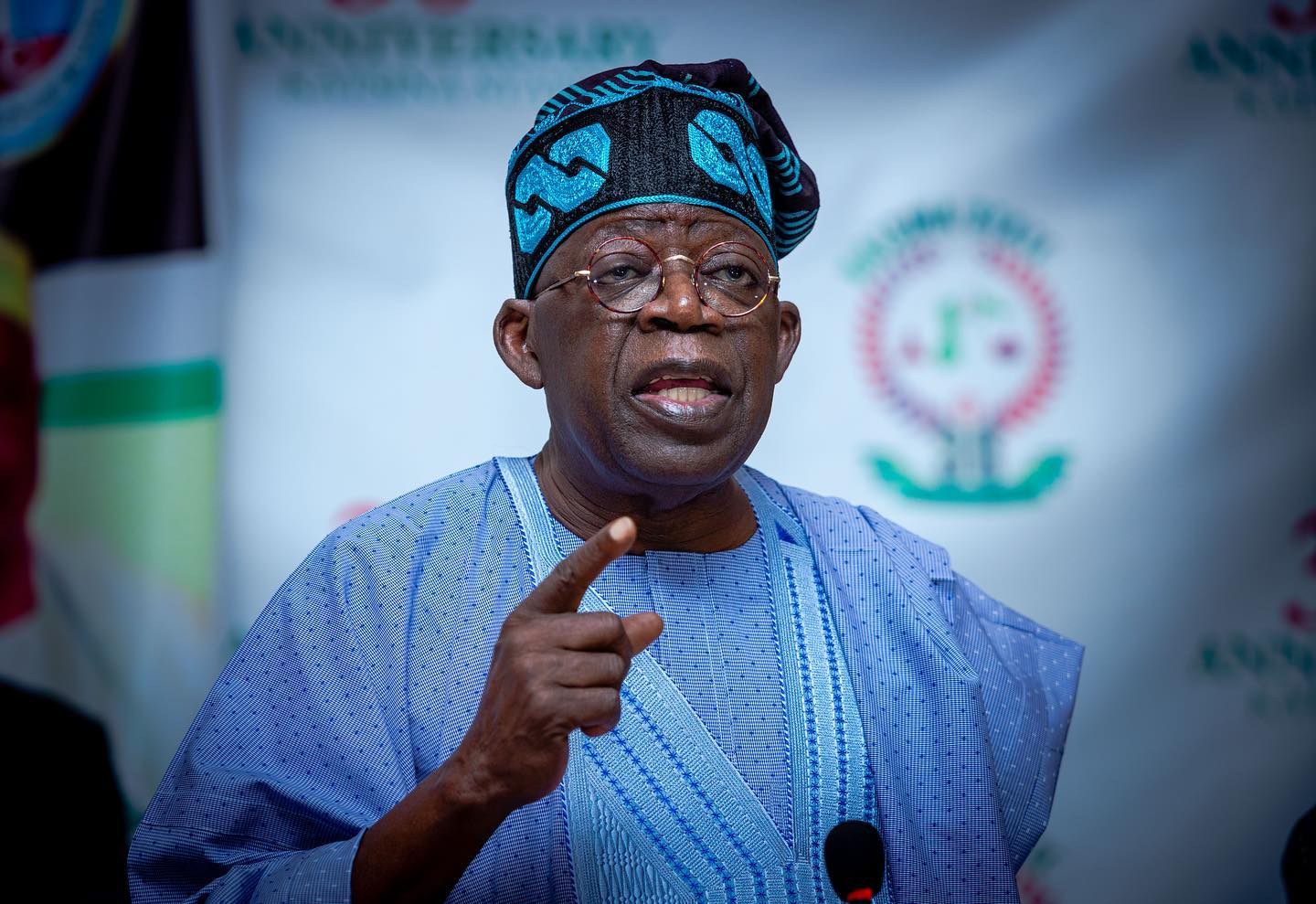
As APC state chapters across Nigeria rush to endorse president for 2027, questions mount about authenticity, governance priorities, and disconnect from economic realities
A carefully orchestrated political drama is unfolding across Nigeria, as state chapters of the All Progressives Congress (APC) engage in what critics describe as a coordinated endorsement spectacle for President Bola Ahmed Tinubu’s 2027 re-election bid—more than a year before voters will cast their ballots.
The latest addition to this nationwide performance came from Anambra State, where the APC chapter formally declared Tinubu its “sole candidate” for 2027, citing his performance and pledging party unity. But Anambra is merely one actor in a much larger production that has seen similar endorsement ceremonies staged from Lagos to Kano, Rivers to Kaduna, Plateau to Oyo, and virtually every corner of the country.
The pattern is remarkably consistent: party stakeholders convene, lavish praise on the president’s “unprecedented achievements,” unanimously pass resolutions backing his re-election, and pledge their structures’ “total commitment” to delivering electoral victory. State chairmen speak of “organic grassroots support” while critics see something far more calculated.
The Synchronized Show
Political observers note that these endorsements bear all the hallmarks of central coordination rather than spontaneous expressions of support. The timing, messaging, and theatrical elements are too uniform to be coincidental. State after state, the script remains essentially unchanged—only the location and cast of characters differ.
“What we’re witnessing is political theater designed to create an illusion of inevitability,” says Dr. Chioma Nwosu, a political analyst at the University of Lagos. “These are not grassroots movements. They’re carefully stage-managed events involving party officials and government appointees, not ordinary party members or citizens.”
The endorsement wave raises fundamental questions about priorities. With Nigeria grappling with severe economic challenges—soaring inflation, currency instability, widespread poverty, and declining living standards—the ruling party’s focus on 2027 electoral calculations strikes many as tone-deaf at best, cynical at worst.
The Economic Disconnect
Perhaps nowhere is the disconnect more glaring than in the contrast between party officials’ enthusiasm and ordinary Nigerians’ daily struggles. While APC chairmen praise Tinubu’s “transformational leadership,” millions of citizens cannot afford basic necessities. While endorsement rallies celebrate “unprecedented infrastructure development,” businesses are collapsing under the weight of high operating costs and foreign exchange challenges.
“They’re endorsing a president for 2027 while people can’t feed their families in 2026,” observes Maryam Ibrahim, a civil society activist in Kano. “It shows where their priorities lie—not with governance or improving lives, but with retaining power.”
The unemployment crisis, particularly among youth, receives no mention at these endorsement rallies. The security challenges plaguing parts of the country merit no discussion. The educational system’s deficiencies warrant no attention. Instead, there are vague references to “bold reforms” and assurances that “the foundations for future prosperity” are being laid.
Opposition parties have seized on this disconnect. “While they’re busy organizing endorsement carnivals, Nigerians are organizing survival strategies,” said a PDP spokesperson. “This tells you everything you need to know about the APC’s priorities.”
The Strategic Calculus
Political strategists acknowledge that the endorsement wave serves multiple calculated purposes, none of which have much to do with democratic expression:
Discouraging Primary Challengers: By manufacturing an appearance of overwhelming support, the endorsements aim to deter potential rivals within the APC from challenging Tinubu in party primaries. The message: opposition is futile, resistance is hopeless.
Securing Patronage: State chapters understand the game. Early endorsement positions them favorably for federal appointments, project allocations, and other benefits that flow from presidential goodwill. It’s transactional politics masquerading as democratic support.
Resource Mobilization: The early start allows the ruling party to monopolize resources, build campaign infrastructure, and establish organizational advantages while opposition parties struggle with internal challenges.
Psychological Warfare: Creating an impression of inevitability can become self-fulfilling by demoralizing opposition supporters and influencing undecided voters who prefer backing winners.
Questions of Authenticity
The authenticity of these endorsements is highly questionable. In many states, the rallies appear to involve primarily party officials, government appointees, and individuals with vested interests in maintaining the status quo. Ordinary party members, let alone average citizens, are conspicuously underrepresented.
“Show me videos of these endorsement events and I’ll show you government buses transporting civil servants and party faithful who’ve been mobilized—sometimes with inducements—to attend,” says political commentator Adewale Ogunleye. “This isn’t organic support. This is political machinery in action.”
The Southeast endorsements, including Anambra’s, are particularly instructive. The APC has historically struggled in this region, yet state chapters are enthusiastically endorsing Tinubu despite the party’s minimal electoral footprint. Critics argue this demonstrates the endorsements’ artificiality—they reflect the aspirations and calculations of party officials, not the sentiments of ordinary citizens in those states.
Historical Parallels and Precedents
This is not the first time a ruling party has engaged in early endorsement orchestration. In 2018, APC state chapters similarly endorsed President Muhammadu Buhari for re-election, often using identical language and staging similar events. Those endorsements were also criticized as inauthentic, premature, and disconnected from citizens’ concerns.
What’s striking is how little the playbook has changed. The same tactics, the same rhetoric, the same gap between party officials’ enthusiasm and public sentiment. It suggests a political class that either hasn’t learned from past criticisms or simply doesn’t care because the strategy, however cynical, has proven effective.
Buhari won re-election in 2019 despite widespread dissatisfaction with his performance. The early endorsements, combined with incumbency advantages, party machinery, and opposition weaknesses, proved sufficient. The current APC leadership clearly hopes history will repeat itself.
Opposition Responses
Opposition parties have responded with varying degrees of mockery, concern, and counter-mobilization. The PDP has dismissed the endorsements as “desperate theater” that reveals the APC’s awareness of its governance failures. Labour Party officials characterize them as “premature celebrations” that ignore citizens’ suffering.
However, opposition criticism may ring hollow if these parties cannot organize effective alternatives. The endorsement wave, however artificial, demonstrates organizational capacity that opposition parties currently struggle to match. While the APC is mobilizing state by state, many opposition parties remain fractured by internal conflicts and leadership disputes.
“The problem for opposition parties is that criticizing APC’s endorsement circus is insufficient,” notes political scientist Dr. Emeka Okonkwo. “They need to present compelling alternatives, unite their ranks, and build organizations capable of competing effectively. Right now, they’re not doing that.”
The Governance Question
Perhaps the most damning indictment of the endorsement wave is what it reveals about governance priorities. With more than a year remaining before the 2027 elections, one might expect a ruling party to focus intensely on policy implementation, service delivery, and addressing citizens’ pressing concerns.
Instead, the APC’s state-by-state endorsement marathon suggests an organization more invested in political positioning than governance excellence. The time, resources, and energy devoted to organizing these rallies could arguably be better spent addressing unemployment, improving security, fixing infrastructure, or tackling corruption.
“When you see a ruling party this focused on re-election this early, it usually means they’re worried about their record,” observes governance expert Dr. Fatima Aliyu. “If they were confident their performance would speak for itself, they wouldn’t need this kind of orchestrated endorsement campaign.”
Implications for Democracy
The endorsement phenomenon also raises broader questions about democratic health in Nigeria. In functional democracies, party primaries serve as genuine contests where members evaluate potential candidates and make informed choices. The current endorsement wave seeks to circumvent that process entirely, presenting Tinubu’s candidacy as a foregone conclusion before primaries have even been scheduled.
This coronation approach undermines intra-party democracy and reinforces the concentration of power within political parties. It sends a message that party structures exist to ratify decisions made by party elites rather than to facilitate genuine democratic participation by members.
Civil society organizations have expressed concern about this trend. “When ruling parties start endorsing incumbents this early and this uniformly, it raises red flags about democratic space within those parties,” warns a statement from the Coalition for Democratic Advancement. “Primary elections should be competitive processes, not rubber-stamping exercises.”
The Road to 2027
As the endorsement train continues its journey through Nigeria’s 36 states, several realities remain clear:
The endorsements are coordinated political strategy, not spontaneous democratic expression. They serve the interests of party officials and political elites more than ordinary citizens. They reflect a ruling party focused on retaining power rather than addressing governance challenges.
Whether this strategy succeeds electorally depends on numerous factors beyond party endorsements: economic performance, security improvements, opposition effectiveness, and ultimately, how Nigerians vote when faced with actual choices in 2027.
For now, the show continues. More state chapters will stage their endorsement ceremonies. More party officials will declare their “unwavering support.” More resolutions will be passed. And more Nigerians will watch this political theater while struggling with the daily realities the endorsements conveniently ignore.
The question is not whether the APC can orchestrate unanimous state-by-state endorsements—clearly it can. The question is whether Nigerian voters in 2027 will be impressed by this coordinated display or will instead ask what tangible improvements in their lives justify another four years of APC governance.
That answer will be written not in party resolutions and endorsement rallies, but in ballot boxes across Nigeria when citizens, not party officials, have their say.