
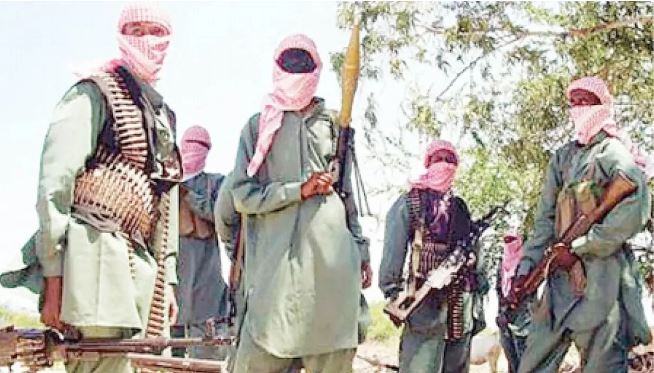
Tension is mounting in Borno State after suspected Boko Haram insurgents issued a 72-hour ultimatum to the Nigerian government over the fate of 416 abducted individuals, mostly women and children.
In a video released on Monday, April 20, 2026, the group identified as Jama’atu Ahlis-Sunna Lidda’awati Wal-Jihad warned that failure to meet its demands within the stipulated time could lead to the captives being relocated to undisclosed areas, complicating any rescue efforts.
The message, delivered in Hausa by a masked spokesperson, was directed at federal authorities and the Borno South Youths Alliance, a local group involved in mediation efforts. Armed fighters appearing in the footage issued what they described as a “final warning,” cautioning against any military intervention.
While the group did not restate its demands in the latest video, earlier communications reportedly included a ransom request of ₦5 billion for the victims’ release.
The victims are believed to have been taken during coordinated attacks in communities around Gwoza and Ngoshe in southern Borno. The situation escalated following a deadly raid on March 4, when insurgents attacked a military base in Ngoshe, resulting in casualties and mass displacement.
The Borno South Youths Alliance has confirmed the authenticity of the video, describing it as a “final warning.” Its president, Samaila Ibrahim Kaigama, has urged swift intervention by President Bola Ahmed Tinubu, Vice President Kashim Shettima, and Borno State Governor Babagana Zulum.
Although there has been no formal statement from military authorities, sources indicate that Operation Hadin Kai has intensified surveillance operations across key insurgent strongholds, including the Mandara Mountains and the fringes of the Sambisa forest.
Security experts note that threats to disperse hostages are often used to deter rescue missions, as such actions make coordinated recovery significantly more difficult.
Families of the abducted, many of whom have reportedly been held for weeks, are growing increasingly anxious as the deadline approaches. Community leaders are appealing for urgent intervention, including support from humanitarian organizations and private stakeholders, to secure a peaceful resolution.
With the clock ticking, pressure is building on authorities to act decisively before the ultimatum expires.