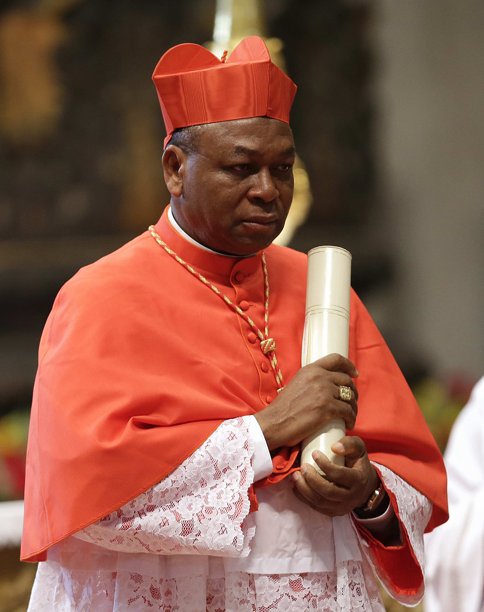
John Cardinal Onaiyekan is the Catholic Archbishop Emeritus of Abuja. In this exclusive interview with Emmanuel Olu, he speaks on how the vast majority of Nigerians have been thrown into deep recession and poverty; how even the government agrees with this assessment; the lack of sincere commitment by successive governments to fight corruption; how systemic fraud fuels lawlessness and stifles development and investment; the unresolved multi-trillion-naira fuel subsidy scandal; and how national sentiment has largely turned against the ruling All Progressives Congress (APC). EXCERPTS
At the moment, how do you see the state of the nation, Nigeria?
From what we can see around, it appears that there are some Nigerians in the corridors of power who are doing very well under this administration. For them, they have never had it so good. But from what I see daily and everywhere around me, the vast majority of Nigerians have been thrown into deep recession and poverty. Even the government agrees with this assessment.
All they are telling us is that we are going through inevitable growing pains for a better Nigeria supposedly coming around the corner. They are asking us to make an act of faith in a government that has given us little or no reason to trust that what they are doing is in our best interest. This makes the pain truly unbearable.
The sooner the government accepts this reality and makes the necessary readjustments to its major policies, the better. In the meantime, there are fears that a lot of damage is being done—damage that will take a long time to recover from. The youth, in particular, feel this fear and despair very deeply and are seeking every possible way to escape from their fatherland. No government should be proud of this.
The Minister of Information and Orientation, Alhaji Mohammed Idris, has claimed that the achievements of President Bola Tinubu in two years have surpassed those of previous administrations—Obasanjo, Buhari, Jonathan, Yar’Adua, and others. Do you agree?
I completely disagree with him. It is most unfortunate that he would make such claims, which convince no one except perhaps the few people around him. This is a great disservice even to the President himself, who needs to be told the truth about the state of the nation.
How do you see the institutional challenges and political dynamics shaping Nigeria’s anti-corruption fight?
I do not believe there has been any sincere commitment by governments to truly fight corruption. It is obvious that little or no success has been achieved. Without the right political will and moral commitment, anti-corruption institutions and agencies will remain ineffective. Sacred cows will continue to enjoy impunity, and many camels will continue to pass through the eye of the needle.
How does systemic fraud undermine development, and how can it be challenged?
Systemic fraud leads to lawlessness and general disorder, making genuine development impossible and discouraging both local and foreign investment. I cannot believe that those in charge of our national affairs are unaware of this basic principle of good governance. There is no way around it. To ignore it for selfish reasons is to tragically deceive ourselves. The chickens will come home to roost—sooner rather than later.
How do you view Nigeria’s multi-trillion-naira fuel subsidy scandal?
It is the same story. Everyone talks about trillion-naira subsidy fraud, but no one tells us who is behind it. With all the human and technical resources available to the NNPC, it is hard to imagine that they could not monitor the flow of subsidized fuel into the country.
This should have been addressed first before plunging Nigerians into multidimensional poverty through a sudden declaration of subsidy removal. We are now hearing that despite the loud announcement of subsidy removal, the fraud continues even two years later. We pray and hope that Nigeria will soon have a government that is transparent and stops taking its citizens for a ride.
Do you think the political climate and public sentiment have shifted significantly against the ruling party?
From everything I have said so far, it is obvious that national sentiment has largely turned against the ruling party. The fundamental question is how much goodwill this government can truly claim to enjoy among the majority of Nigerians.
Have we forgotten the figures from the last election, disputed as it was? Furthermore, where is the credible and viable alternative to the tragic outfit currently ruling us, given the utter disarray within most opposition parties?
Time is not on our side. Above all, the issue of installing an independent, impartial, and competent electoral commission must be resolved before the 2027 elections. If there is any truth to the rumours that those in power are deliberately blocking electoral reforms to preserve rigging loopholes, then suffering Nigerians must learn to rise peacefully but decisively to defend their right to freely choose their leaders.
With the influx of defectors into the APC, how do you see this development? Is it a sign of political strength or renewed public support?
In my opinion, these defections are not in the interest of the people, no matter how loudly the defectors proclaim their love for their constituents. It is purely selfish posturing—taking the people for granted while politicians negotiate among themselves on how to control power for personal gain.
The name of the game is power grabbing, not service to the people. Still, we must not lose hope. We continue to pray and hope that before the elections, a credible group of patriotic Nigerians will emerge with a clear agenda for service that can restore public trust in leadership.
What do you think about President Bola Tinubu securing another term in office? Is it realistic or possible?
The real issue is not whether it is realistic or possible, but how we can ensure that a better Nigeria emerges for the good of all. I still believe this is possible—even by 2027—but it will not happen by chance. It must be deliberately pursued by all of us and not left in the hands of the same old professional politicians, whether civilian or military, who brought us to this point.
Do you support the emergence of a new coalition that reflects the true aspirations of Nigerians?
When I hear the word “coalition,” I think of a merger of existing political parties, which does not strike me as truly new. What I envision is an entirely new movement—one with a fresh understanding of politics as service rather than a means for power and self-enrichment, guided by a people-centred manifesto and a renewed vision for Nigeria.
Do you think Nigerian voters are ready to embrace a political alternative focused on development, equity, and transparency?
Nigerians have always been ready. Unfortunately, the system has consistently shut them out and denied them the freedom to choose their leaders. Elections have become wars among political gladiators—do-or-die battles fought at all costs.
This is why election days resemble war zones, with armed soldiers, police, sirens, and intimidation everywhere. The excuse is preventing rigging, yet rigging has only worsened with each election. Authorities should withdraw their armies of official and unofficial thugs and allow Nigerians to conduct peaceful, free elections, as practiced in civilized democracies around the world.