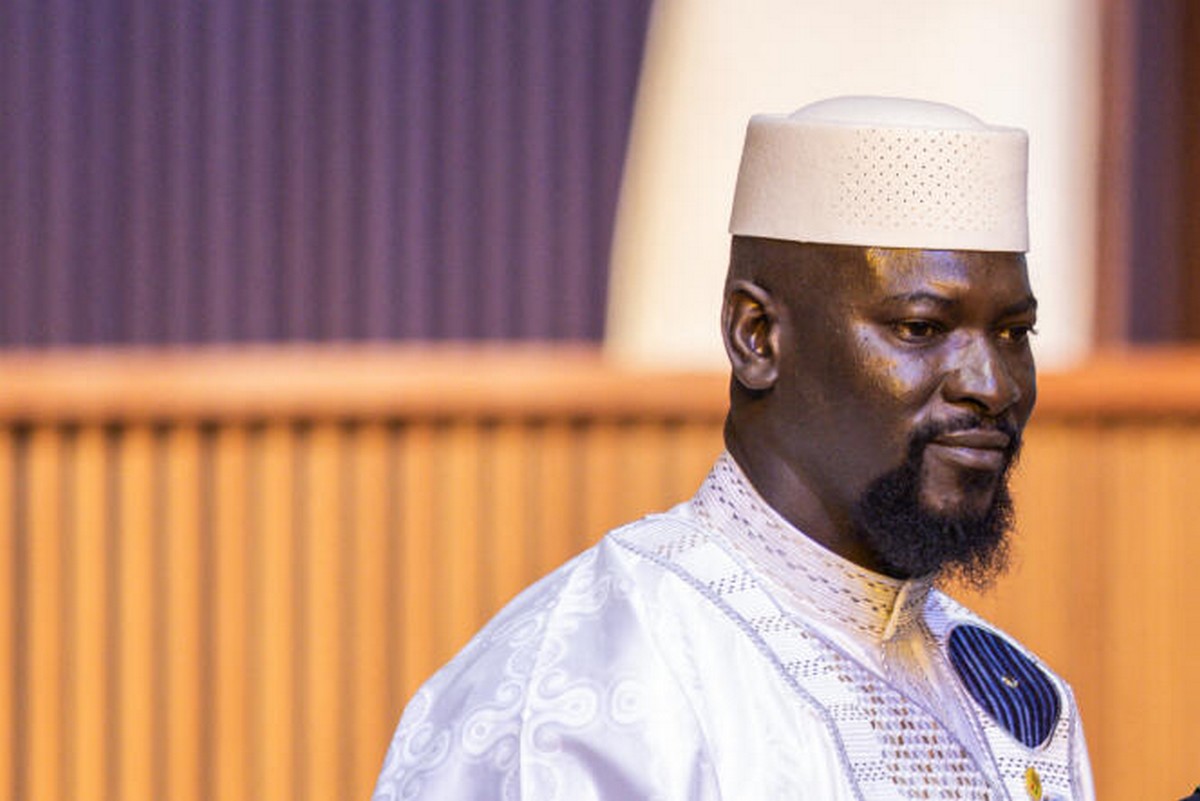
Guinea on Saturday marked a formal return to constitutional rule with the inauguration of President Mamady Doumbouya, closing a four-year military transition and placing renewed focus on the future of democracy and regional diplomacy in West Africa.
The ceremony, attended by regional leaders and envoys including Nigeria’s Vice President Kashim Shettima, was hailed by the Economic Community of West African States (ECOWAS) as a significant step toward restoring constitutional order in a region increasingly challenged by military takeovers.
Guinea has been under military rule since September 2021, when then-Colonel Doumbouya seized power in a coup that toppled President Alpha Condé. Following prolonged negotiations with ECOWAS, the junta committed to a transition timetable that culminated in elections and Friday’s inauguration.
For ECOWAS, Guinea’s return to civil rule comes at a critical moment. The regional bloc is grappling with its deepest political crisis in decades after military-led governments in Mali, Burkina Faso and Niger rejected ECOWAS sanctions and formally withdrew from the organisation. Together, the three Sahelian states are now pursuing a separate security and political alliance outside ECOWAS structures.
Analysts say Guinea’s transition presents both an opportunity and a dilemma for the bloc. On one hand, it offers ECOWAS a rare success story after years of stalled or reversed democratic transitions. On the other, critics warn that the Guinean process — led by a former junta leader who successfully converted military authority into electoral legitimacy — could be interpreted by other military regimes as a template for prolonging power rather than relinquishing it.
“The message ECOWAS sends now matters,” said a regional political analyst in Dakar. “If Guinea is presented as a full democratic success without scrutiny, it may reinforce the belief among juntas that elections alone are enough, regardless of how competitive or inclusive they are.”
In Mali, Burkina Faso and Niger, military leaders have repeatedly argued that ECOWAS pressure ignores their security challenges and undermines national sovereignty. Guinea’s decision to remain within the bloc and negotiate its transition contrasts sharply with the confrontational stance adopted by the Sahel states.
Diplomats say ECOWAS hopes Guinea’s reintegration will help rebuild its credibility and reopen dialogue with estranged members. However, the bloc now faces the difficult task of balancing engagement with enforcement — encouraging transitions back to civilian rule without legitimising prolonged military dominance.
As Guinea turns a new page, its political journey is being closely watched across West Africa. Whether its return to civil governance strengthens democratic norms or reshapes how military regimes seek legitimacy may ultimately define ECOWAS’s influence in the region’s uncertain political future.