
When jihadist insurgents overran a Nigerian Army brigade headquarters in Benisheikh, Borno State, in the early hours of April 9, killing a general, torching military vehicles, and withdrawing largely unimpeded, they did more than inflict casualties. They exposed, once again, the widening gap between Nigeria’s official narrative of a war being won and the battlefield reality of a conflict that continues to bleed the country dry.
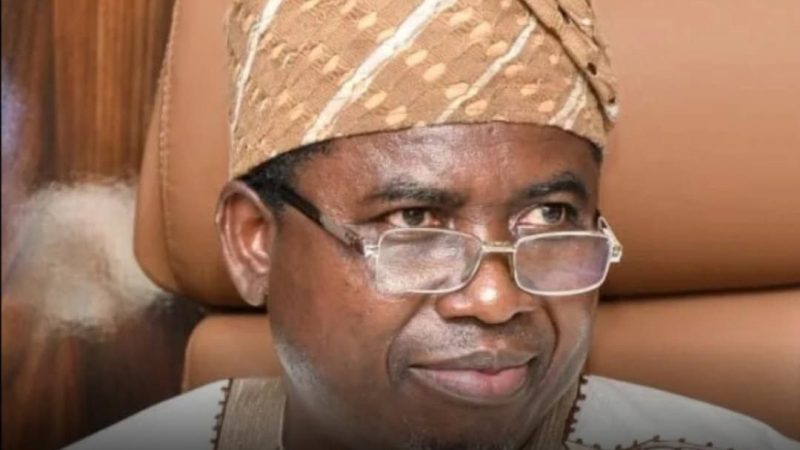
Brigadier General Oseni Omoh Braimah became the second top officer killed in five months as violence surges across the country’s mostly Muslim north. The Defence Headquarters confirmed the midnight assault on the 29 Task Force Brigade’s headquarters in Benisheikh located along the strategically critical Maiduguri-Damaturu highway with defence spokesperson Major General Michael Onoja saying the attack was aimed at breaching the defensive perimeter of the base.
Four sources, including military officials, confirmed the overnight attack. One intelligence source put the death toll at 18. Several military assets were set ablaze during the attack, while construction equipment belonging to the Borno State Government was also destroyed. The attackers were also said to have looted food supplies from shops in Pulka before withdrawing.
The Defence Headquarters did not comment on reported simultaneous attacks on other military formations in Pulka and Mungono. Collectively, the assaults suggest a coordinated, multi-pronged offensive rather than an isolated strike, one that several analysts say bears the hallmarks of careful pre-operational planning.
Official Optimism, Battlefield Reality
The Defence Headquarters was quick to cast the assault as a sign of insurgent desperation. The military described the attack as reflecting “the desperation of terrorists who continue to embark on futile offensives against well-defended military positions,” adding that clearance operations were ongoing to track fleeing insurgents.
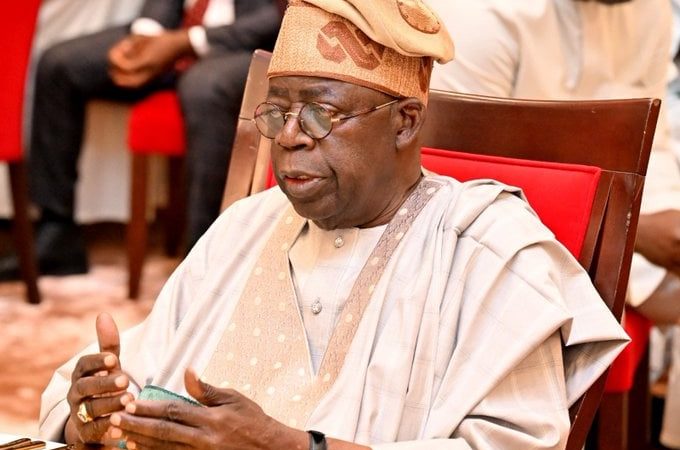
President Bola Tinubu struck a similar tone, framing the attack as the death rattle of a fading insurgency. Tinubu praised the courage and heroism of soldiers “who fought valiantly to repel the terrorists,” while describing the assault as evidence of insurgent desperation following sustained Nigerian military offensives.
But for many security analysts, the language of official reassurance has grown harder to reconcile with the facts. Since January 2025, ISWAP has launched at least twelve coordinated attacks on military bases and infrastructure across Borno State, a sustained offensive that has exposed systemic flaws in Nigeria’s counterterrorism approach and highlighted the collapse of the military’s “supercamp” strategy. Many of these installations are underfunded and poorly fortified due to corruption and mismanagement, leaving them exposed to attacks and looting.
The death of Brigadier General Braimah places the Benisheikh incident among the most serious recent strikes on a military formation in northeastern Nigeria. Beyond the immediate casualties, the raid exposes how quickly local security crises can become national questions about resilience, command, and deterrence.
Structural Failures: Intelligence, Overstretch, and Technology
Security analysts point to a constellation of systemic vulnerabilities that have allowed ISWAP to sustain and even intensify its campaign despite years of declared military gains.
Forward operating bases in the northeast are frequently under-resourced, under-manned, and poorly fortified relative to the threat environment, a vulnerability the March and April 2026 raids have exploited at scale. Despite improvements in strategic surveillance, tactical human intelligence networks in rural Borno and Yobe remain dangerously thin, allowing ISWAP to conduct pre-operational reconnaissance without detection.
The Nigerian military simultaneously manages banditry in the Northwest, separatist militancy in the South-East, oil theft and cultist violence in the Niger Delta, and the northeast insurgency, an overstretch that is not accidental from ISWAP’s perspective, as the group has an incentive to maintain pressure on multiple Nigerian security theatres to prevent the concentration of force against it.
The insurgents have also evolved technologically in ways Nigeria’s military has struggled to match. ISWAP and Boko Haram have been using satellite internet services, including Amazon’s Project Kuiper and Elon Musk’s Starlink, to strengthen their communications infrastructure, disseminate propaganda, conduct surveillance, and maintain contact with the Islamic State core. Nigerian security forces struggle to disrupt their operations due to a lack of advanced surveillance capabilities, pervasive corruption that undermines procurement and intelligence-sharing, and poor coordination between key agencies.
In 2025, ISWAP began deploying weaponised drones in attacks against military targets, marking a worrying evolution in the group’s capabilities beyond its earlier use of drones only for surveillance and propaganda.
A War on Multiple Fronts
The Borno crisis does not exist in isolation. It is one theatre of a security emergency that has spread far beyond the northeast. Nigeria’s armed forces have been deployed in two-thirds of the country’s states and are overstretched as Boko Haram, ISWAP, and bandit groups continue to expand their areas of operation and attack all populations. Authorities are struggling to contain escalating inter-communal violence in Benue and Plateau states, where large-scale violence and abductions are gradually becoming normalised.
The Christian Association of Nigeria reported that bandits in Kebbi State had launched raids “from one village to the next” over three days, without military intervention, displacing at least 1,900 people. Kebbi, sitting on Nigeria’s border with Benin and Niger, has been targeted by a rising number of jihadist attacks since 2025, with conflict monitor ACLED documenting a surge in attacks carried out by militants affiliated with Al-Qaeda and the Islamic State.
Human Rights Watch, in its 2026 World Report, concluded that insecurity remained prevalent across Nigeria in 2025, underscoring the authorities’ failure to protect communities or ensure accountability — with deadly attacks in Borno signalling a resurgence of the JAS faction of Boko Haram, even as killings, kidnappings, and violent raids by criminal groups continued to impact the Northwest.
The Leadership Question
The crisis has also intensified scrutiny of the political leadership nominally in charge of the military response. Minister of Defence General Christopher Musa, the former Chief of Army Staff appointed to the role in late 2025 has been chairing the APC National Convention Security Committee, vowing to develop a comprehensive security framework to guarantee the safety of thousands of delegates, party leaders, and government officials at the ruling party’s convention. He was among senior officials who conducted a physical inspection of the APC Convention Centre at Eagle Square, assessing preparedness and coordination arrangements for the political event.
The juxtaposition a defence minister focused on securing a party convention while generals are being killed and villages burned in multiple states has drawn pointed criticism. Opposition presidential candidate Peter Obi, in a statement on April 6, described the continued killings as “a failure of leadership and responsibility,” noting that the perpetrators “are not invisible” and that government inaction had encouraged them.
Two Generals, One Verdict
The killing of Brigadier General Braimah follows the death of Brigadier General Musa Uba, who commanded the 25 Task Force Brigade in Damboa, Borno State, and was ambushed, captured, and killed by ISWAP in mid-November 2025. The loss of two brigadier generals each commanding major task force brigades in the Northeast, within five months represents a severity of attrition at senior command level not seen since 2021.
Security analysts have linked the pattern to a combination of factors affecting field operations: limitations in equipment, challenges in logistics, the complexity of operating across multiple regions, and concerns about troop welfare and the demands placed on personnel involved in extended deployments.
Discussions between Abuja and Paris, including a phone call between President Tinubu and French President Emmanuel Macron, have centred on intelligence sharing, joint training, and capacity-building support for Nigerian security forces, as the surge in violence has amplified calls for effective international partnerships. The United States has also deployed 200 troops to provide technical and training support, while conducting airstrikes in Sokoto in December. Yet none of this international scaffolding has prevented the insurgency from striking at the very heart of Nigeria’s military infrastructure.
Total state collapse remains unlikely in the near term. But the conditions for protracted strategic erosion of sovereign control are firmly in place and worsening. For the families of the soldiers buried without the country fully knowing their names, and for the civilians in Borno, Plateau, Benue, and Kebbi still waiting for a state that can protect them, that is cold comfort.