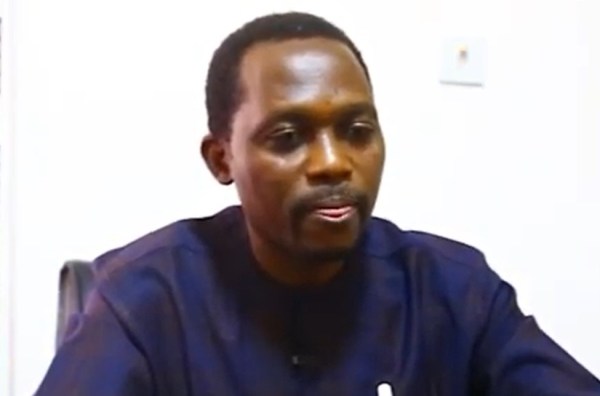
Dr. Allen Manasseh is the Founder and Executive Director of ImpactTrust International, a community-centred organisation promoting climate resilience and sustainable livelihoods, inclusive governance, and youth mentorship. He is also a strategic team member of the #BringBackOurGirls movement and a consistent voice for the Chibok community.
Dr. Manasseh serves as the Managing Director/CEO of Fortune Allen Consult, a firm that supports organisations with ESG compliance policies, climate-smart enterprise development, and business development consultancy services.
In this interview, Dr. Manasseh speaks candidly on Nigeria’s political development, governance, insecurity, the economy, and the prospects ahead of the 2027 general elections. He argues that the political class, beginning with President Bola Ahmed Tinubu. is delivering what he describes as mediocre leadership that fails to inspire citizens. EXCERPTS
What is your assessment of Nigeria’s political development?
Political development can be viewed from different perspectives. Some focus on the quality of political leadership, while others examine the broader political environment—politicking, the conduct of the electoral umpire, and the urgent need for electoral and judicial reforms. From all these angles, Nigeria’s political development is neither impressive nor promising.
The political class, starting from the President, is delivering mediocre leadership that does not inspire citizens. Anyone praising the current APC-led government is either an appendage of power benefiting from the national treasury or a hireling hailing mediocrity for crumbs. I am not impressed by this government. I have not seen performance worthy of a 65-year-old nation that has experienced oil booms and is endowed with vast human capital, especially a youthful population that should be driving productivity, innovation, and inclusive governance.
Most political parties positioning themselves for a 2027 takeover are not even interested in correcting the mistakes of 2023, where the electoral law was designed with loopholes and zero consequences for those who subverted the will of the people. If we desire a functional Nigeria—where democracy is truly citizen-driven and governance is people-centred—we must insist on strong, watertight electoral laws that protect the people’s mandate. Electoral integrity must be non-negotiable. The ongoing constitutional review must also be conducted transparently to genuinely address citizens’ concerns.
What advice would you give President Tinubu on managing the economy?
Capacity is globally available. If you want to travel to the moon today, you do not need to start studying space science from scratch—others have already done the work. How did Singapore succeed? What are China and India getting right? What did Brazil do differently, and how has Rwanda rebuilt after war? How can the so-called Giant of Africa, endowed with oil, solid minerals, and human resources, still crawl like a toddler after 65 years of independence? It is shameful.
The President must assemble people of character, competence, and capacity—men and women of courage, boldness, and selflessness—who will implement evidence-based policies focused on nation-building. Governance must not be reduced to “food for the boys.”
Subsidy savings must be transparently managed, with every naira tied to verifiable, productive outcomes that benefit citizens. Opaque governance, handouts, and welfare schemes that serve as conduits for corruption must end. Any government that abdicates its constitutional responsibility for the security and welfare of its citizens is a failed government.
Today, terrorists control numerous areas across Nigeria. The federal road to my local government area has been under terrorist control for over 14 years, with only periodic military escorts. Citizens are killed daily by Boko Haram, bandits, armed herders, unknown gunmen, Lakurawa, Ansaru, and emerging groups in states like Kwara and Nasarawa. This reflects leadership failure—especially when security agencies offer excuses for terrorists. To fix the economy, the government must first fix security, operate transparent governance, reduce the cost of governance, simplify the tax system, devolve powers to local governments, remove immunity, and strengthen the judiciary to prosecute corruption swiftly.
How do inflation, subsidy removal, and insecurity affect the economy?
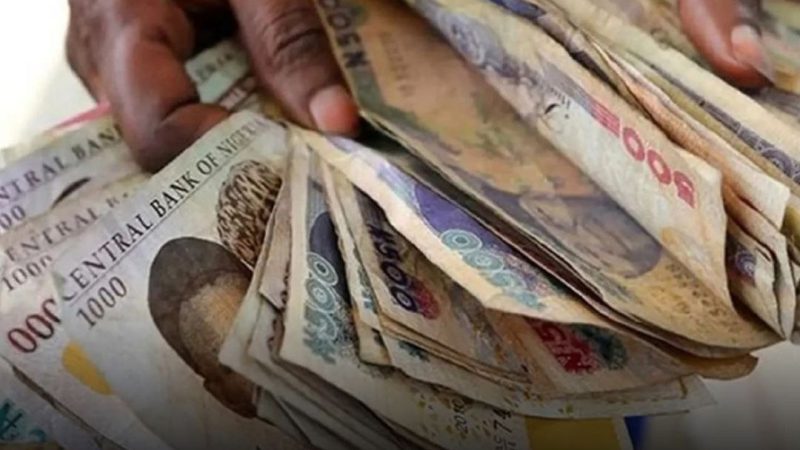
These three factors severely undermine the economy. Although inflation reportedly dropped to 18.02% in September 2025, it has not improved the daily lives of Nigerians. The abrupt and poorly planned removal of fuel subsidies crippled many middle-class businesses, disrupted supply chains, and raised transportation and food costs.
Agricultural productivity has declined due to insecurity, forcing farmers off their land. Subsidy savings must be systematically reinvested—not shared across tiers of government for looting. Nigeria must prioritise agriculture and solid minerals with value addition and create an enabling environment for youths to access finance and drive innovation.
There are claims that the government is secretly subsidising petroleum products. What is your view?
This reinforces the need to completely reform the oil sector and remove government from its direct control to ensure transparency. The opacity surrounding the industry must end. How can turnaround maintenance costs exceed what it took Dangote to build a new, higher-capacity refinery? Yet, no one is held accountable. The oil industry is run like a secret cult. Comprehensive and transparent reform is overdue.
How serious is unemployment as a threat to Nigeria’s survival?
The link between unemployment and insecurity is well established. It is tragic that many Nigerian youths now prefer risking death in deserts and seas to remaining at home. The ‘japa’ syndrome has weakened our institutions.
With over 70% of our population being youths, vast arable land, and abundant resources, Nigeria should not be hungry or jobless. Instead, young people face insecurity, regulatory frustration, multiple taxation, and lack of support. Unless unemployment is urgently addressed, jobless youths and out-of-school children will remain easy recruits for terrorism and crime.
How can Nigeria build a prosperous, just, and equitable society?
We must stop the worst of us from governing the best of us by insisting on transparent, credible, and citizen-driven leadership selection. Nigeria needs value-driven leaders who see leadership as service—guided by responsibility, justice, inclusivity, and integrity.
Institutions must become centres of innovation and research, not storytelling. Inclusivity is central to social justice. Nigerian youths must awaken, take responsibility, and elect leaders who can inspire their dreams across technology, agriculture, healthcare, arts, and innovation.
What is your view on the opposition coalition adopting ADC for 2027?
There is nothing fundamentally new in the coalition. Many of its members have been in power before. Leadership of character can make a difference anywhere, but we do not need recycled politicians. We need value-driven, progressive leaders committed to nation-building.
Youths must take 2027 seriously and draw clear lines between their future and the current political class. Electoral reform must remain the priority, and courts must not be allowed to choose leaders for Nigerians.
Does the ADC coalition have the cohesion and ideology to defeat APC?
I have not seen anything different beyond the pursuit of positions. However, Nigeria desperately needs a strong opposition to end APC’s debased governance. Continuation of this trajectory beyond 2027 would reduce Nigeria to a continental embarrassment.
Do you agree that the coalition has ethnic bias?
It is premature to make such claims. Nigeria’s real problem is the deliberate creation of ethnic and religious divisions by the political class to mask incompetence. What we need is an opposition committed to Nigeria’s peace, growth, and development.
Has public sentiment shifted against the ruling party?
Was the President elected by a clear majority? No. Are there credible indicators—local or international—rating this government positively? No. Insecurity, hunger, unemployment, inflation, and corruption have worsened. The middle class has been wiped out. Anyone praising this government either benefits from it or survives on crumbs.
Is your state governor meeting expectations? What advice would you give?
Performance is below acceptable standards. Roads remain unsafe, ghost towns persist, and infrastructure is dilapidated. Governance is overly centralised, opposition is stifled, and accountability is weak. The governor must revive industries, promote LGA productivity, engage credible minds, embrace opposition, invest in infrastructure, power, water, security partnerships, and inclusive development.
Are you contesting any elective position in 2027?
Yes, God willing. Politics is too important to be left to politicians. Leadership should come from those with proven records outside politics. I will present myself credibly to offer value-based, people-centred leadership. In 2023, I won overwhelmingly, but results were suppressed, and the courts failed to uphold justice—hence my continued advocacy for electoral and judicial reforms.
Final thoughts?
Nigeria needs leaders who ask citizens how they want to be governed and then serve with sincerity, integrity, courage, and truth. That is the path to innovative growth and national renewal.