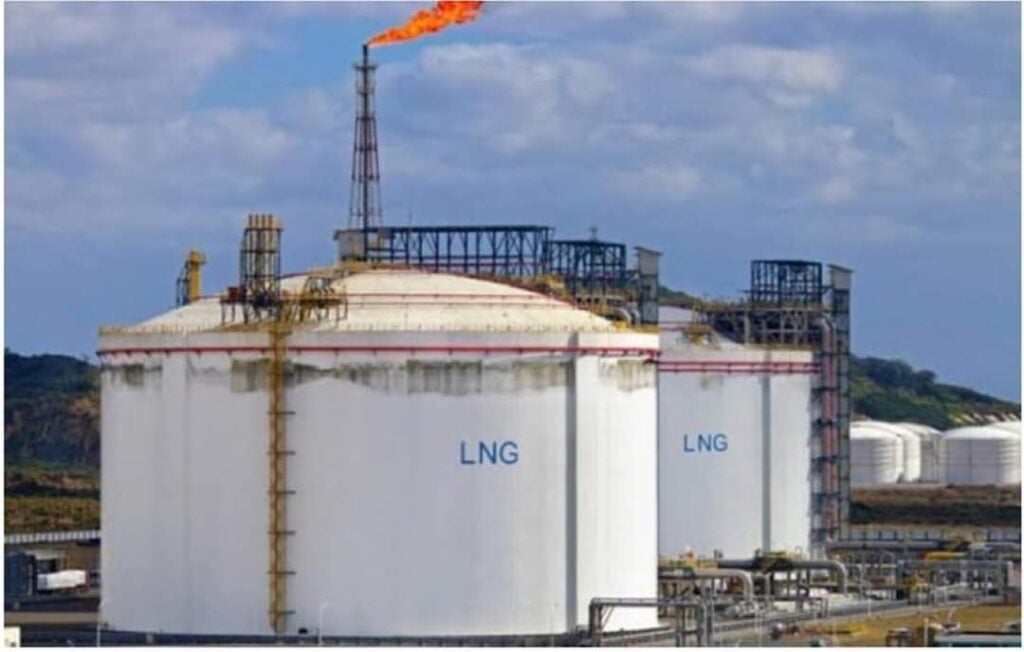
A liquefied natural gas tanker carrying a Nigerian cargo has abruptly changed course from Europe to Asia, in a vivid illustration of how the US-Iran war is redrawing the world’s energy map and triggering a fierce global scramble for gas supplies.
The BW Brussels LNG tanker loaded a cargo from Nigeria’s Bonny LNG terminal on February 27 and was initially moving westward before altering its route and heading south toward Asia via the Cape of Good Hope. The vessel had initially signalled a course toward France before the diversion.
Asian LNG prices have jumped sharply, opening up arbitrage opportunities for traders to ship cargoes from the Atlantic to the east to replace Qatari supply lost during the US-Iran war. Cargo diversions could intensify competition between the Atlantic and Pacific basins as the Middle East conflict curtails shipments and halts output from Qatar, whose Asian buyers take more than 80 per cent of its LNG exports.
The benchmark Japan-Korea Marker for spot LNG cargoes jumped by 68.52 per cent to $25.393 per million British thermal units for April delivery — its highest level in years — making Asian buyers far more attractive customers for flexible Atlantic Basin cargoes than their European counterparts.
The Nigerian tanker was one of three LNG vessels to pivot toward Asia in a single week, alongside two carrying US cargoes, according to vessel-tracking data reviewed by Reuters.
European gas prices have also surged 53 per cent since Friday following Iranian strikes that forced Qatar to halt production and brought shipping through the Strait of Hormuz to an effective standstill. European gas reserves stand at less than 30 per cent of capacity — well below the five-year average — leaving the continent critically exposed heading into the summer storage refill season.
Analysts at Kpler warn that the disruption has removed approximately 20 per cent of global LNG supply from the market, a shortfall that alternative exporters — including Nigeria, Algeria, and the United States — cannot realistically cover in the near term.
Eurasia Group analyst Henning Gloystein summed up Europe’s predicament: “It’s a double punch. Europe is only coming out of an industrial energy crunch and now we’ve got the next one.”