
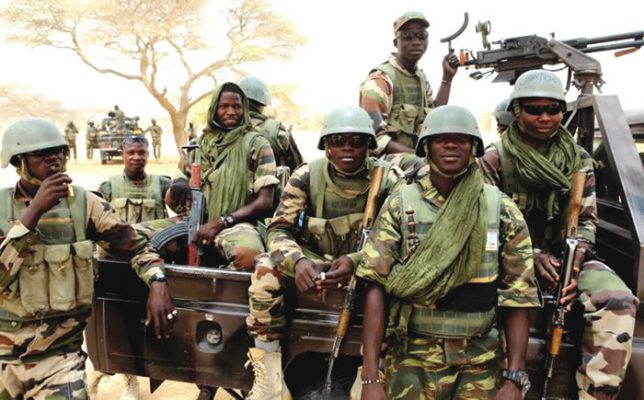
Between 2019 and 2025, ambush attacks claimed at least 1,007 lives across Nigeria, with soldiers suffering the highest casualties in a pattern that underscores the country’s ongoing struggle with asymmetric warfare.
Analysis of the seven-year period reveals that Nigerian military personnel accounted for 454 deaths—representing the largest single victim category. Security forces overall bore more than half of all fatalities when police officers and other operatives are included, reflecting their frontline vulnerability in counterinsurgency efforts.
Northern Nigeria Bears Overwhelming Burden
The violence shows a pronounced geographic concentration. Nigeria’s North East and North West regions accounted for over 90 percent of all ambush deaths nationwide.
The North East alone recorded 576 fatalities, driven by persistent jihadist activity, while the North West saw 338 deaths amid worsening banditry and rural insecurity. The North Central region recorded 71 deaths, and Nigeria’s three southern zones combined registered fewer than 40 fatalities across the entire period.
A Lagos-based security analyst noted that this distribution indicates Nigeria continues fighting what is predominantly a northern conflict, with the North East and North West remaining zones of persistent armed violence despite progress elsewhere.
Borno State Emerges as Epicenter
Borno state recorded 456 fatalities—nearly half the national total, making it the epicenter of ambush violence. Experts link this to Boko Haram’s entrenched presence, the state’s challenging geography, and vulnerable border areas.
Zamfara state followed with 163 deaths, while Yobe recorded 99. Kebbi and Niger states saw 87 and 57 deaths respectively, demonstrating how ambush tactics have spread along transit routes and rural areas in the North West and North Central. States including Katsina, Sokoto, and Kaduna each recorded 20 to 33 deaths, while many southern states reported single-digit figures.
Boko Haram Deadliest Actor
Boko Haram emerged as the most lethal force, responsible for 590 deaths, more than half of all fatalities. The Islamic State West Africa Province caused 82 deaths, while armed bandit groups accounted for 329. Attacks involving armed herders and pro-Biafra groups remained comparatively marginal.
A counterinsurgency researcher explained that ambushes have become tactically favored because they eliminate the government’s conventional military advantages by exploiting intelligence shortcomings, local terrain knowledge, and mobility—particularly against patrols and convoys.
Security Forces Pay Heavy Price
Beyond the 454 soldiers killed, 52 police officers died in ambushes, along with 275 other security operatives including paramilitary personnel. Security agents comprised well over half of all casualties.
The data shows 224 militants were killed during these encounters, suggesting many incidents evolved into sustained gunfights rather than quick hit-and-run operations. A retired army officer observed that modern ambushes increasingly involve coordinated assaults designed to maximize casualties and capture weapons.
Fatalities Decline from 2020 Peak
Ambush deaths peaked at 287 in 2020, then fell to 223 in 2021 and dropped sharply to 113 in 2022. After rising slightly to 116 in 2023, deaths eased to 111 in 2024. The 2025 figure of 61 represents the lowest toll since 2019’s 96 deaths.
A defense policy expert cautioned that while declining fatalities are encouraging, seven consecutive years of ambush attacks demonstrate that armed groups remain resilient and adaptive.
Structural Challenges Remain
Security specialists argue that tactical victories alone won’t resolve the crisis. They emphasize the need for improved intelligence coordination, better troop protection, stronger community engagement, and sustained investment in surveillance and logistics.
As one analyst put it, governance gaps, poverty, and weak state presence in vulnerable areas will continue making ambush warfare an attractive option for non-state actors.
Despite improvements since 2020, the data highlights ongoing challenges facing Nigeria’s security apparatus and the steep cost borne by those defending the state.