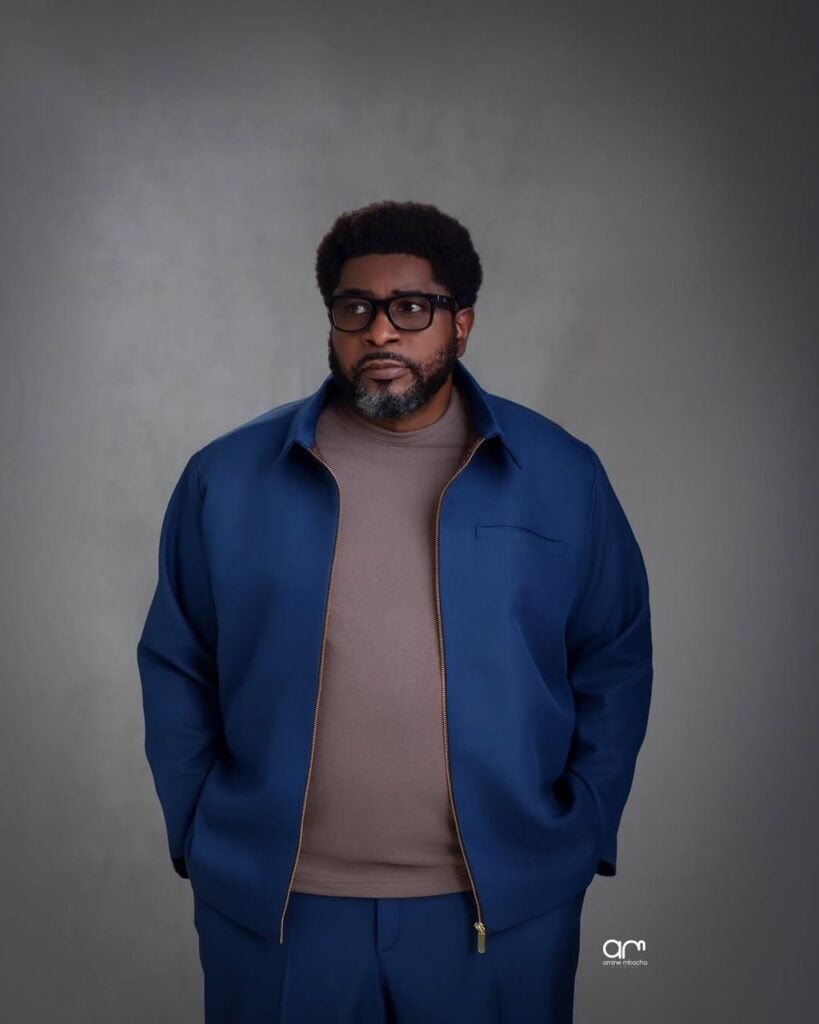
Pastor Kingsley Okonkwo, lead pastor of David Christian Centre (DCC), has declared that there is no clear biblical basis for condemning Christians who choose to have tattoos, arguing that faith should be judged by character and obedience to Christ rather than outward appearance.
The popular relationship coach made the remarks while appearing on News Central Television’s Take 3 programme, addressing the heated debate sparked by his recent unveiling of a John 3:16 tattoo on his arm to mark his 50th birthday.
The Controversy
The inscription, written in Roman numerals as “III: XVI,” represents John 3:16, one of the most widely known verses in the Bible Punch. The video, shared on his Instagram page, quickly went viral and divided opinion across Nigerian social media.
Critics immediately referenced Leviticus 19:28, which states: “Do not cut your bodies for the dead or put tattoo marks on yourselves. I am the Lord.” However, Pastor Okonkwo challenged this interpretation, arguing that many objections to tattoos stem from personal preferences, church policies, or subjective interpretations rather than clear biblical teachings.
Pastor’s Defense
“There’s no scripture that says the child of God cannot have tattoo,” Pastor Okonkwo stated, adding that “people are doing personal preference or what the Holy Spirit told them or what their church policy is. They want to impose this on other people and that’s not how this works” Nigeriainfo.
He challenged critics to provide concrete evidence—biblical, scientific, or logical—for their stance against tattoos. “Somebody needs to sit me down and spell out, ‘oh tattoos are bad because if somebody draws an ink on their body, their brain goes bad’. And they must give me some either scriptural proof or scientific proof or something to back this thought up,” he said Nigeriainfo.
The pastor criticized stereotyping people based on appearance, comparing it to banning pastors from wearing jeans simply because criminals have worn jeans. “I can give you 10 good people that have tattoos. You can give me 10 bad people that have tattoos. So what are we going to do now?” he asked Nigeriainfo.
Evangelism Through Controversy
Responding to critics in an earlier Facebook post, Pastor Okonkwo noted an unexpected benefit of the controversy: mass evangelism. “My religious brothers and sisters were busy judging over tattoo; they didn’t notice that the gospel (John 3:16) was preached to millions in 24hrs by almost all blogs” Punch.
The pastor explained that his decision to get the tattoo was aimed at spreading the gospel rather than making a fashion statement or challenging Christian values. The widespread discussion and sharing of John 3:16 across blogs and social media platforms achieved what he described as large-scale evangelism in a very short time.
Divided Reactions
The tattoo sparked intense debate online. While some Christians argued that the Bible explicitly forbids body markings, supporters defended the pastor’s creative approach to evangelism.
One critic wrote: “Does this pastor not know it’s a sin to tattoo his skin? As a pastor, you should be leading members with what the Bible teaches.” Another supporter countered: “Tattoo and tribal mark are the same. It is just an advanced one. Our older generations did the same thing. So don’t judge.”
Pastor Okonkwo attributed much of the controversy to what he described as “Afro-trado Judeo Christianity”—a unique blend of African traditions, local customs, and Judeo-Christian practices that shapes Nigerian Christianity and often leads to misunderstandings about scripture.
Broader Implications
The debate reflects a larger conversation within Nigerian Christianity about biblical interpretation, cultural context, and the role of personal conviction versus church tradition. Pastor Okonkwo’s stance challenges the tendency to impose denominational rules as universal Christian doctrine.
Known for his contemporary approach to relationship and marriage teachings, as well as his youth-friendly messaging, the pastor has built a reputation for addressing contentious issues directly. His willingness to challenge traditional views on tattoos fits this pattern, though it has also drawn sharp criticism from more conservative Christians.
As the debate continues online, Pastor Okonkwo has invited the public to his praise and thanksgiving service at David Christian Centre in Lagos, describing it as “a time of worship, joy and fellowship” where more details about his position will be shared.
The controversy underscores ongoing tensions within Christianity over how ancient texts apply to contemporary practices—and whether outward expressions of faith matter as much as inner character and devotion to Christ’s teachings.