
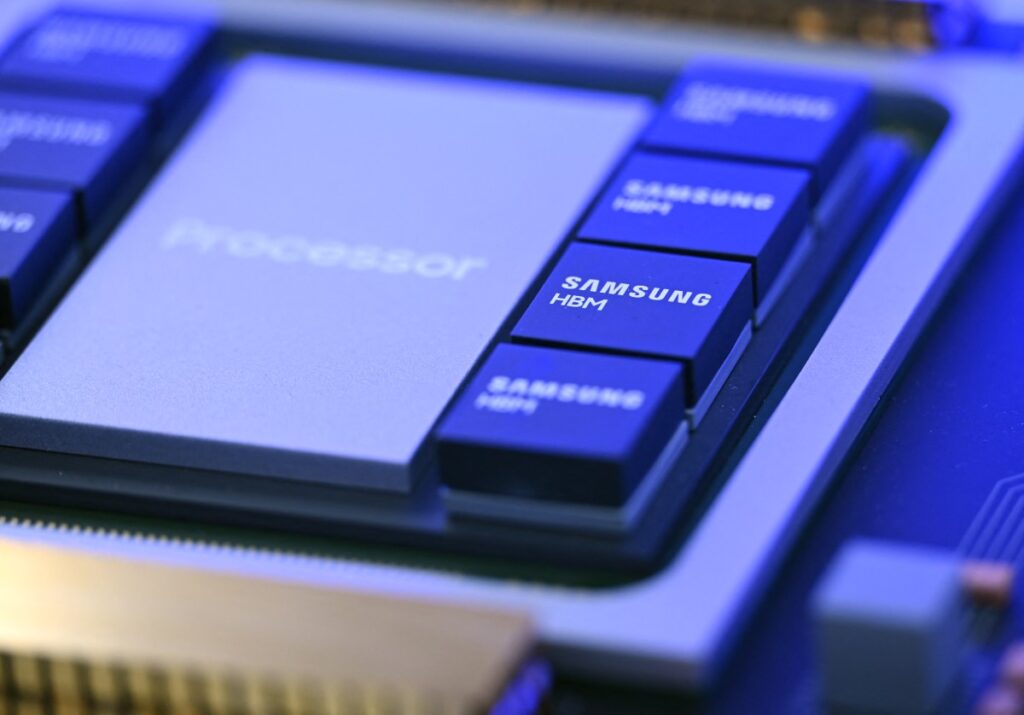
Samsung Electronics has commenced mass production of its next-generation HBM4 AI memory chips, marking a significant milestone in the race to meet surging global demand for advanced semiconductor components that power artificial intelligence applications.
The HBM4 (High Bandwidth Memory 4) chips represent the latest evolution in specialized memory technology designed specifically for AI data centers and high-performance computing systems. As a major supplier to Nvidia, whose graphics processing units dominate the AI chip market, Samsung’s production ramp-up comes at a crucial time as tech companies worldwide scramble to expand their AI infrastructure.
The new memory chips offer substantial improvements over previous generations in both speed and capacity, enabling faster data processing and more efficient AI model training and deployment. These advances are essential for supporting the increasingly complex and data-intensive AI applications being developed across industries, from generative AI systems to autonomous vehicles.
Samsung’s move to begin mass production positions the company to capitalize on the explosive growth in AI-related semiconductor demand. The global AI boom has created unprecedented appetite for specialized chips, with memory components like HBM representing a critical bottleneck that has limited the expansion of AI capabilities for many organizations.
As one of the world’s leading memory chip manufacturers, Samsung faces fierce competition from rivals including SK Hynix and Micron Technology, all vying for dominant positions in the lucrative AI memory market. The ability to scale production of advanced HBM chips has become a key competitive advantage, with supply constraints driving premium pricing and strong profit margins.
Industry analysts view Samsung’s HBM4 production launch as a strategic win for both the company and its major customers like Nvidia, which relies on a stable supply of cutting-edge memory to meet demand for its AI accelerators. The timing is particularly significant as Nvidia and other AI hardware providers face persistent supply chain challenges in meeting orders from cloud providers and enterprise customers.
The mass production announcement also underscores South Korea’s continued leadership in the global semiconductor industry, with Samsung’s advanced manufacturing capabilities serving as a cornerstone of the country’s technology sector and export economy.
Samsung has not disclosed specific production volumes or customer commitments, but industry observers expect the HBM4 chips to begin appearing in next-generation AI systems and data center deployments within the coming months.