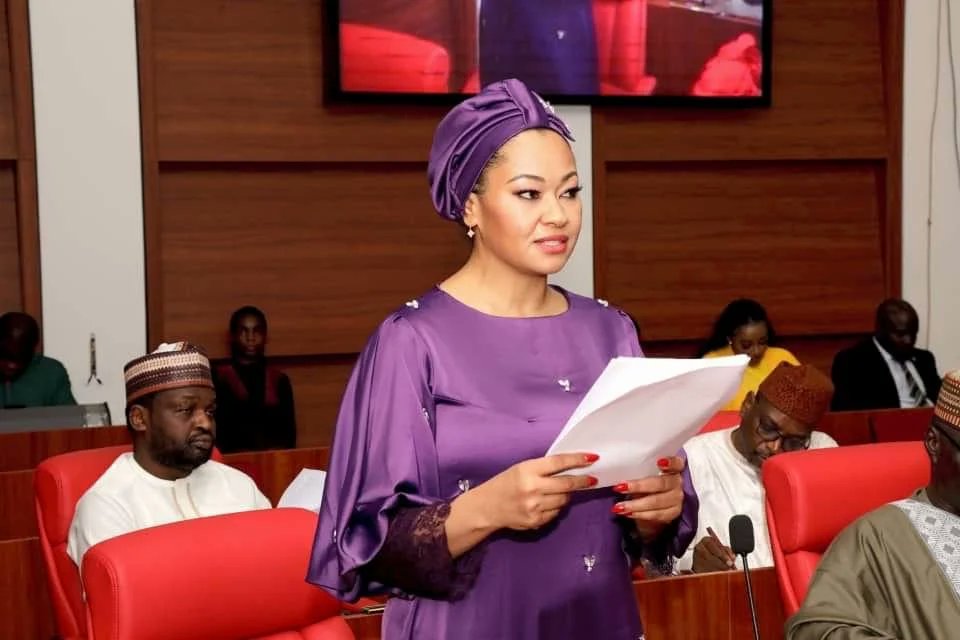
Drama unfolded in the Nigerian Senate as Senator Natasha Akpoti-Uduaghan publicly protested her exclusion from the North Central committee, alleging a deliberate pattern of marginalization that has targeted her since joining the upper legislative chamber.
The Kogi Central Senator expressed frustration and disappointment over what she described as systematic sidelining from key Senate committees and decision-making structures, particularly her removal from the North Central committee which coordinates legislative interests for her geopolitical zone.
In an impassioned address, Senator Akpoti-Uduaghan questioned the rationale behind her exclusion, arguing that as an elected representative of a North Central constituency, she has every right to participate in the committee that addresses issues affecting her region and constituents. She characterized the move as politically motivated and detrimental to effective representation.
The female lawmaker, known for her vocal advocacy on various issues, suggested that her exclusion may be connected to her independent stance on legislative matters and unwillingness to be silenced on issues affecting ordinary Nigerians. She vowed not to be intimidated into abandoning her principles or constituency responsibilities.
Senator Akpoti-Uduaghan’s protest has drawn attention to broader questions about committee assignments in the Senate and whether political considerations sometimes override fair representation principles. Her allegations have resonated with observers who have noted instances where senators perceived as too independent face challenges in securing influential committee positions.
Senate leadership has not yet issued an official response to the senator’s complaints, though sources within the chamber suggest that committee compositions are determined through consultations among various stakeholders and that multiple factors influence membership decisions beyond simple geographical representation.
Some fellow senators have privately expressed sympathy for Akpoti-Uduaghan’s situation, acknowledging that committee assignments can sometimes reflect political dynamics rather than purely merit-based or representational considerations. However, few have been willing to publicly support her protest, reflecting the complex political calculations within the Senate.
The senator’s supporters, both within and outside the National Assembly, have rallied behind her, describing her exclusion as unjust and calling on Senate leadership to reconsider the decision. They argue that her track record and constituency mandate entitle her to full participation in structures affecting her geopolitical zone.
Civil society organizations monitoring legislative activities have called for transparency in committee assignment processes, suggesting that clear criteria and open procedures would help prevent perceptions of marginalization or political victimization of individual senators.
Critics of the senator, however, have suggested that her protest may be exaggerated and that committee memberships regularly change based on various legitimate considerations including workload distribution, expertise areas, and political party balancing formulas.
The North Central committee plays a crucial role in coordinating positions on legislation and appropriations affecting states in the region, making membership valuable for senators seeking to effectively represent their constituencies’ interests. Exclusion from such committees can limit a senator’s influence on regional development priorities.
Senator Akpoti-Uduaghan has indicated that she will continue to press for her inclusion in the North Central committee through appropriate channels while not allowing the exclusion to diminish her overall legislative effectiveness or commitment to her constituents.
The controversy highlights ongoing tensions within the Senate regarding representation, committee structures, and the treatment of lawmakers who maintain independent positions on issues. It also raises questions about whether gender dynamics play any role in committee assignments and legislative opportunities.
As the matter continues to unfold, political watchers will be monitoring whether Senate leadership addresses the senator’s concerns and how the situation might influence broader conversations about fairness and inclusion in Nigeria’s legislative processes.
For now, Senator Natasha Akpoti-Uduaghan’s public protest has succeeded in drawing attention to her grievances, though whether it will result in her reinstatement to the North Central committee or broader reforms in committee assignment practices remains to be seen.