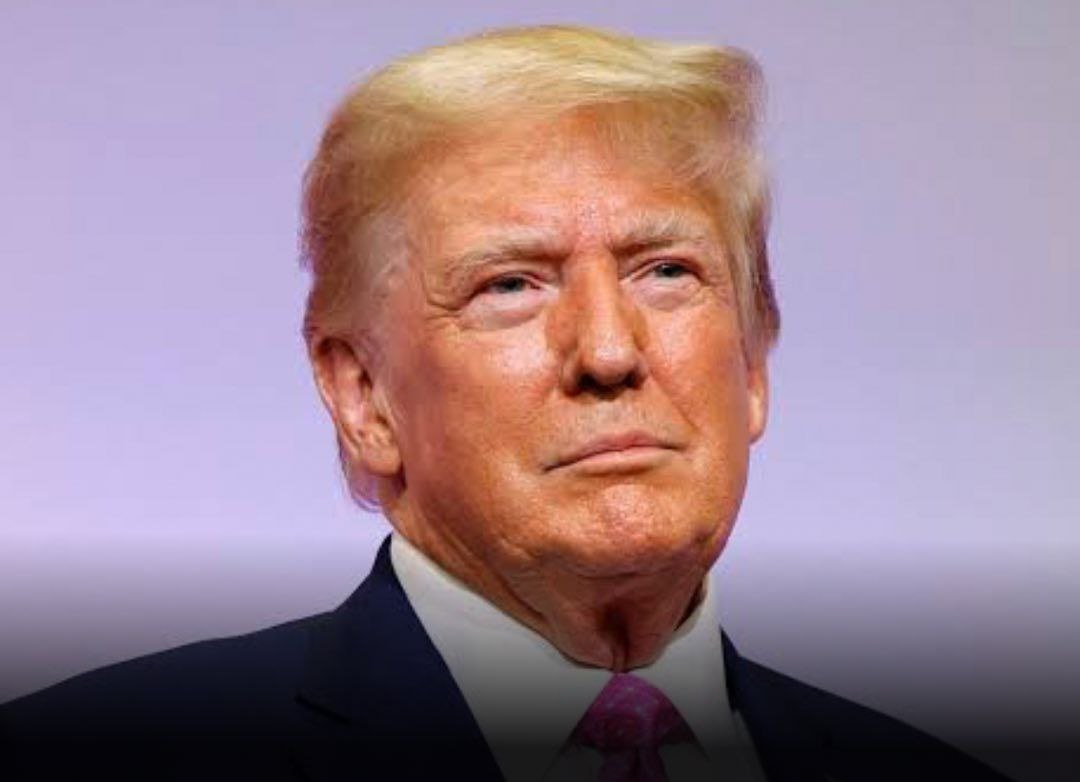
The White House has confirmed that US President Donald Trump is weighing a range of options including possible military action to assert control over Greenland, a move that has sharply escalated tensions with Denmark and raised fears of a catastrophic rupture within NATO.
The renewed focus on the mineral-rich, self-governing Arctic territory comes days after US forces captured Venezuelan President Nicolás Maduro, an operation that has already unsettled Washington’s allies. Now, Trump’s attention has turned northward.
White House Press Secretary Karoline Leavitt said Tuesday that acquiring Greenland has become a “national security priority” for the administration, framing the island as strategically vital in countering rivals such as Russia and China.
“The president and his team are discussing a range of options to pursue this important foreign policy goal,” Leavitt said in a statement to AFP. “Utilizing the US military is always an option at the commander in chief’s disposal.”
According to The Wall Street Journal, Secretary of State Marco Rubio told US lawmakers that Trump’s preferred approach remains purchasing Greenland from Denmark, adding that recent threats should not be interpreted as signaling an imminent invasion.
Denmark, however, has responded with stark warnings. Officials in Copenhagen said any attempt to seize Greenland by force would cause “everything to stop,” including NATO cooperation and nearly eight decades of close transatlantic security ties. An attack on Greenland would invoke NATO’s Article Five, which obligates members to defend any ally under assault a scenario that would effectively collapse the alliance.
Greenland’s Foreign Minister, Vivian Motzfeldt, wrote on social media that her government had sought a meeting with Rubio throughout 2025, but “it has so far not been possible.” Denmark’s Foreign Minister Lars Løkke Rasmussen said such a meeting could help “clear up certain misunderstandings.”
Greenland’s Prime Minister, Jens-Frederik Nielsen, was unequivocal: the island is not for sale, and only its 57,000 residents have the right to determine its future.
European allies have largely closed ranks around Denmark and Greenland, while carefully avoiding direct confrontation with Trump. Britain, France, Germany, Italy, Poland, Spain and Denmark issued a joint statement reaffirming “universal principles” of sovereignty, territorial integrity and the inviolability of borders.
At Ukraine peace talks in Paris, French President Emmanuel Macron and British Prime Minister Keir Starmer sought to play down the dispute as they met alongside Trump’s envoy Steve Witkoff and son-in-law Jared Kushner. Macron said he could not imagine a situation in which the United States would violate Danish sovereignty.
The United States currently maintains around 150 military personnel at Greenland’s Pituffik Space Base.
On the island itself, Trump’s remarks have been met with rejection and anger. “This is not something we appreciate,” said Christian Keldsen, director of the Greenland Business Association, speaking to AFP in the capital Nuuk. “It is not acceptable in the civilized world.”
Trump has floated the idea of annexing Greenland since his first term. In response, Denmark has significantly increased security spending over the past year, allocating roughly 90 billion kroner ($14 billion).
In Washington, the proposal has triggered rare bipartisan resistance. Still reeling from the fallout of Maduro’s capture, Democratic Senator Ruben Gallego of Arizona vowed to introduce a resolution blocking any invasion of Greenland. In a social media post, he accused Trump of reckless grandstanding, saying the president “wouldn’t think twice about putting our troops in danger if it makes him feel big and strong.”
Republicans also voiced opposition. House Speaker Mike Johnson said it would not be “appropriate” for the United States to take military action against Greenland. Senator Jerry Moran of Kansas warned the move would hasten “the demise of NATO,” while Nebraska Congressman Don Bacon dismissed the idea bluntly on X: “This is really dumb.”
As tensions simmer, allies and adversaries alike are watching closely, wary that Trump’s Greenland ambitions could redraw not just maps but the foundations of the post-war security order.