
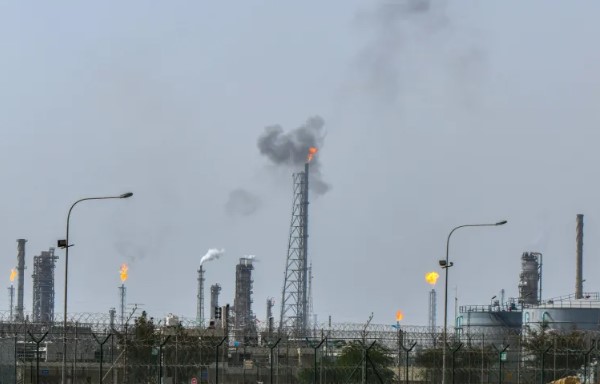
Iran has struck Kuwait’s largest oil refinery for the second consecutive day, sending fresh fires raging across multiple units of the Mina Al-Ahmadi facility on Friday morning as Kuwait marked Eid al-Fitr, the latest and most alarming escalation in Iran’s expanding campaign to destroy Gulf energy infrastructure in retaliation for Israeli strikes on its own energy assets.
Fires erupted across multiple units at the Mina Al-Ahmadi refinery, which processes approximately 730,000 barrels of oil per day, in the early hours of Friday as Kuwaitis celebrated the end of the holy month of Ramadan. Kuwait said firefighters were working to control the blazes and confirmed there were no immediate injuries from the attack. Kuwait’s state oil company, the Kuwait Petroleum Corporation, said several units had been shut down as a precaution to ensure workers’ safety.
The attack on Friday follows strikes that hit the same refinery on Thursday, where a first drone hit an operational unit at Mina Al-Ahmadi causing a limited fire that was quickly brought under control without injuries, followed shortly after by a second strike on the nearby Mina Abdullah refinery, also operated by Kuwait National Petroleum Company, triggering another fire at that site.
The Mina Al-Ahmadi refinery is Kuwait’s largest and oldest operational oil refinery, located approximately 45 kilometres south of Kuwait City along the Arabian Gulf coast, and is a critical component of Kuwait’s $16 billion Clean Fuels Project, which upgraded the facility to produce high-value, ultra-low-sulphur products meeting international environmental standards.
Kuwait’s military confirmed the country has faced a broader wave of aerial threats across both days. The General Staff said air defence systems were actively intercepting “hostile missile and drone attacks” targeting multiple locations, with explosions heard in several areas as interception systems engaged incoming projectiles. Residents were urged to follow safety instructions issued by authorities.
The strikes form part of a broadening Iranian campaign against Gulf Arab states, launched in retaliation for an Israeli strike earlier in the week on Iran’s South Pars gas field, the country’s largest, marking the first known Israeli strike on Iran’s upstream energy infrastructure since the conflict began on February 28.
Brent crude prices jumped to $119 per barrel on Thursday’s news before easing to around $114, though analysts warn the figures could spike far higher if the assault on Gulf energy infrastructure intensifies. Saudi Arabia has predicted oil prices could exceed $180 per barrel if disruptions continue into late April.
The Eid timing of Friday’s attack has sharpened its psychological impact. The Iranian drone barrage came as Kuwait marked the celebration signalling the end of Ramadan, a moment of religious and cultural significance across the Muslim world, underscoring Iran’s willingness to strike at any moment and against any target in its widening campaign against Gulf states hosting US military assets.
Since the start of the Iran war on February 28, Iranian strikes on Kuwait have killed six US soldiers and wounded dozens, destroyed a General’s aircraft, targeted the US garrison at Camp Buehring, struck the Kuwait International Airport and the Ali Al Salem Air Base, and hit a makeshift operations centre at Kuwait’s civilian port, making Kuwait one of the most heavily targeted non-combatant states in the conflict.
The UN Security Council held an urgent closed meeting on the attacks on Gulf energy sites, with multiple countries calling for an immediate moratorium on strikes targeting energy and water infrastructure across the Middle East.