
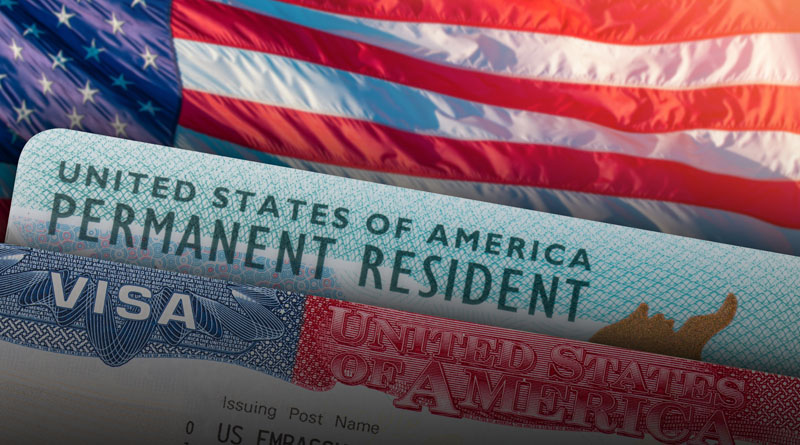
The Trump administration has announced a sweeping change to U.S. legal immigration procedures, directing most foreign nationals in the country on temporary visas to return to their home countries to complete green card applications.
The directive, issued Friday, May 22, 2026, by U.S. Citizenship and Immigration Services (USCIS), significantly restricts the long-standing process known as “Adjustment of Status,” which has for decades allowed eligible visa holders to apply for permanent residency without leaving the United States.
Under the new policy, in-country green card processing will be reserved only for applicants who qualify under narrowly defined “extraordinary circumstances.”
The policy represents a major departure from established immigration practice, which has allowed students, workers, and family-based applicants to remain in the U.S. while their permanent residency applications are processed.
USCIS said the change is intended to align immigration procedures with what it described as the original intent of federal law and to reduce administrative backlogs.
A USCIS spokesperson said applicants must now complete the process through U.S. embassies and consulates abroad, adding that the shift would also help streamline domestic processing workloads.
The Department of Homeland Security (DHS) said the revised approach would allow immigration agencies to focus more resources on citizenship applications and humanitarian cases.
The announcement has sparked concern among immigration attorneys and advocacy groups, particularly regarding its impact on individuals already in long-term residency queues.
Critics argue the policy could disrupt employment for skilled foreign workers in sectors such as technology, healthcare, and research, many of whom are in the United States on temporary work visas.
International students transitioning from study visas and spouses of U.S. citizens are also expected to face delays and extended separation periods due to limited appointment availability at overseas consulates.
Legal experts have also warned that applicants who have previously overstayed visas could face re-entry bans if required to leave the country to complete processing abroad.
Immigration advocacy organizations and business groups have signaled potential legal challenges, arguing that the policy could harm families and disrupt U.S. employers that rely on foreign talent.
Some industry figures have criticized the directive as destabilizing for sectors dependent on high-skilled immigration, warning it may discourage international professionals from pursuing long-term opportunities in the United States.
USCIS has stated that implementation will be handled on a case-by-case basis, but immigration lawyers are advising affected individuals to seek legal guidance before making international travel decisions pending potential court reviews of the policy.