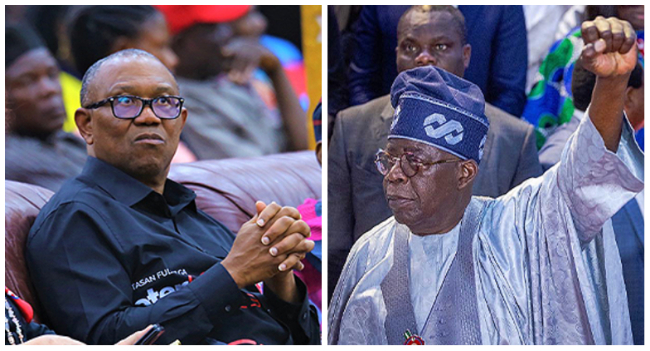
The Presidency has expressed confidence that Labour Party presidential candidate in the 2023 general election, Peter Obi, will not be able to replicate his electoral performance in Lagos State in the 2027 presidential election.
Special Adviser to President Bola Tinubu on Media and Public Communications, Sunday Dare, stated that the Presidency is not worried about Obi’s political prospects ahead of the next general election, insisting that the former Anambra State governor lacks the political strength to secure another victory in Lagos.
Dare made the remarks while reacting to ongoing discussions about the political landscape ahead of the 2027 elections. According to him, the outcome of the 2023 presidential poll in Lagos does not necessarily indicate how voters will decide in the next election cycle.
“We’re not afraid of Peter Obi. He can’t win Lagos again,” Dare said, expressing confidence that President Tinubu and the ruling All Progressives Congress (APC) remain firmly positioned in the state.
The presidential aide argued that the Tinubu administration is focused on implementing policies and programmes aimed at improving the economy, expanding infrastructure and addressing national challenges rather than engaging in early election campaigns.
He maintained that the administration believes its performance in office will ultimately shape voters’ decisions in 2027.
Peter Obi, who contested the 2023 presidential election on the platform of the Labour Party, recorded a surprise victory in Lagos State, defeating then-APC candidate Bola Tinubu in what many political observers described as one of the biggest upsets of the election. Obi’s victory in Nigeria’s commercial capital was widely attributed to strong support from young voters, urban professionals and members of the Obidient Movement.
Since the 2023 election, political conversations have increasingly shifted toward the 2027 contest, with analysts closely watching alliances, party realignments and the strategies of leading political figures.
Although no major political party has formally commenced campaigns for the next presidential election, comments from political leaders and government officials have continued to fuel public debate about the likely contenders and the balance of political power across the country.
Dare’s comments have drawn mixed reactions from political observers and supporters of the major parties. While APC supporters argue that Lagos remains the party’s traditional stronghold and that the 2023 outcome was an exception, Labour Party supporters insist that Obi’s performance reflected changing political dynamics and growing demand for alternative leadership.
Political analysts, however, caution that Nigeria’s electoral landscape remains fluid, noting that voter preferences, party coalitions, government performance and prevailing socio-economic conditions are likely to influence the outcome of the 2027 elections.
With more than a year before political parties are expected to begin formal campaign activities, discussions surrounding the next general election continue to gather momentum as key stakeholders position themselves for what is expected to be another fiercely contested presidential race.