The Sultan of Sokoto and President-General of the Nigerian Supreme Council for Islamic Affairs, Muhammadu Sa’ad Abubakar III, has expressed concern over the growing wave of religious intolerance and hate speech in Nigeria, warning that both pose a serious threat to the country’s unity and peaceful coexistence.
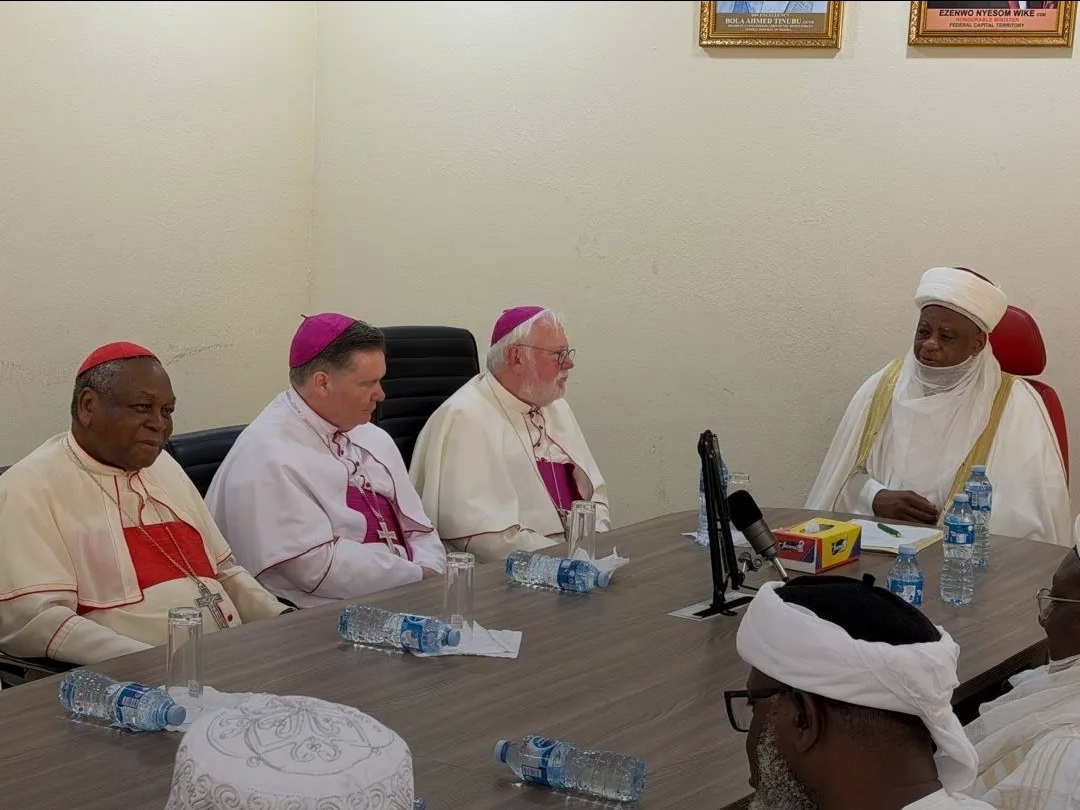
The Sultan made the remarks on Monday in Abuja through the Deputy Secretary-General of the NSCIA, Salisu Shehu, while receiving Paul Richard Gallagher, the Vatican’s Secretary for Relations with States and International Organisations.
The meeting formed part of ongoing efforts to strengthen interfaith dialogue and deepen collaboration between religious institutions in promoting peace, mutual understanding, and national development.
Speaking on behalf of the Sultan, Shehu said Nigeria’s religious and ethnic diversity should be regarded as a source of strength rather than division. He stressed that promoting tolerance, respect, and constructive engagement among different faith communities remains essential to preserving the country’s stability.
According to him, the increasing prevalence of inflammatory rhetoric and hate speech has continued to fuel distrust and tension among citizens, thereby undermining national cohesion.
He called on religious leaders, public office holders, community influencers, and citizens to embrace responsible communication and work collectively to foster peaceful coexistence across the country.
The Sultan also reaffirmed the NSCIA’s commitment to interfaith cooperation, noting that dialogue remains one of the most effective tools for resolving differences and preventing conflicts in a multi-religious society such as Nigeria.
In his remarks, Archbishop Gallagher underscored the importance of sustained collaboration between religious institutions in addressing common societal challenges. He commended efforts aimed at promoting peace and reaffirmed the Vatican’s commitment to supporting initiatives that encourage dialogue, reconciliation, and respect for religious diversity.
The Vatican envoy noted that faith leaders have a unique responsibility to promote understanding and discourage narratives capable of inciting violence or deepening social divisions.
The meeting concluded with both parties expressing optimism that stronger partnerships between Islamic and Christian leaders would contribute to national unity, peaceful coexistence, and lasting stability.
The visit reflects the longstanding engagement between the Vatican and Nigerian religious leaders in advancing interfaith relations, with both sides reiterating the need for continuous dialogue to address the country’s social and security challenges while fostering harmony among its diverse religious communities.