
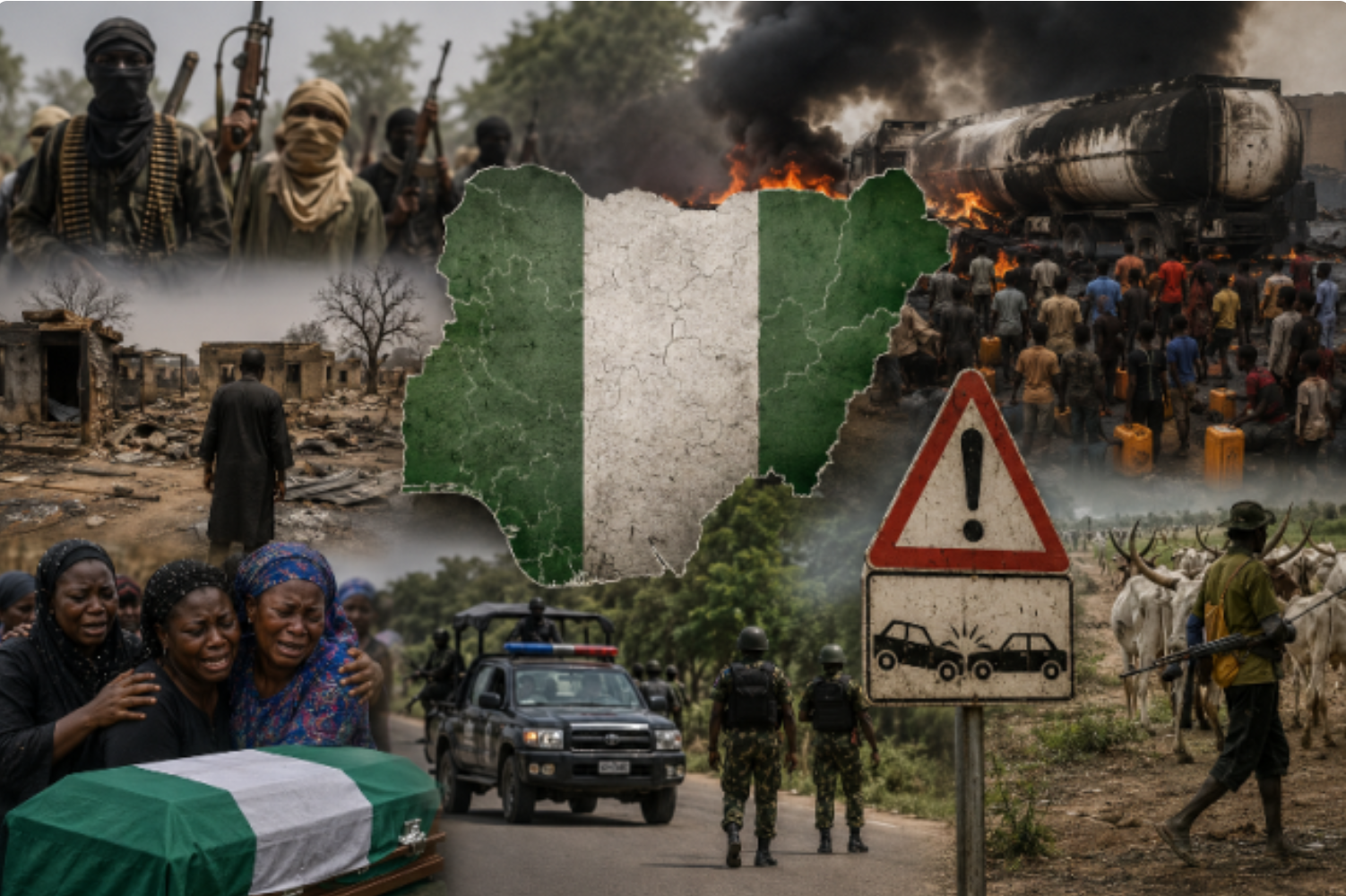
Nigeria recorded 882 security incidents and at least 792 fatalities across the country in June 2026, according to a new report by SARI Global, a crisis management and risk intelligence firm.
The report, published on the United Nations humanitarian platform ReliefWeb, said the incidents occurred across the 36 states and the Federal Capital Territory (FCT), reflecting the country’s persistent security challenges despite sustained military operations against insurgents and criminal groups.
According to the report, government security forces initiated 375 of the recorded incidents through counter-insurgency operations, law enforcement raids and security patrols. The operations led to the killing of 274 suspected terrorists and other criminal elements.
However, the report noted that non-state armed groups remained responsible for the highest number of deaths. Although they initiated 224 incidents during the month, they accounted for 337 fatalities, representing about 42.5 per cent of the total deaths recorded.
A major concern highlighted in the report was the worsening security situation in northern Borno State, where the Islamic State West Africa Province (ISWAP) reportedly intensified attacks aimed at disrupting humanitarian operations.
The group was said to have targeted communities around Monguno, Cross Kauwa, Baga and Kukawa, attacking humanitarian supply routes and aid workers. The report alleged that an employee of an international non-governmental organisation was abducted, while several trucks transporting relief materials along the Monguno-Gajiram road were set ablaze.
According to SARI Global, the attacks could further restrict humanitarian access to thousands of internally displaced persons (IDPs) who depend on aid in the affected communities.
The report warned that the increase in military operations should not be mistaken for a significant improvement in the country’s security situation.
It stated that while security agencies have intensified efforts to confront armed groups, the overall threat level remains high due to continued attacks by insurgents, bandits and other criminal networks.
Beyond the North-East, the report also highlighted persistent banditry in the North-West and growing threats against schools and educational facilities in several parts of the country.
It urged humanitarian organisations, development partners and educational institutions operating in conflict-prone areas to strengthen their security measures and regularly review operational plans to reduce risks.
The report concluded that although security forces have maintained sustained pressure on criminal groups, Nigeria continues to face complex security challenges requiring coordinated military, humanitarian and governance responses.