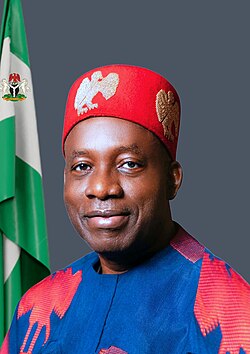

Chief of Staff to the President, Femi Gbajabiamila, and the Speaker of the Delta State House of Assembly, Emomotimi Guwor, have expressed support for the establishment of state police and the devolution of more powers to sub-national governments, describing both reforms as essential to addressing Nigeria’s security and governance challenges.
The two leaders made their positions known during discussions on constitutional reforms and the future of Nigeria’s federal system, arguing that strengthening the powers of states would improve security, enhance governance, and accelerate development across the country.
Gbajabiamila said the country’s evolving security landscape requires bold constitutional reforms that would enable state governments to play a more active role in maintaining law and order.
According to him, creating state police would complement the operations of existing federal security agencies and improve the capacity to tackle crimes such as kidnapping, banditry, communal clashes, and other security threats that often require local knowledge and rapid response.
He stressed that policing should reflect the realities of Nigeria’s diverse communities, noting that state-controlled police formations would be better positioned to gather intelligence and respond promptly to emerging threats.
Gbajabiamila also advocated for greater devolution of powers from the Federal Government to the states, arguing that decentralising certain responsibilities would strengthen governance and allow states to respond more effectively to the needs of their residents.
He said empowering states with greater constitutional authority would promote efficiency, deepen federalism, and encourage healthy competition in service delivery and economic development.
Echoing similar views, Delta State House of Assembly Speaker Emomotimi Guwor described state policing as a necessary step toward improving public safety and enhancing the country’s internal security architecture.
Guwor argued that state governments are often more familiar with the unique security challenges within their jurisdictions and should therefore be given greater responsibility for protecting lives and property.
He added that constitutional reforms should not only focus on policing but also on transferring additional powers and responsibilities to states to strengthen Nigeria’s federal structure.
The Speaker said effective devolution would enable state governments to design policies tailored to their specific developmental priorities while reducing excessive dependence on the Federal Government.
Both leaders maintained that constitutional amendments should reflect the aspirations of Nigerians and address long-standing concerns about governance, security, and fiscal federalism.
Their remarks come amid ongoing national conversations on constitutional reform, with stakeholders from across the country advocating changes aimed at improving governance, promoting accountability, and enhancing national unity.
Supporters of state police argue that decentralising policing would improve intelligence gathering, increase community participation in security, and reduce response times to criminal activities.
However, critics have cautioned that adequate constitutional safeguards and oversight mechanisms would be necessary to prevent the misuse of state police by political office holders.
The debate over state policing and power devolution has gained renewed momentum following recent legislative efforts to amend the Constitution, with proponents insisting that the reforms are critical to strengthening Nigeria’s democratic institutions and improving security nationwide.