What began as an allegation of impersonation has evolved into one of Nigeria’s most controversial public sector scandals, exposing alleged gaps in government administration, raising questions about the integrity of the federal budget process, and triggering a criminal prosecution that could have far-reaching implications for public accountability.
At the centre of the controversy is the Presidential Foreign Investment Promotion Council (PFIPC), an agency the Federal Government insists was never legally established but which allegedly operated from government premises, corresponded with several federal ministries, engaged foreign diplomatic missions, and even appeared in the 2026 Appropriation Act with a budgetary allocation of about ₦1.3 billion.
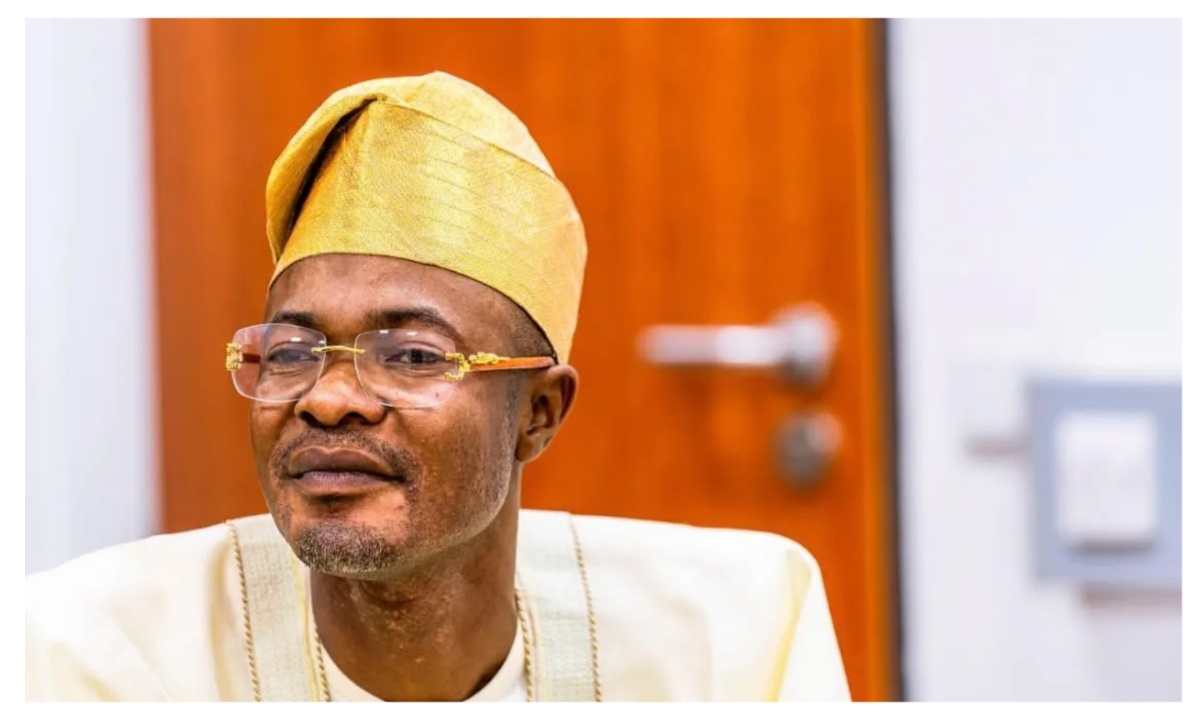
The controversy has attracted national attention following the arrest of the self-acclaimed Director-General of the council, Prince Adeniyi Adeyemi, who is facing criminal charges bordering on conspiracy, forgery and impersonation before the Federal High Court in Abuja.
The case took a dramatic turn after Justice Mohammed Garba Umar issued a bench warrant for Adeyemi’s arrest when he failed to appear for his scheduled arraignment.
The court heard that the defendant had repeatedly failed to honour court appearances since the matter was first filed in late 2025.
Although his lawyer argued that Adeyemi stayed away because he feared for his life and had written to President Bola Tinubu seeking an independent panel of inquiry, the court rejected the explanation and ordered security agencies to arrest him and produce him for trial.
He has since been arrested by the Nigeria Police and is expected to face trial on an eight-count charge.
According to the Nigeria Police Force, Adeyemi falsely presented himself as the Director-General of the PFIPC using forged presidential documents.
Investigators alleged that he forged an appointment letter purportedly signed by the Chief of Staff to the President, Femi Gbajabiamila, and produced other official-looking documents bearing presidential insignia.
The prosecution further alleged that the accused used the documents to seek office accommodation within the Federal Secretariat, correspond with ministries and government agencies, request diplomatic assistance from the Ministry of Foreign Affairs, and open dozens of bank accounts allegedly linked to the council.
Police also alleged that efforts were made to establish official financial structures for the council despite its alleged lack of legal existence.
Adeyemi has denied any wrongdoing.
The Presidency maintains that the PFIPC is not a legally recognized federal agency and has consistently described Adeyemi as an impostor.
Chief of Staff Femi Gbajabiamila was among the first senior government officials to publicly distance the Presidency from the council after allegedly discovering documents bearing his forged signature.
His office subsequently petitioned the Inspector-General of Police, leading to a criminal investigation.
Government officials insist that any documents linking the Presidency to the council were fabricated and that the matter should be resolved through the courts.
Perhaps the most puzzling aspect of the controversy is the appearance of the PFIPC in Nigeria’s 2026 federal budget.
Despite official claims that the agency does not exist, budget documents reportedly allocated approximately ₦1.3 billion to the council under the Presidency.
The revelation has generated widespread public debate and prompted lawmakers to initiate investigations into how an allegedly non-existent agency found its way into a budget approved by the National Assembly and signed into law.
Analysts say the issue goes beyond the criminal charges against Adeyemi, raising broader concerns about Nigeria’s budgeting process and internal administrative controls.
The House of Representatives has commenced inquiries aimed at determining how the allocation was inserted and whether established budget procedures were followed.
Before his arrest, Adeyemi made a series of allegations that further heightened public interest in the case.
In several media interviews, he claimed he spent about ₦400 million to secure his appointment, alleging that the money was raised through loans from associates.
He also claimed that additional payments were demanded before he could fully assume office and further alleged that disagreements arose after he refused to surrender a substantial percentage of the agency’s proposed take-off funds.
The Presidency has strongly denied the allegations, describing them as false and intended to divert attention from the criminal charges against him.
To date, no court has made any findings on the bribery allegations, and they remain unproven.
Adding another layer of intrigue to the controversy is the death of Dolapo Babatunde Tanimola, whom Adeyemi identified as a key intermediary in the events leading to his alleged appointment.
Tanimola reportedly sustained severe burns following a fire at a hotel in Abuja in October 2025 before later dying at the National Hospital.
The incident attracted widespread attention after reports emerged that the hotel where the fire occurred was demolished shortly afterwards.
While the timing of the demolition has fueled public speculation, authorities have not officially linked it to the PFIPC investigation, and no official investigation has concluded that the fire or demolition was connected to the criminal case.
As the matter heads to trial, several questions continue to dominate public discourse.
Foremost among them is how an agency the Federal Government describes as fictitious appeared in the national budget with a multi-billion-naira allocation.
Questions have also been raised about whether government administrative processes were sufficiently robust to prevent alleged forged documents from being processed by multiple public institutions.
Observers are equally awaiting clarity on the circumstances surrounding the death of Tanimola and whether the various allegations made by Adeyemi against senior government officials will feature during the court proceedings.
Legal analysts believe the forthcoming trial could become one of the most closely watched public corruption cases in recent years.
Beyond determining Adeyemi’s criminal liability, the proceedings are expected to shed light on the authenticity of official documents, the integrity of Nigeria’s public administration, and the safeguards within the country’s budgeting system.
For many observers, the PFIPC saga is no longer simply about one individual’s alleged impersonation. It has become a broader test of institutional accountability, transparency and governance.
As the Federal High Court prepares to hear the substantive case, Nigerians will be looking to the judicial process for answers to the many questions surrounding what has become widely known as the country’s alleged “phantom agency” scandal.