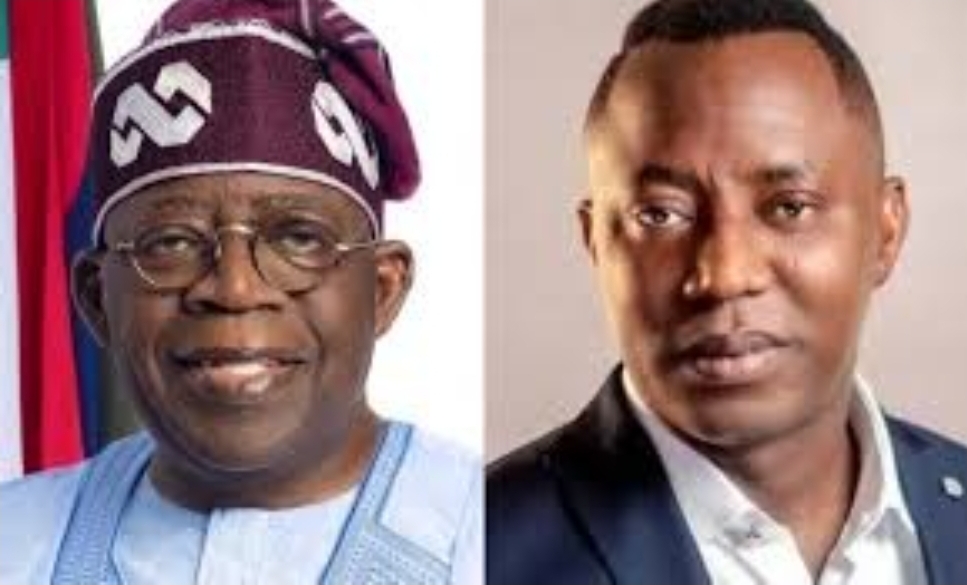
African Action Congress (AAC) presidential candidate Omoyele Sowore has pledged to reverse the naming of public infrastructure and facilities after President Bola Tinubu and other political figures if elected president in the 2027 general election.
Sowore made the declaration while outlining his vision for governance, arguing that public assets should not be named after serving or recently serving political office holders. He maintained that national monuments and government-owned infrastructure should reflect collective national values rather than celebrate individuals in positions of power.
According to the AAC candidate, his administration would review the names of public facilities currently bearing the names of political leaders and reverse those he believes do not align with principles of accountability and institutional integrity.
He argued that government projects are financed with public funds and should therefore be regarded as national assets rather than monuments dedicated to political office holders.
Sowore said his proposal is aimed at promoting a culture of modesty in public service and ensuring that elected officials are remembered for their contributions through history rather than by naming public infrastructure after themselves.
“If elected, we will reverse the naming of public facilities after President Bola Tinubu and other politicians. Public assets belong to the Nigerian people, not to individuals occupying public office,” he said.
Also read:Sowore introduces mobile app to strengthen 2027 election campaign
The former presidential candidate added that public recognition should be reserved for individuals whose contributions have stood the test of time and whose legacies have received broad national acceptance.
He also criticised what he described as the increasing politicisation of public institutions, arguing that government resources should be managed in a manner that reflects transparency, accountability, and democratic values.
Sowore reiterated his commitment to reforms aimed at strengthening public institutions, combating corruption, and promoting responsible governance if elected in 2027.
His comments come amid ongoing political activities and debates ahead of the next general election, with prospective candidates outlining their policy priorities and campaign promises.
The proposal is expected to generate mixed reactions among political stakeholders and the public. While supporters may view it as a step toward reinforcing institutional neutrality, critics could argue that the naming of public facilities has long been used to honour individuals considered to have made significant contributions to national or state development.
Across Nigeria, numerous roads, airports, public buildings, educational institutions, and other government facilities have been named after former presidents, military leaders, statesmen, and other notable public figures.
Whether such naming should include serving public office holders has remained a subject of public debate, with opinions differing on the appropriate criteria for recognising national service.
As political campaigns gradually gather momentum ahead of the 2027 elections, Sowore said his administration, if elected, would prioritise institutional reforms that place public interest above personal or political recognition.