
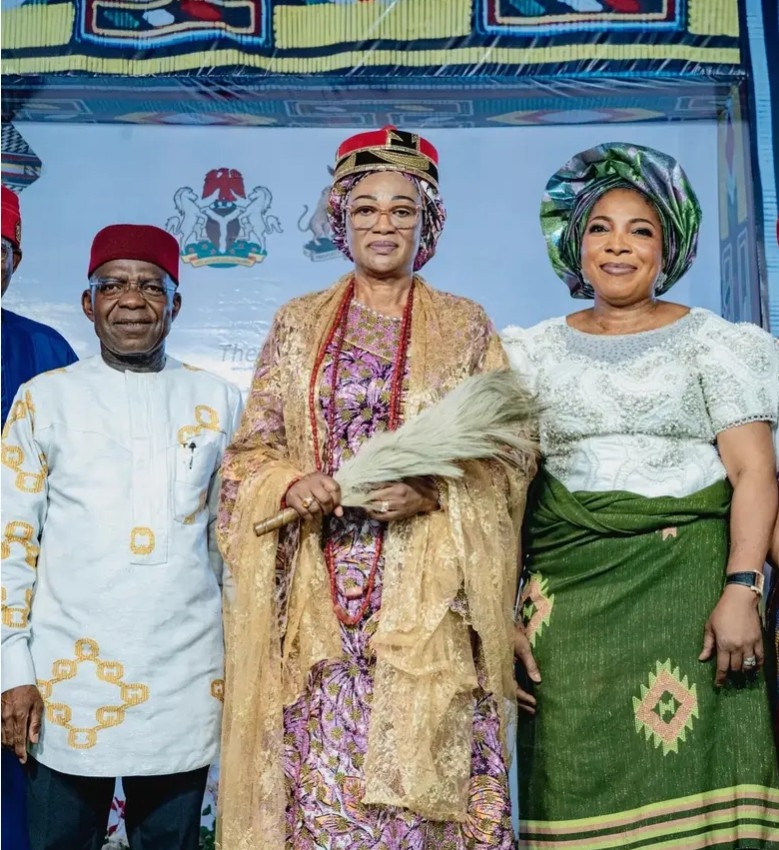
Nigeria’s First Lady, Senator Oluremi Tinubu, has announced a ₦2 billion donation to support the preservation and expansion of the historic Akwete weaving industry in Abia State, describing the centuries-old textile tradition as a vital part of the nation’s cultural and economic heritage.
The announcement was made on Tuesday during her visit to Akwete in Ukwa East Local Government Area of Abia State, where she toured the renowned Akwete Weaving Cooperative Society and met with local artisans engaged in the production of the handwoven fabric.
Speaking during the visit, the First Lady said the intervention would support the development and upgrading of the Akwete production site, with the aim of creating employment opportunities, improving local livelihoods and strengthening the state’s economy through indigenous textile production.
She praised the craftsmanship of Akwete fabric, noting that the textile woven primarily by women using cotton, raffia and silk on traditional vertical looms is globally recognised for its intricate geometric patterns and vibrant colours.
Tinubu urged Nigerians, particularly prominent sons and daughters of the South-East, to support efforts to preserve and promote the indigenous fabric, saying the industry has significant potential to generate income, attract investment and showcase Nigeria’s cultural identity on the global stage.
According to the First Lady, preserving Akwete weaving goes beyond safeguarding a cultural tradition, as it also offers opportunities for youth employment, women’s economic empowerment and the expansion of Nigeria’s creative economy.
The visit formed part of activities aimed at promoting the historic Akwete weaving heritage. Governor Alex Otti and his wife, Priscilla Otti, received the First Lady during the visit, which included a tour of the weaving cooperative and a civic reception attended by government officials, traditional rulers, community leaders and residents.
The Akwete fabric, indigenous to Akwete community in Abia State, is regarded as one of Nigeria’s oldest traditional handwoven textiles and remains a symbol of Igbo cultural heritage. Stakeholders have long advocated greater investment in the industry to preserve the craft and improve its commercial value in both local and international markets.