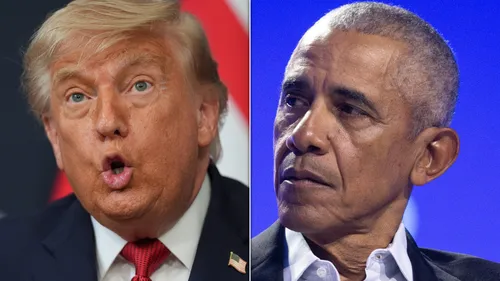
The signing of a new preliminary agreement between the United States and Iran has sparked renewed debate among foreign policy experts, with analysts drawing comparisons between the 2015 Joint Comprehensive Plan of Action (JCPOA) negotiated under former U.S. President Barack Obama and the recently signed 2026 Memorandum of Understanding (MoU) brokered under President Donald Trump.
The new agreement, signed in June 2026 following weeks of heightened tensions and military confrontation between both countries, is aimed at stabilizing relations, maintaining a ceasefire and ensuring the reopening of key international shipping routes in the Gulf region.
While both agreements were designed to ease tensions surrounding Iran’s nuclear programme, observers note significant differences in their structure, scope and implementation.
The 2015 JCPOA was negotiated between Iran and six world powers, including the United States, the United Kingdom, France, Germany, Russia and China. Under the agreement, Iran accepted strict limits on uranium enrichment and reduced its stockpile of enriched uranium in exchange for the lifting of international sanctions.
Supporters of the accord argued that it significantly delayed Iran’s ability to develop a nuclear weapon and established one of the most comprehensive international inspection regimes ever implemented. Critics, however, maintained that the deal failed to address Iran’s ballistic missile programme and regional influence through allied groups across the Middle East.
The new 2026 MoU takes a different approach. Negotiated primarily between Washington and Tehran, the framework seeks to preserve a ceasefire following recent hostilities while creating a pathway toward broader negotiations.
Under the arrangement, the United States agreed to ease certain sanctions affecting Iranian oil exports and financial transactions, while Iran committed to extending a temporary ceasefire and reducing the concentration of its enriched uranium stockpile under international supervision.
The agreement has generated mixed reactions. Supporters argue that it provides an immediate mechanism to prevent further escalation in a volatile region and helps restore stability to global energy markets. They contend that diplomatic engagement remains the most practical route to preventing a wider conflict.
Critics, however, question whether the agreement provides sufficient guarantees regarding Iran’s nuclear activities. Some analysts argue that granting sanctions relief before securing a comprehensive long-term agreement may weaken future negotiating leverage. Others express concerns that the framework does not directly address Iran’s missile capabilities or broader regional security issues.
Foreign policy experts remain divided over which agreement offered stronger safeguards. Advocates of the JCPOA argue that its extensive verification measures and strict limitations on uranium enrichment provided greater long-term protection against nuclear proliferation. Conversely, supporters of the 2026 framework contend that it addresses immediate security concerns and reflects current geopolitical realities.
As negotiations continue, diplomats and security analysts say the ultimate success of the new agreement will depend on whether both sides can translate the interim framework into a durable and enforceable long-term settlement.
The renewed debate highlights the enduring challenge facing successive U.S. administrations: balancing diplomatic engagement, economic pressure and regional security concerns while attempting to prevent a nuclear crisis in the Middle East.