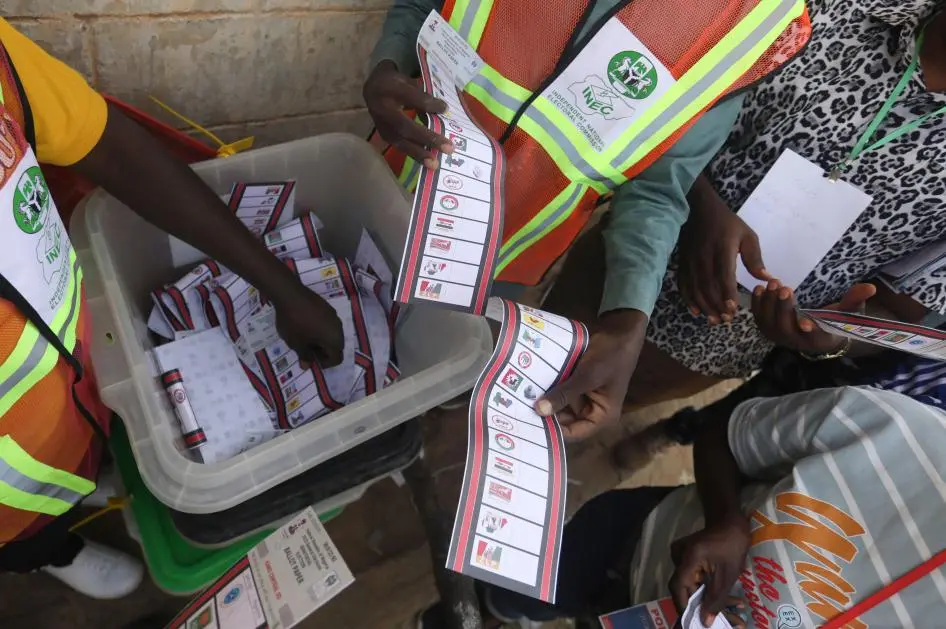
As Nigeria edges closer to the 2027 general elections, efforts to build a united opposition front are facing mounting uncertainty, with political actors struggling to reconcile competing ambitions, legal disputes, and internal mistrust.
The debate has intensified following Oyo State Governor Seyi Makinde’s “Mapo Declaration” in Ibadan, where he unveiled a proposed PDP–APM alliance as part of a broader attempt to reshape opposition politics ahead of the next election cycle.
While the initiative was presented as a pathway toward consolidation, political developments since then suggest that the wider opposition remains deeply fragmented, with little consensus on structure, leadership, or strategy.
At the centre of the opposition crisis is the ongoing division within the Peoples Democratic Party (PDP), which remains split between rival factions contesting control of the party’s leadership and electoral direction.
One faction aligned with FCT Minister Nyesom Wike has publicly rejected the PDP–APM arrangement, describing it as unauthorised and inconsistent with the party’s official structure. The dispute has further complicated efforts to present a unified opposition platform.
Beyond the PDP, broader coalition talks involving former presidential candidate Peter Obi and other political actors have also yet to produce a clear agreement on leadership or candidate selection. Discussions involving multiple opposition blocs remain ongoing, but insiders say consensus is still far from reach.
The African Democratic Congress (ADC) has meanwhile emerged as a potential neutral platform for negotiations, although concerns about internal trust and political infiltration have slowed progress toward a formal merger.
While opposition parties continue to negotiate, the ruling All Progressives Congress (APC) is said to be strengthening its internal structure ahead of the elections, with preparations for party primaries already underway.
Analysts say the APC’s organisational cohesion and incumbency advantages place it in a stronger position compared to a divided opposition landscape.
Political observers note that the ruling party’s strategic advantage may lie less in its popularity and more in the fragmentation of its rivals, which could split votes across multiple opposition candidates in 2027.
A major obstacle to opposition unity remains what analysts describe as a “trust deficit” among key political actors, driven by suspicions of hidden allegiances, competing ambitions, and unresolved leadership questions.
The absence of an agreed mechanism for selecting a single presidential candidate has further complicated coalition talks, with no clear consensus on how parties such as the PDP, Labour Party, and NNPP would share power within a unified structure.
Political analysts warn that without resolving these internal contradictions, the opposition risks entering the 2027 elections in multiple competing blocs rather than a single coordinated front.
With electoral timelines tightening, experts say the window for forming a legally recognised and operational opposition merger is closing rapidly.
While initiatives such as Makinde’s Ibadan Declaration have provided momentum for coalition discussions, ongoing disputes within the PDP and cautious positioning by other major political figures suggest that a fully unified opposition remains uncertain.
As the 2027 race approaches, analysts say Nigeria’s electoral outcome may ultimately depend less on policy platforms and more on whether opposition leaders can overcome personal rivalries long enough to present a unified challenge at the ballot box.