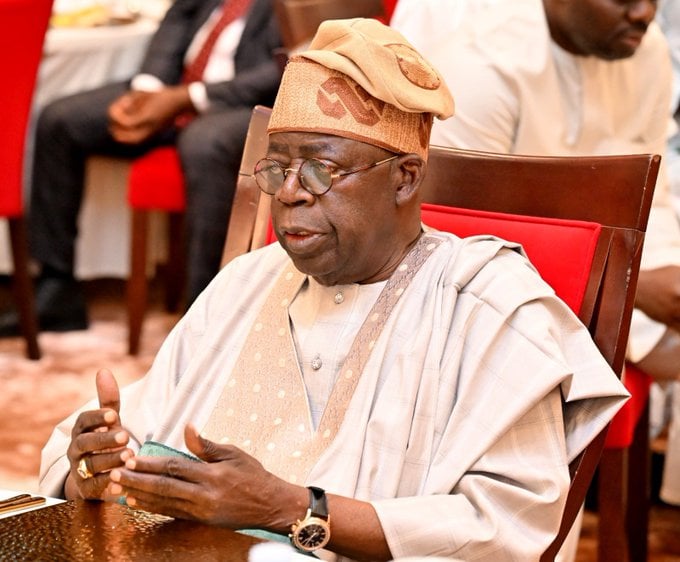
President Bola Tinubu has delivered a passionate tribute to Nigerian creativity and resilience at the closing reception of the Nigerian Modernism exhibition at Tate Modern in London, the highlight of a two-day state visit to the United Kingdom that has yielded billions in new investment deals and the strongest diplomatic reset between the two nations in nearly four decades.
Addressing dignitaries, Nigerian diaspora members, and international guests at the Tate Modern, Tinubu described the exhibition as “a testament to a revolution,” reflecting on the bold generation of Nigerian artists who, in the mid-20th century, redefined their narrative and asserted their identity beyond colonial constructs. “It is a profound honour to stand here to witness the soul of Nigeria on display. What we see here is a people who have taken the best of global techniques and infused them with the enduring rhythms of our heritage,” he said.
The president commended Access Holdings and Coronation Group for supporting the exhibition, saying: “By bringing these works to London, you are not just hosting an exhibition; you are facilitating a vital dialogue between our past and our shared future.” He also stressed the need for sustained partnerships between government, the private sector, and international stakeholders to deepen funding structures and enhance global visibility for Nigerian creatives.
Turning to Nigerians in the diaspora, Tinubu urged them to draw inspiration from the artists on display. “You come from a lineage of pioneers — the ability to innovate, adapt and lead,” he said, reaffirming the importance of cultural diplomacy. “Art has no borders. It is the language of our common humanity,” he added.
The president also used the occasion to project optimism about Nigeria’s economic trajectory. “As I stand before you, I can tell you that we have navigated our way out of a dark tunnel, a tunnel of economic uncertainty and the hopelessness of the past. Today, we look toward a bright future that we want to bring to every Nigerian,” he said.
The Nigerian Modernism exhibition at Tate Modern celebrates the achievements of Nigerian artists working before and after independence from British colonial rule in 1960. It explores artistic networks that spanned Zaria, Ibadan, Lagos and Enugu, as well as London, Munich and Paris, and features works by more than 50 artists including Uzo Egonu, El Anatsui, Ladi Kwali, and Ben Enwonwu MBE — a generation that fused Nigerian, African, and European techniques to produce vibrant and multidimensional works.
Cultural advocate Mudiare Onobrakpeya seized on Tinubu’s attendance to call on the government to allocate a fixed percentage of public infrastructure budgets for art and to establish a national museum dedicated to modern Nigerian art. He warned that while Nigerian art is gaining global recognition, with increasing interest from collectors and international institutions, domestic structures supporting the sector remain fragile. “The conversation has shifted. Yet at home, much of the structure supporting this momentum remains fragile,” he said.
The exhibition visit capped a packed itinerary. Tinubu was received at Windsor Castle by King Charles III and Queen Camilla and attended a state banquet in his honour, before holding bilateral talks with Prime Minister Keir Starmer at 10 Downing Street the following day. The visit culminated in the signing of several memoranda of understanding covering trade, investment, defence, and cultural cooperation, as well as a landmark £746 million financing agreement between UK Export Finance and Nigerian authorities for the refurbishment of the Lagos Port Complex and the Tin Can Island Port Complex.