The US-Israel war on Iran entered its eleventh day on Tuesday with contradictory signals from Washington deepening global uncertainty, as oil prices swung wildly, Iran vowed to fight indefinitely, and African economies began absorbing the shockwaves of the biggest global energy crisis in years.
President Donald Trump gave conflicting signs on Monday in a series of remarks about the war strategy. In one interview he said the war was “very complete, pretty much” and would be a “short-term excursion,” causing stocks to jump and oil prices to drop, before telling House Republicans that “we haven’t won enough” and calling for “ultimate victory” against Iran.
Trump said the United States “will not relent until the enemy is totally and decisively defeated,” and separately, together with Israeli Prime Minister Benjamin Netanyahu, would set “the terms of surrender” with Iran.
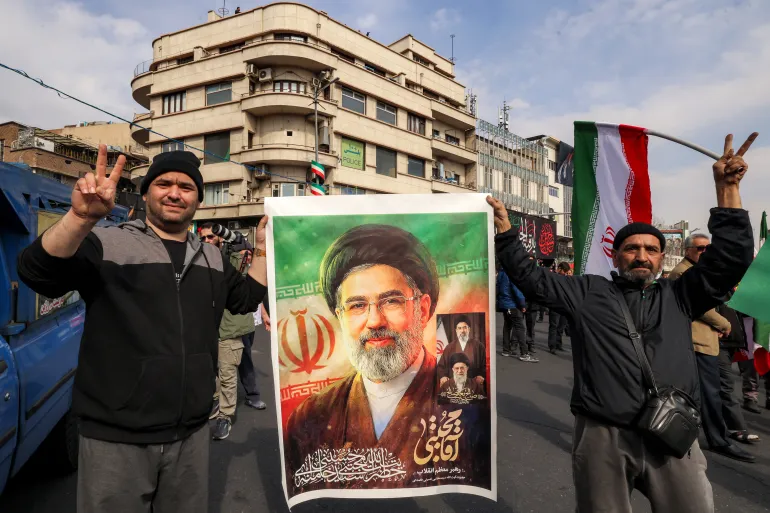
Tehran’s position remains unambiguous. A senior Iranian official told CNN there was no prospect for an immediate end to the conflict, saying Israel’s attacks on oil and fuel depots had pushed the war into a “new phase” and threatening retaliatory strikes on further energy infrastructure. Iran launched fresh attacks on Israel and several Gulf states on Tuesday, with Turkey, which borders Iran, reporting that NATO defences intercepted a missile headed its way for the second time in the conflict.
Iran’s new Supreme Leader Mojtaba Khamenei, 56, the son of the assassinated Ayatollah Ali Khamenei, has close ties with the Revolutionary Guard and has signalled a continuation of his father’s hard-line stance. The US identified its seventh military casualty, Sgt. Benjamin N. Pennington, 26, of Kentucky, who died of injuries sustained during a March 1 attack on a base in Saudi Arabia.
The price of Brent crude briefly neared $120 a barrel on Monday before dropping below $90 on Tuesday as G7 finance ministers pledged to take “necessary measures” to stabilise the market and Trump’s comments hinted at a possible end to the war. Before the war broke out, crude was trading at $70 a barrel. Roughly nine million barrels of oil per day are now off the market due to facilities being hit or producers taking precautionary measures, according to energy analysts. Ships carrying roughly 20 million barrels of oil a day remain stranded in the Persian Gulf, unable to safely pass through the Strait of Hormuz.
The US State Department ordered non-emergency diplomats to leave Saudi Arabia, reflecting growing risks to American personnel as the conflict deepens. A US service member had already died following an attack on a Saudi military base. Russia’s President Putin sent a congratulatory telegram to Iran’s new supreme leader and dispatched his foreign affairs adviser to convey diplomatic proposals for a swift political settlement, while China’s top diplomat Wang Yi reiterated Beijing’s call for an end to the military action, lamenting it as a war that “should never have happened.”
Africa is proving structurally exposed to the conflict. The continent is a net importer of refined fuel, hosts military bases within reach of Iranian missiles, and relies heavily on remittances from hundreds of thousands of migrant workers in the Gulf all now under threat. Pump prices in Nigeria were up around 14 per cent in the past week alone.
Nigerian think tank SBM Intelligence said the crisis had exposed the government’s “wait-and-see” approach to international affairs, which leaves its “economic interests subject to forces beyond our control.”
In South Africa, the rand has weakened sharply as investors flee to safe-haven assets, and economists warned that oil prices sustained above $110 per barrel could push consumer inflation above 4% in the second quarter, potentially forcing the Reserve Bank to raise interest rates, a move that would choke off the country’s fragile economic recovery.
Oxford Economics estimates the energy shock could raise global inflation by 0.3 to 0.4 percentage points in late 2026 while trimming about 0.1 percentage point from global economic growth, a toll that will fall disproportionately on the world’s most vulnerable economies.