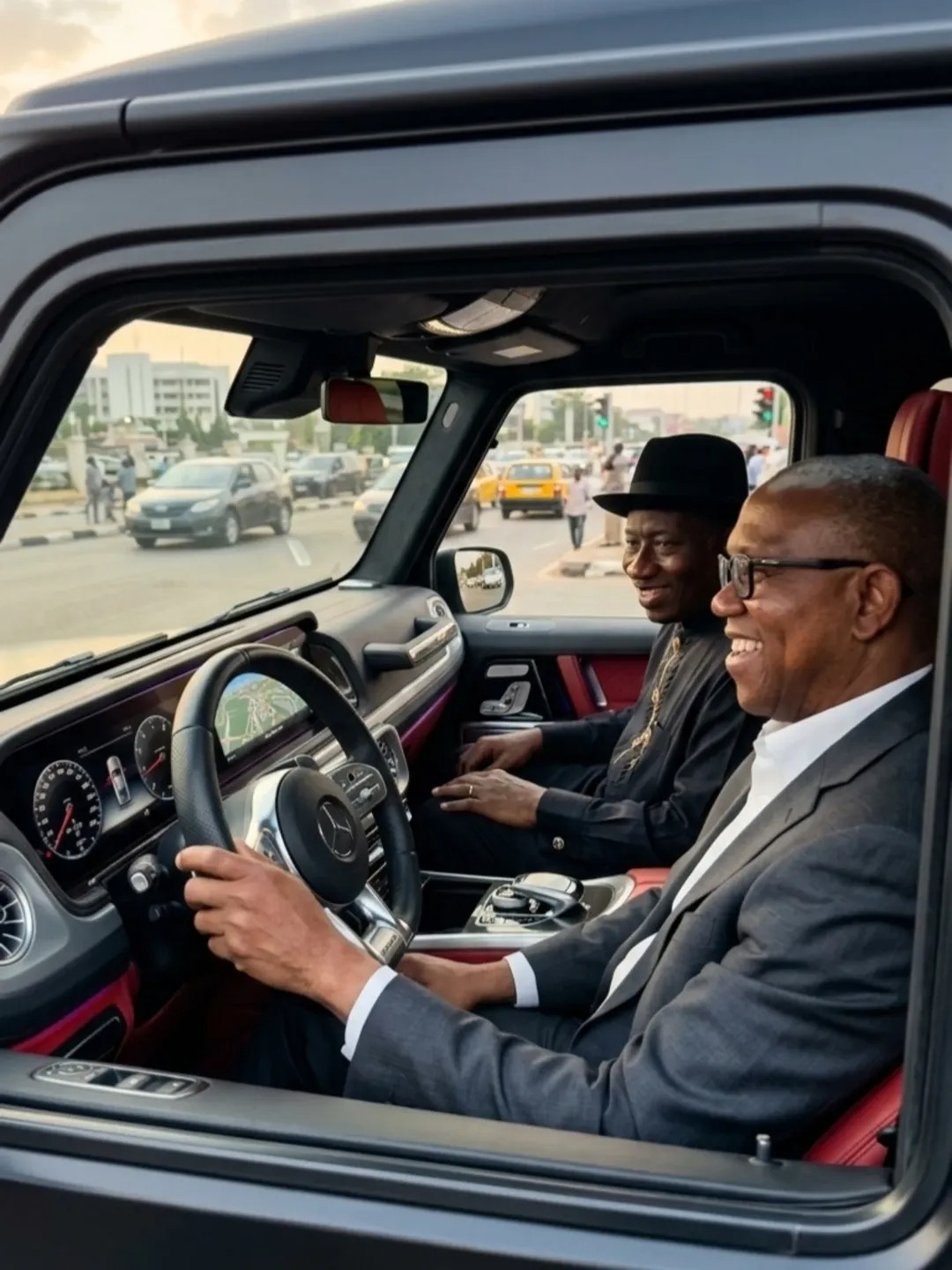
A social media post by former President Goodluck Jonathan featuring a photograph of himself with Labour Party’s 2023 presidential candidate, Peter Obi, has triggered widespread political debate across Nigeria, with discussions centering on voter apathy and possible early alignments ahead of the 2027 general elections.
The image, shared on Jonathan’s verified social media accounts, showed both men seated together in the back of a vehicle. However, it was the former president’s accompanying message on Nigeria’s declining voter participation that quickly became the focal point of national discourse.
In his post, Jonathan highlighted the gap between Nigeria’s growing population and digital engagement versus actual voter turnout, noting that while the country has tens of millions of active social media users, only a fraction of eligible voters consistently participate in elections.
He referenced historical voting figures, pointing out that Nigeria’s highest recorded turnout stands at just over 42 million votes, despite a population exceeding 240 million and millions of active online users.
The former president also drew attention to the 2023 general elections, where turnout was significantly low despite intense political campaigns and high youth engagement on social media platforms.
The post has since generated divided interpretations among political commentators and online users.
One school of thought argues that the message, combined with the photograph of Jonathan and Obi, signals early political consultations and possible behind-the-scenes alignment ahead of 2027. Supporters of this view point to Peter Obi’s ongoing engagements with political stakeholders nationwide as evidence that the image may carry deeper political meaning.
Others, however, insist the post should be viewed strictly as a civic message from a statesman concerned about democratic participation. They note Jonathan’s history of advocating peaceful elections and political stability, arguing that the inclusion of Obi in the image may simply reflect a strategic choice to reach younger, digitally active Nigerians.
The development has intensified conversations about the role of social media in shaping political perception in Nigeria, where online engagement often drives narratives that may not always translate into real-world voter turnout.
Analysts say the incident highlights a growing tension in the country’s political landscape: the contrast between high digital political activity and consistently low electoral participation at polling units.
As discussions continue, Jonathan’s post has further amplified concerns among stakeholders about how to convert online political enthusiasm into actual votes in the 2027 elections, as parties quietly begin positioning themselves for the next electoral cycle.