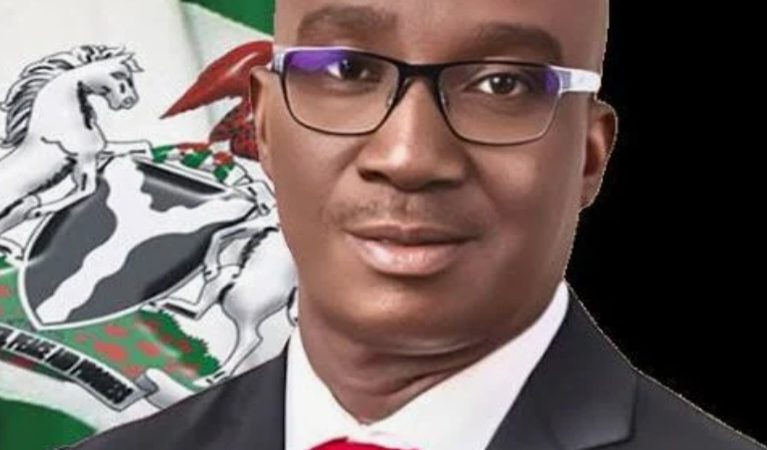

Former Ekiti State Governor Ayodele Fayose has sparked fresh political controversy by suggesting without offering evidence that the abduction of schoolchildren and teachers in Oyo State may have been deliberately staged to embarrass President Bola Tinubu.
Fayose made the claim while appearing on Channels Television’s Politics Today programme, saying: “In Oyo State, I strongly believe though I might be wrong but this sometimes might be orchestrated.” The comment was widely interpreted as an allegation that the Oyo State Government, led by Governor Seyi Makinde, had a hand in facilitating the attack.
Fayose argued that the blame for insecurity should not rest solely with the presidency, noting the existence of a clear governance hierarchy from local governments to states each of which holds security responsibilities and security votes.
The attack occurred on May 15, 2026, when heavily armed gunmen simultaneously stormed three educational institutions in the Oriire Local Government Area of Oyo State, Community Grammar School, Baptist Nursery and Primary School in Yawota, and L.A. Primary School in Esiele seizing 39 students and pupils, mostly children aged between two and 16, alongside seven teachers.
The attackers, who reportedly arrived on motorcycles, struck the schools in quick succession. The violence also claimed lives during the raid, including that of a school official and a motorcyclist.
President Tinubu condemned the abductions as “barbaric” and dispatched a high-powered federal delegation to Ogbomoso, including the National Security Adviser, Nuhu Ribadu; Chief of Staff Femi Gbajabiamila; Inspector General of Police Tunji Disu; and Defence Minister Christopher Musa.
The allegation is particularly striking given that Fayose, a prominent figure in the Peoples Democratic Party (PDP), the same party as Governor Makinde has in recent months positioned himself closer to the Tinubu camp. In a separate comment on the same programme, he credited the president for doing his best to address the country’s deteriorating security situation.
Fayose was careful to qualify his allegation with the caveat that he could be wrong, yet the claim was explosive enough to generate immediate headlines. His remarks stop short of providing any factual basis for the suggestion of state level complicity.
There was no immediate response from Governor Makinde’s office to the allegation at the time of publication.
The abduction has set off a storm of political recriminations. The Nigeria Union of Teachers ordered an indefinite strike by primary and secondary school teachers in Oyo State, while nationwide solidarity rallies were called. Oyo’s APC chapter demanded the governor’s resignation, and President Tinubu approved 1,000 forest guards while considering establishing a military base in the region.
In a distressing video circulated online, Rachael Alamu, principal of Community High School, appealed to both President Tinubu and Governor Makinde to pursue negotiations rather than a forcible rescue, warning that military action could put lives at greater risk. “We are in the cold, under the sun and rain,” she said, urging professional bodies and well-meaning Nigerians to intervene.
Fayose’s allegation adds a deeply contentious political dimension to a crisis that families, educators, and civil society groups are still desperate to resolve through the safe return of all those still in captivity.