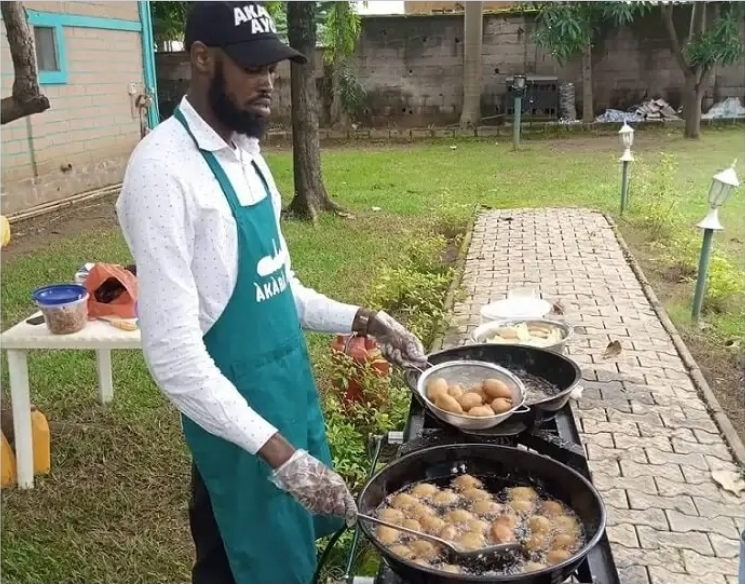
An akara vendor, Ayobami Ogunmoroti, has narrated how financial support from Nigeria’s First Lady, Senator Oluremi Tinubu, helped transform his small business from operating under a tree to running a fully established kiosk.
Ogunmoroti shared his experience while recounting the impact of the assistance he received through an empowerment initiative supported by the First Lady, describing the intervention as a turning point in his entrepreneurial journey.
According to him, he previously sold akara under a tree with limited resources, making it difficult to expand his business or attract more customers.
He said the financial support enabled him to acquire essential equipment and establish a permanent kiosk, significantly improving both his working conditions and daily sales.
“The support I received changed my life. I moved from selling under a tree to operating from a proper kiosk, and my business has continued to grow,” Ogunmoroti said.
He explained that the improved business environment has not only increased his income but also boosted customer confidence, allowing him to serve more people and better support his family.
Ogunmoroti expressed gratitude to the First Lady for the intervention, saying the assistance gave him the opportunity to become more financially stable and pursue his business with renewed confidence.
He noted that beyond expanding his enterprise, the support inspired him to work harder and explore additional opportunities for growth.
The vendor encouraged government institutions, corporate organisations, and well-meaning Nigerians to continue investing in small businesses, describing micro-enterprises as critical drivers of employment and economic development.
He said timely financial assistance can help many entrepreneurs overcome startup challenges and create sustainable livelihoods.

The empowerment initiative forms part of broader efforts aimed at supporting small-scale entrepreneurs, women, and youths through financial assistance, skills development, and business support programmes.
Such initiatives are designed to promote financial inclusion, reduce poverty, and encourage entrepreneurship by providing beneficiaries with resources to strengthen their businesses.
Stakeholders have consistently emphasised the importance of supporting micro, small and medium-sized enterprises (MSMEs), noting that they contribute significantly to Nigeria’s economy through job creation and local production.
Economic analysts argue that expanding access to financing, business training, and market opportunities remains essential to unlocking the full potential of small businesses across the country.
For Ogunmoroti, the assistance marked a new chapter in his entrepreneurial journey, transforming what began as a modest roadside venture into a more structured and sustainable business.
He expressed optimism about the future, saying he hopes to continue expanding his akara business and create employment opportunities for others as it grows.