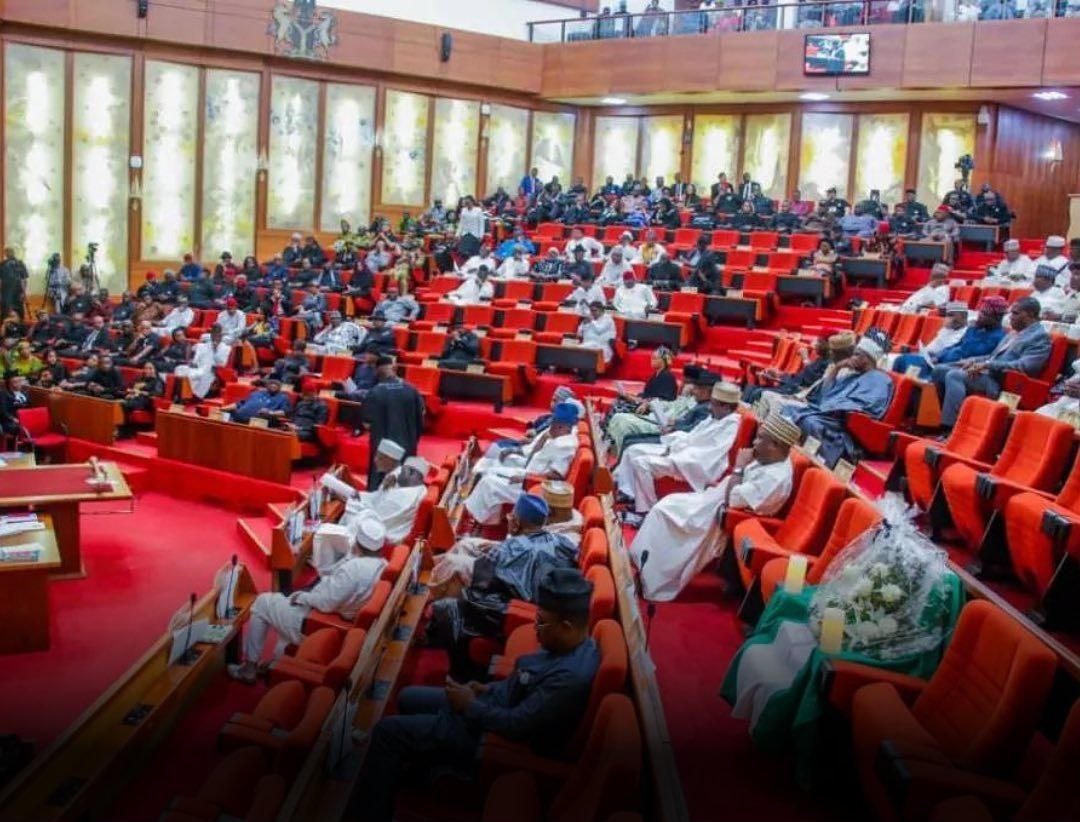
The Senate has passed the Federal Road Safety Corps (Amendment) Bill, 2026, proposing a ₦50,000 fine for individuals convicted of hawking, trading, preaching, or engaging in other unauthorised activities inside commercial vehicles.
The proposed legislation forms part of efforts to strengthen road safety regulations, improve passenger security, and reduce distractions that could endanger commuters and motorists on Nigerian roads.
Under the bill, persons found guilty of hawking goods, conducting commercial transactions, preaching, soliciting donations, or engaging in similar activities while inside commercial buses could face a fine of ₦50,000 upon conviction.
Lawmakers said the amendment is intended to discourage practices that may distract drivers, obstruct passengers, or create safety risks during transit.
Supporters of the bill argued that commercial vehicles should primarily serve as safe means of transportation and not be used for activities capable of compromising road safety or inconveniencing passengers.
According to the Senate, the proposed amendment is part of broader reforms aimed at modernising the legal framework governing road traffic management and enhancing the enforcement powers of the Federal Road Safety Corps (FRSC).
The legislation also seeks to improve compliance with traffic regulations and strengthen measures designed to protect road users across the country.
Some lawmakers maintained that unsolicited preaching, hawking, and aggressive marketing inside moving vehicles have become common in many parts of Nigeria, often creating discomfort for passengers and diverting drivers’ attention.
They argued that introducing stiffer penalties would serve as a deterrent and encourage greater adherence to road safety standards.
However, the proposal has sparked mixed reactions among Nigerians.
While some stakeholders welcomed the move as a necessary step toward improving safety and order in public transportation, others questioned whether the measure could affect constitutional rights relating to freedom of expression and religion.
Critics have also urged lawmakers to ensure that the legislation clearly defines prohibited conduct to avoid arbitrary enforcement by regulatory agencies.
Legal experts noted that the bill is still part of the legislative process and does not become law until it is passed by both chambers of the National Assembly, harmonised where necessary, and signed by the President.
If eventually enacted, the amended law would empower relevant authorities to prosecute offenders in accordance with its provisions.
The proposal comes amid ongoing efforts by the Federal Government to strengthen road safety regulations and reduce accidents through stricter enforcement, public awareness campaigns, and legislative reforms.
Stakeholders have called for continued public engagement before the bill becomes law, emphasizing the need to balance road safety objectives with the protection of citizens’ constitutional rights.
Should the legislation receive presidential assent, it would introduce one of the most significant changes to regulations governing conduct inside commercial vehicles in Nigeria in recent years.