
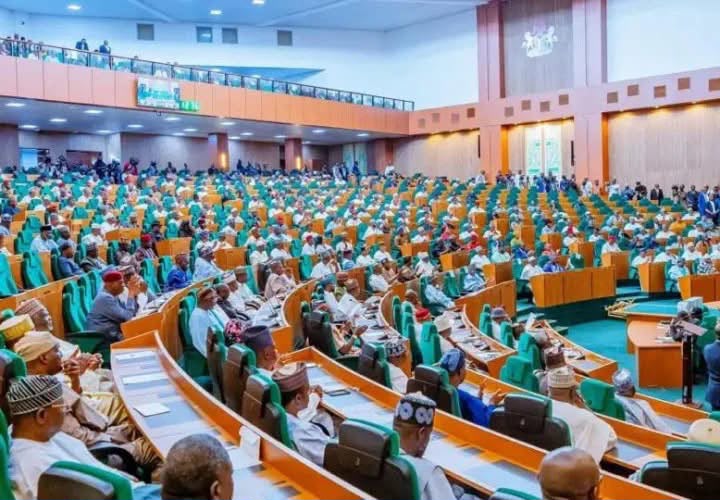
The House of Representatives has withdrawn its previously passed constitutional amendment bill seeking the establishment of state police to pave the way for consideration of an executive bill transmitted by President Bola Tinubu.
The decision is aimed at aligning the House’s position with the Senate and expediting the passage of a unified framework for the proposed decentralisation of Nigeria’s policing system.
The resolution was reached during plenary presided over by Speaker Tajudeen Abbas. The House had earlier passed its version of the State Police Bill on June 11, 2026, and constituted a 12-member conference committee to harmonise differences with the Senate’s version.
However, lawmakers voted to rescind the earlier bill after President Tinubu forwarded the Constitution of the Federal Republic of Nigeria (Alteration) (State Police) Bill, 2026 to the National Assembly.
Leading the motion, Chairman of the House Committee on Rules and Business, Francis Waive, said the executive bill provides an opportunity to streamline the legislative process and ensure that both chambers work from the same framework.
He noted that adopting the executive proposal would facilitate a more coordinated approach to establishing a dual policing system while addressing concerns raised during previous deliberations.
The executive bill has already passed second reading in the House and has been referred to the Committee on Constitution Review for further legislative work.
Among its key provisions are safeguards intended to prevent abuse of state police by political office holders. The proposal provides that state governors will appoint Commissioners of Police based on the recommendation of the National Police Council, subject to confirmation by the respective State Houses of Assembly.
The bill also contains provisions prohibiting state police authorities from arresting, investigating or harassing individuals solely for expressing political opinions or criticising government officials.
In addition, it stipulates that the Nigeria Police Force will retain primary policing responsibilities in states until they enact laws establishing state police and demonstrate compliance with nationally approved operational standards. Federal intervention would also be permitted in situations involving a breakdown of law and order or at the request of a state governor.
In his communication to lawmakers, President Tinubu described the executive bill as a critical step toward strengthening Nigeria’s security architecture and improving internal security through a more decentralised policing system.
The proposed state police legislation seeks to amend the 1999 Constitution and must secure the approval of at least two-thirds of members in both chambers of the National Assembly. It must also be ratified by no fewer than 24 of the 36 State Houses of Assembly before it can be presented to the President for assent.