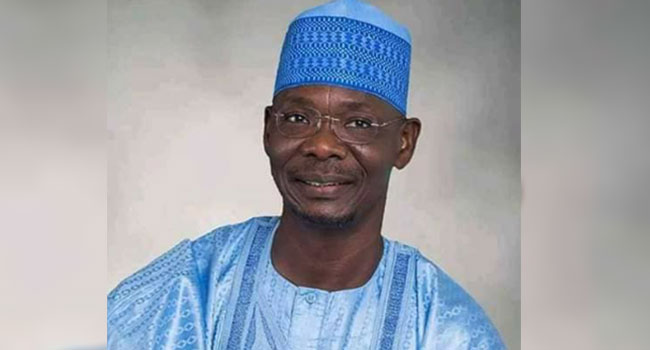
Nasarawa State Governor Abdullahi Sule has said he hopes Nigeria will one day produce a successful Christian-Christian presidential ticket, stressing that the country should move beyond religious considerations and focus on competence, character and the ability of candidates to deliver good governance.
The governor made the remarks while speaking on national politics and the role of religion in Nigeria’s electoral process, arguing that leadership should not be determined by religious affiliation but by the capacity of candidates to address the country’s challenges.
According to Sule, his prayer is for Nigeria to reach a point where citizens can freely elect leaders based on merit, regardless of whether the presidential and vice-presidential candidates share the same faith.
“I pray Nigeria gets a winning Christian-Christian ticket,” he said, adding that the country’s democracy would be stronger if voters were able to make choices without religious or ethnic bias.
The governor explained that his position was not intended to diminish the importance of religious diversity but to encourage Nigerians to place greater emphasis on competence and national unity.
He noted that political campaigns and elections should be driven by policies, vision and leadership qualities rather than identity politics.
Sule also cautioned against what he described as religious exclusion in the nation’s political space, saying every Nigerian should have an equal opportunity to aspire to public office irrespective of faith.
He maintained that democracy thrives when citizens evaluate candidates on their track records, integrity and ability to deliver meaningful development.
The governor’s comments come amid continued national conversations about the role of religion and ethnicity in Nigeria’s electoral politics.
Questions surrounding the composition of presidential tickets have remained a recurring issue in the country’s democratic history, with political parties often balancing religious and regional considerations when selecting candidates.
Sule said he believes Nigeria’s long-term political development depends on building a society where competence outweighs identity in determining electoral outcomes.
He urged Nigerians to embrace tolerance and coexistence, stressing that the country’s diversity should be viewed as a source of strength rather than division.
Political analysts say the governor’s remarks are likely to generate debate given the sensitivity of religious representation in Nigerian politics.
Some observers argue that balancing religious and regional interests has historically been viewed as a means of promoting national inclusion, while others contend that leadership should be based primarily on merit and the ability to govern effectively.
Sule, however, insisted that the ultimate goal should be the emergence of leaders capable of addressing Nigeria’s economic, security and developmental challenges, regardless of their religious background.
He called on political leaders, religious organisations and citizens to continue promoting unity, peaceful coexistence and issue-based politics as the country prepares for future electoral contests.
The governor concluded by expressing optimism that Nigeria’s democracy would continue to mature, enabling voters to make decisions based on the vision and competence of candidates rather than religious or ethnic considerations.