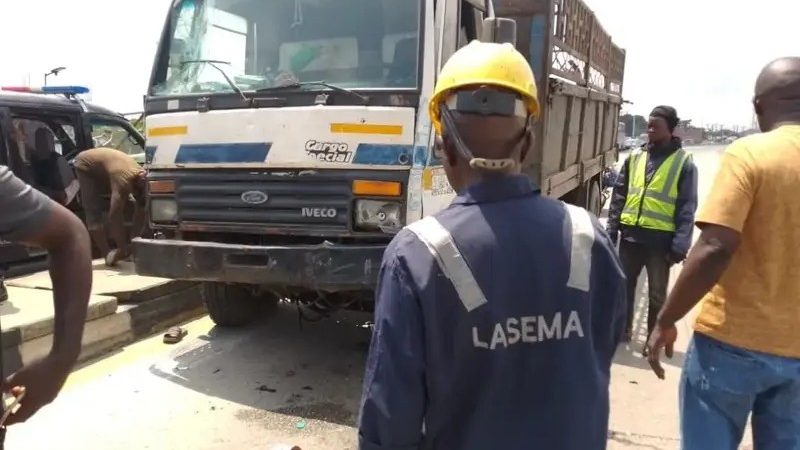

Minister of Works, David Umahi, has warned motorists and other road users against activities capable of obstructing or compromising safety on the Lagos-Calabar Coastal Highway.
Umahi said the Federal Government would not tolerate the use of the newly constructed coastal highway for activities such as illegal parking, unauthorised U-turns, commercial roadside activities and other practices that could endanger road users or impede traffic.
The minister’s warning comes amid renewed efforts by the Federal Government to regulate activities along the Lagos-Calabar Coastal Highway and protect infrastructure on the strategic corridor.
“All of this is not tolerated on the Coastal Road. And let me use this medium also to announce to Lagosians and Nigerians, we don’t want trailers to park on the Coastal Road. No keke on the Coastal Road,” Umahi said.
The warning was made as authorities intensified measures to prevent misuse of the highway, which forms part of the Federal Government’s flagship Lagos-Calabar Coastal Superhighway project.
Recent reports indicate that authorities have also moved against the creation of illegal U-turns and other unauthorised activities along the corridor. Three people were reportedly arrested for allegedly creating illegal U-turns and collecting money from motorists.
The Federal Government has separately warned motorists and residents against abandoning vehicles and allowing livestock, including cattle and goats, onto the highway.
The measures are aimed at improving safety and ensuring that the coastal road serves its intended purpose as a major transport corridor linking communities along Nigeria’s coastline.
Umahi has repeatedly defended the Lagos-Calabar Coastal Highway against criticism, insisting that the project remains strategically important to Nigeria’s economic development and will be completed.
According to the Federal Ministry of Works, construction is progressing across several sections of the highway, with work ongoing in states including Lagos, Ogun, Ondo, Akwa Ibom and Cross River. The ministry said more than 50 per cent of the entire stretch was already under construction as of August 2026.
The minister has also urged Nigerians who criticise the project to do so constructively and offer alternatives, while maintaining that the highway is designed to improve connectivity, create jobs and stimulate economic activity along the coastal corridor.
The latest directive underscores the Federal Government’s position that the highway is not a conventional roadside space for parking, informal trading or other activities that could undermine its safety, functionality and longevity.