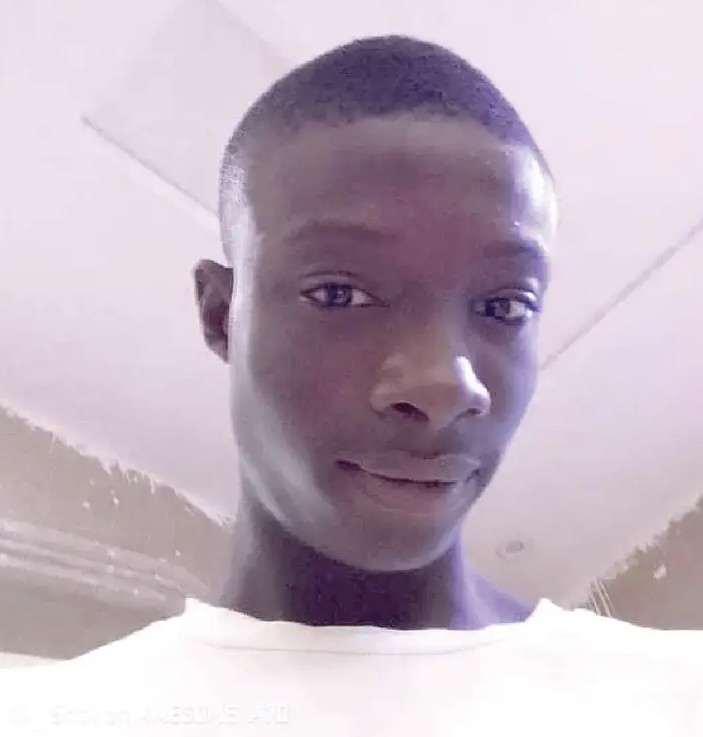
The father of an 18-year-old undergraduate, Israel Awotunde, has raised concerns over the circumstances surrounding his son’s death at an abandoned mining site in Ilesa, Osun State.
Raphael Awotunde said he was informed on the night of Friday, August 7, 2026, that his son had reportedly gone swimming with other students at the abandoned mining site and drowned.
However, the grieving father said he found several aspects of the account difficult to accept, particularly because, according to him, Israel was afraid of water and would not ordinarily have gone swimming.
Israel was a 100-level Pharmacology student of the University of Ilesa and had completed his second semester.
Awotunde said he became more suspicious after arriving in Ilesa and being shown his son’s clothes, shoes and a bead allegedly recovered from the scene.
He said he was told that nine people had gone to the site and that Israel was the only person who died.
The father also questioned the condition of his son’s body after it was recovered from the water.
According to him, the body did not appear swollen despite the claim that Israel had drowned a day earlier. He also said his son’s fingers were folded and that the family was initially prevented from taking photographs or recording the body.
Awotunde further alleged that fresh blood was coming from his son’s nose and ears, which, he said, heightened his suspicion that the death might not have resulted from drowning.
“I am thinking that he might have been killed and abandoned at the mining site,” he said, while acknowledging that he did not have proof of the allegation.
The father said people who recovered the body from the water also expressed doubts about the appearance of the deceased.
He called on the authorities to investigate the circumstances surrounding his son’s death and question the eight other students who were reportedly at the location.
Awotunde also expressed concern over his son’s mobile phone, saying it had reportedly been left with some of his friends since Thursday, despite the family’s attempts to reach him.
He said Israel’s phone rang when he called, but nobody answered. According to him, his son was not known to go anywhere without his phone.
The father said neither the school nor the police had provided the family with sufficient answers, adding that he had not received a condolence visit from representatives of the institution or the families of the other students.
As of the time of the interview, Awotunde said his son’s body remained at the mortuary and that the family had not yet conducted an autopsy to establish the cause of death.
The circumstances surrounding Israel’s death remain subject to investigation. The father’s suspicions and allegations have not been independently established, and there is no confirmed evidence in the report that the teenager was murdered.
The case highlights the need for a thorough investigation, including an autopsy and examination of the circumstances at the mining site, to determine the actual cause of Israel’s death.