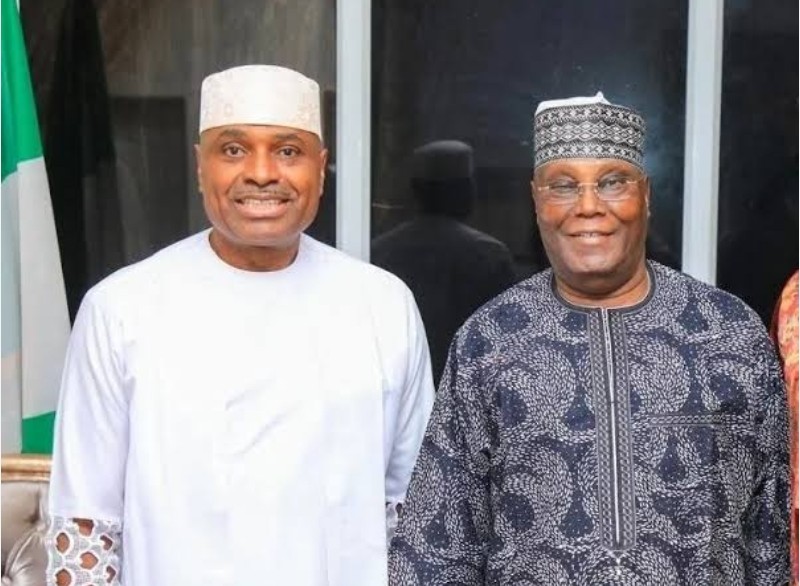
Kenneth Okonkwo, spokesperson for the 2027 presidential campaign of former Vice-President Atiku Abubakar, has defended Atiku’s proposal to restore petrol subsidy, saying the plan is intended to make fuel more affordable for Nigerians.
Okonkwo, who spoke on Channels Television’s Sunday Politics, said the proposal should not be interpreted as a return to the subsidy regime that operated before its removal by President Bola Tinubu in 2023.
Atiku, the presidential candidate of the African Democratic Congress (ADC), recently said he would restore petrol subsidy if elected president in 2027. The proposal has sparked debate, particularly because of his position during the 2023 presidential campaign on the removal of the subsidy.
President Tinubu has criticised the proposal, describing Atiku’s position as evidence of what he called “serious ignorance of governance and economy.” The President argued that restoring subsidy would return the country to a policy that placed a heavy burden on public finances.
Responding to the criticism, Okonkwo said Atiku was proposing a different approach focused on using Nigeria’s growing domestic refining capacity to reduce the cost of petrol.
He said the plan, which he referred to as the Atiku Fuel Affordability Plan (AFAP), would involve making crude oil available to local refineries at a fair price so they could produce petrol more cheaply.
“The whole idea of the Atiku plan is affordability of fuel to the ordinary Nigerian,” Okonkwo said.
He argued that the country’s previous subsidy arrangement was largely driven by dependence on imported petrol, creating opportunities for manipulation and corruption.
According to him, Atiku’s proposal would not involve a return to that system because Nigeria now has greater domestic refining capacity.
Okonkwo said the former subsidy regime became problematic because Nigeria relied heavily on imported fuel and did not have sufficient functional refineries to meet domestic demand.
“This was the way the subsidy of the old operated. They were importing 100 per cent of the fuel. We didn’t have any refinery,” he said.
He maintained that Atiku’s proposed intervention would instead seek to ensure that locally produced petrol could be sold at a price Nigerians could afford.
The controversy over petrol subsidy comes more than three years after Tinubu announced its removal in his May 29, 2023 inaugural address. The policy led to a sharp increase in petrol prices and has remained one of the most contentious aspects of the administration’s economic reforms.
The renewed debate is also expected to feature prominently in the build-up to the 2027 presidential election, with political parties and candidates likely to offer competing positions on fuel pricing, domestic refining and the management of Nigeria’s petroleum resources.
Okonkwo’s defence of Atiku’s proposal therefore marks another development in the emerging economic policy debate ahead of the election, with the two sides offering contrasting views on whether government intervention in petrol pricing is necessary to protect consumers.