
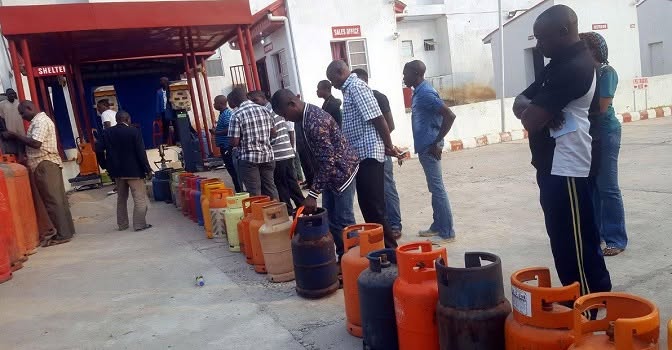
Nigeria’s Liquefied Petroleum Gas (LPG) market continues to face supply shortages despite recent imports aimed at stabilising distribution, with retail prices rising sharply in several parts of the country.
Market data and retailer reports indicate that cooking gas is being sold at as much as ₦2,400 per kilogram in some neighbourhood outlets, even after fresh shipments entered the domestic supply chain.
Dealers say the latest imports have not fully translated into retail relief, as bottlenecks in distribution and high landing costs continue to affect availability.
While major depots and official filling stations are selling at comparatively lower rates, independent retailers report difficulty accessing sufficient stock, forcing them to increase prices to manage limited supplies.
The sustained price surge has placed additional pressure on households, many of whom rely on LPG for daily cooking. A standard 12.5kg cylinder now costs significantly more to refill, pushing some families to reduce usage or seek alternative fuels.
Retailers warn that without stable supply and improved distribution efficiency, prices are likely to remain high in the near term.
Stakeholders in the downstream petroleum sector say the situation reflects broader structural challenges, including logistics constraints, foreign exchange pressures, and uneven distribution of imported volumes.
They argue that unless supply is more evenly distributed across depots and retail networks, market instability will persist despite increased import activity.
Consumers and industry operators continue to call for coordinated interventions to improve supply flow and stabilise pricing. For now, the cooking gas market remains volatile, with no immediate relief in sight for households facing rising energy costs.