As Nigeria continues its battle against insurgency, terrorism and banditry, a troubling pattern has emerged from the frontlines: the growing number of senior military officers who have paid the ultimate price while leading troops into combat.
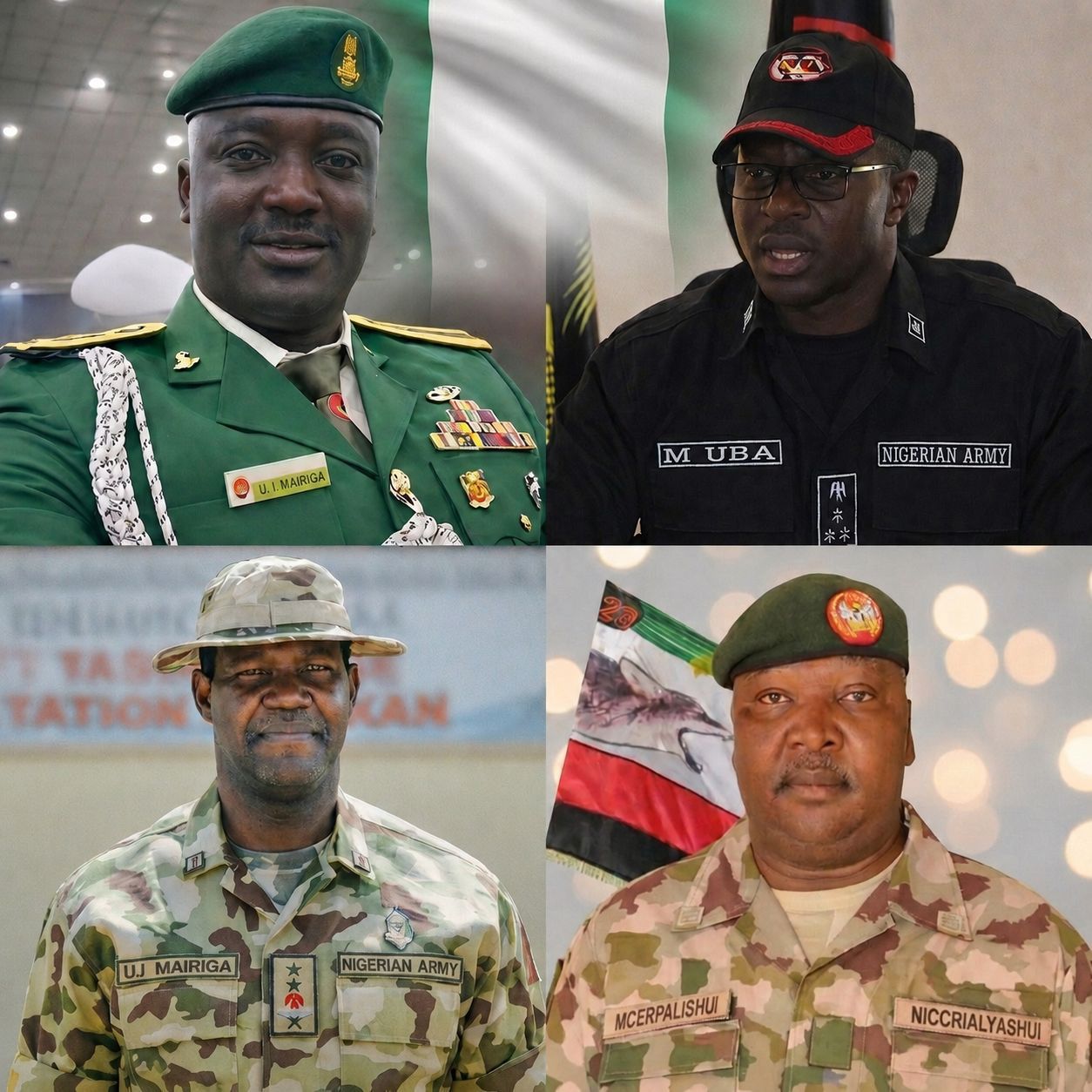
Over the past decade, at least 16 senior commanders—including brigadier generals, colonels and lieutenant colonels—have been killed in operations against Boko Haram, Islamic State West Africa Province and armed bandit groups, highlighting the enormous human cost of Nigeria’s prolonged security crisis.
Military experts warn that beyond the loss of personnel, the deaths represent a significant depletion of battlefield experience and institutional knowledge accumulated over decades of service.
Records from military operations between 2016 and 2026 indicate that the fallen officers include three brigadier generals, two colonels, ten lieutenant colonels and one major.
Many of the officers were killed while leading combat operations, reinforcing military positions, or responding to insurgent attacks across Borno, Yobe, Katsina and other conflict-prone states.
Among the most prominent casualties was Brigadier General Dzarma Zirkusu, commander of the 28 Task Force Brigade, who was killed in 2021 during fierce fighting with ISWAP fighters in Chibok, Borno State.
In 2025, Brigadier General Musa Uba was killed after insurgents ambushed his convoy along the Damboa-Wajiroko road in Borno State.
Most recently, Brigadier General Oseni Braimah, commander of the 29 Brigade, was among those killed during a large-scale terrorist attack on a military formation in Benisheikh in 2026.
Other senior officers lost in combat include Colonel I.A. Mohammed, Colonel Rabe Abubakar, Lieutenant Colonel Muhammad Abu Ali, Lieutenant Colonel O.K. Adegoke, Lieutenant Colonel Ibrahim Sakaba, Lieutenant Colonel Emeka Onyekachi Alabar, Lieutenant Colonel O.C. Okolo, and Lieutenant Colonel Manu, among others.
Unlike many conventional armies where senior commanders operate from secure headquarters, Nigerian military officers have frequently led troops from forward operating bases and active battlefields.
This doctrine has exposed commanders to insurgent ambushes, improvised explosive devices (IEDs), and direct assaults on military formations.
Security analysts say this leadership style has boosted troop morale and operational effectiveness but has also made senior officers prime targets for insurgent groups seeking to disrupt military operations.
“The loss of a battalion or brigade commander goes beyond the immediate casualty figures,” said a security analyst in Abuja. “These officers possess years of experience, local intelligence networks and operational knowledge that cannot be replaced overnight.”
Analysts note that many of the fallen commanders had spent years building intelligence sources, understanding local terrain, and developing relationships with community leaders and local security volunteers.
Their deaths, experts say, can temporarily affect operational continuity as replacement commanders familiarize themselves with complex security environments.
The loss of experienced officers also impacts mentorship within the armed forces, as senior commanders often serve as guides for younger officers preparing to assume leadership positions.
Despite significant gains recorded against insurgent groups over the years, security threats remain persistent across parts of northern Nigeria.
Military authorities continue to conduct operations aimed at dismantling terrorist networks and restoring stability in affected communities. However, defence experts argue that protecting experienced commanders while preserving institutional knowledge must become a key component of future counter-insurgency strategy.
As Nigeria honours the sacrifices of its fallen officers, their deaths serve as a reminder that the nation’s fight against terrorism and banditry is being paid for not only in territory contested and battles fought, but also in the lives of the commanders tasked with leading the war from the front.