
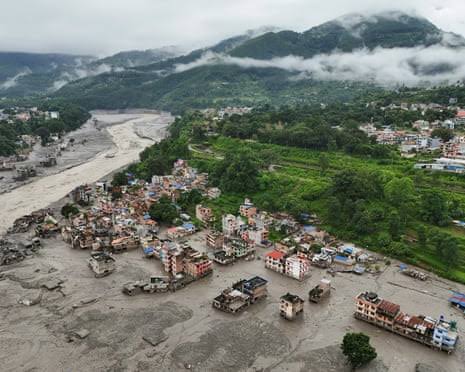
A catastrophic flash flood and mudslide disaster along the Nepal-Tibet border has left hundreds of people missing, including foreign tourists and pilgrims, after torrents of water, mud and debris swept through mountain settlements and major transport routes.
The disaster struck on Wednesday after a collapse of ice, rock and debris in the Himalayan region sent a powerful surge through the Lhende Khola and Bhote Koshi river valleys. Villages, homes, bridges, roads and other critical infrastructure were destroyed, while trekking and pilgrimage routes were cut off.
Nepali authorities have recovered at least 157 bodies, while three deaths have been reported on the Tibetan side, taking the confirmed death toll above 160. Authorities expect the figure to rise as rescue teams reach areas that remain inaccessible.
The disaster occurred during a busy trekking and pilgrimage period, with many international visitors travelling through the affected region toward the Langtang trekking area and Mount Kailash in Tibet.
Nepalese authorities have reported hundreds of missing people, including foreign nationals from more than two dozen countries. The latest figures include 177 Indians, 63 Americans, 34 Australians, 33 Britons and 25 Canadians, while nationals from South Africa, Malaysia, South Korea, Portugal and other countries are also among those unaccounted for.
The number of missing South Africans has also risen. Nepal’s tourism authorities initially reported four South Africans missing, but the figure had increased to six by Thursday.
South African humanitarian organisation Gift of the Givers has placed search-and-rescue personnel on standby following reports that two South African couples were among those missing. The organisation said it has 11 urban search and water-rescue specialists, four police dog handlers and four search dogs ready for possible deployment.
However, the organisation said it was awaiting a formal request from Nepalese authorities before sending teams, citing dangerous conditions, secondary landslide risks and the lack of safe access to affected areas.
Rescue operations have been severely complicated by the destruction of bridges and roads across the mountainous region.
At least 19 bridges and about 40 kilometres of roads have reportedly been washed away, leaving some communities accessible only by helicopter. Rescue teams have been using helicopters, drones and search dogs to locate survivors and deliver emergency supplies.
The destruction has also disrupted electricity and telecommunications, making it difficult for families and authorities to establish contact with people in affected areas.
Across the border, China’s Tibet Autonomous Region suffered extensive damage around Gyirong County and Gyirong Port, a major crossing between China and Nepal.
Chinese state media reported 558 people missing in Gyirong, including 260 foreign nationals. Three deaths have been confirmed on the Chinese side.
Videos from the area showed enormous walls of mud and debris sweeping through the border crossing, damaging buildings and infrastructure.
Chinese authorities have deployed emergency personnel and equipment to the affected area, while monitoring the risk of further flooding from unstable debris and water blockages upstream.
Nepal has mobilised thousands of soldiers, police officers and emergency personnel for the search-and-rescue operation. Military helicopters are being used to evacuate survivors, transport injured people and deliver supplies to communities cut off by the floods.
India and other countries have offered humanitarian assistance, while governments are working with Nepalese authorities to determine the whereabouts of their nationals.
The United Nations has also released emergency funding to support relief operations as the scale of the disaster becomes clearer.
The flash floods have highlighted the growing vulnerability of communities and tourism infrastructure in the Himalayan region to sudden glacier-related disasters.
The latest catastrophe follows other major glacial and flood events in the region and has renewed concerns about the effects of rising temperatures on glaciers and mountain ecosystems.
For now, rescue teams remain focused on reaching isolated communities and accounting for hundreds of missing people, while authorities warn that continuing rainfall and unstable terrain could trigger additional landslides and flooding.